And that’s a wrap for the INL SUMMIT 2022. The INL – International Iberian Nanotechnology Laboratory aimed that this event would be an open and inclusive forum of exchange that enabled the needed transitions through a unique and inspiring panel of multidisciplinary experts sharing the latest findings on new materials for sustainable solutions, disruptive computation, healthcare innovation, and other nanotech advances transforming our lives.
The INL Summit was opened by the Portuguese Minister of Science, Technology and Higher Education – Elvira Fortunato, Ricardo Rio, Mayor of Braga, António Cunha, President of CCDR-N and Professor Lars Montelius, Director-General INL – International Iberian Nanotechnology Laboratory.
Elvira Fortunato highlighted INL and the work developed and stressed the scientific cooperation between Portugal and Spain through the implementation of a new Iberian Research Center focused on Energy Storage, which will be born in the city of Cáceres and should start operating at the end of 2023 with 150 technicians and researchers. The Minister also mentioned that the Portuguese Government will support the creation of this new laboratory which is so important for all of Europe in the sense of a greener and more sustainable future.
Ricardo Rio, Mayor of Braga, insisted on the need to commit to science in the face of humanity’s new challenges, such as the green transition or the circular economy. He also referred to the importance of providing a solution to “sustainable mobility” in large cities and the importance of “finding new solutions to store the energy” that is produced, which is why the city of Braga participates in the “Batteries 2030” research to find new formulas for energy production and distribution.
Researchers, policy-makers, industry partners, and venture capital investors came together in a program that included lectures, round tables and networking opportunities, with the participation of Peter Dröll, Director for Prosperity, Directorate-General Research and Innovation – European Commission, Fabio Taucer, Policy Officer, Directorate-General Joint Research Centre (JRC), European Commission, José Mendes, Executive President of Fundação Mestre Casais and a Full Professor at the University of Minho, António Amorim, President and CEO Corticeira Amorim among others.
With a multidisciplinary group of 30 experts and + 300 participants this INL Summit 2022 was in a hybrid format and participants could attend either online or in-person at the International Iberian Institute of Nanotechnology (INL), in Braga, Portugal.
Isabel Rodríguez among the best 5000 Spanish scientific women

Isabel Rodríguez, Research Fellow at the Food Processing and Nutrition Research Group, has been ranked among the best 5000 Spanish scientific women.
As part of CSIC’s institution’s commitment to gender equality policies, they’ve published the first edition of the Ranking of Spanish and foreign researchers working in Spain according to data from their personal public profiles on Google Scholar. This edition consists of the 5600 researchers ordered according to the highest h-index and secondarily by a number of citations.
“I am thrilled to be included in this list, which recognises the research I have been doing over the last ten years. It means that our research at INL is at the forefront of the food biotechnology sector and impacts the scientific community. Personally, it encourages me to do my best to achieve new developments that can impact society” says Dr Isabel Rodríguez Amado.
Dr Isabel Rodríguez Amado is a Biochemist and holds a PhD in Food Science and Technology from the Universidade de Vigo (Spain), and has postdoctoral experience at the University of Reading (UK) and at the Universidade do Minho (Portugal). Her research has covered disciplines from Food Biotechnology, Valorization and Food Processing, to Drug Delivery at different European institutions. She has over 30 peer-reviewed publications and was a co-author in 8 book chapters. She has also been involved in lecturing in Food Chemistry and Biochemistry disciplines, and in co-supervising postgraduate students in Spain, UK and Portugal.
She is a Research Fellow and works in the Food Processing and Nutrition research group. The research project she is involved in is focused on the development of new treatments for obesity by enhancing bioactive discovery-development and delivery to targeted tissues, through actuation on the microbiota-gut-brain axis.
Prime Minister António Costa highlights INL as an “important starting point” for common Iberian projects in cutting-edge economic areas
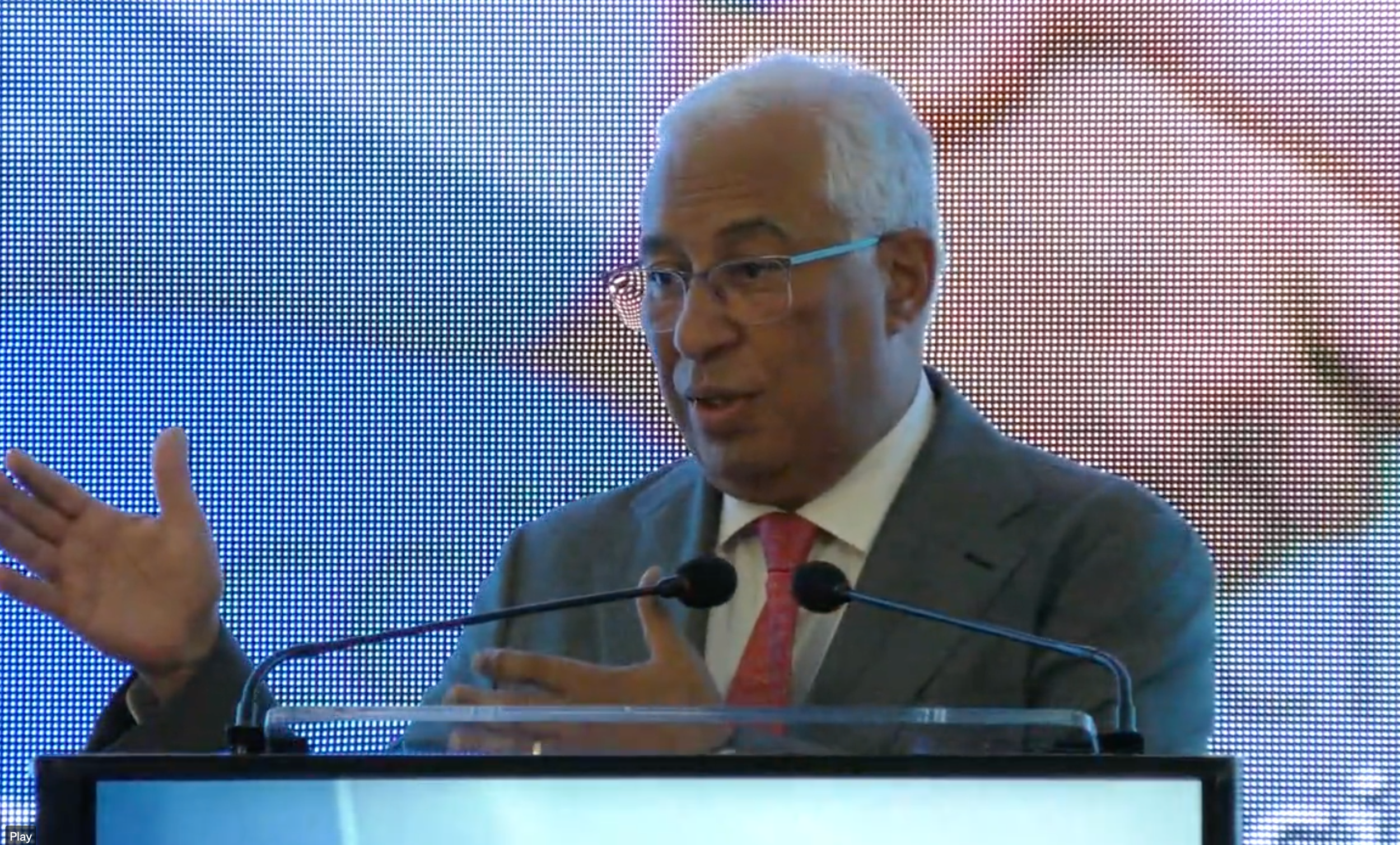
António Costa, Prime Minister of Portugal, spoke, last Friday to members of the Portuguese-Spanish Chamber of Commerce, in a speech in which he defended that INL – International Iberian Nanotechnology Laboratory is an “important starting point” for common Iberian projects in cutting-edge economic areas. The prime minister also informed that he agreed with his Spanish counterpart, Pedro Sánchez, that the next Spanish Luso Summit will take place in autumn, at INL.
“Minho is a border region where we have not been for a long time and which will allow us to better understand the potential of the Braga Nanotechnology Laboratory, which is world-class and can play a crucial role in terms of a common strategy for the future”, he said.
“We have to look at these research centres as being Iberian and not exclusively from Portugal, just because they are based in Braga. We have to know how to take advantage of all the technology that has been produced in these research centres”, he declared.
According to the leader of the executive, “the bet that the European Union has made regarding the effort to relocate in Europe many of the activities previously outsourced to other regions of the world, as well as the bet to shorten value chains, investing in the reindustrialization effort, is of immense complexity”.
“This effort cannot stop at Eastern Europe or Central Europe. We must have in Portugal and Spain the ability to play a crucial role”, he warned. In the perspective of António Costa, Portugal and Spain “have the resources for this and have a unique geographical position in a Europe that is more autonomous but also more open to the world”.
BATERIAS 2030 Project: outcome and results presented next week at INL
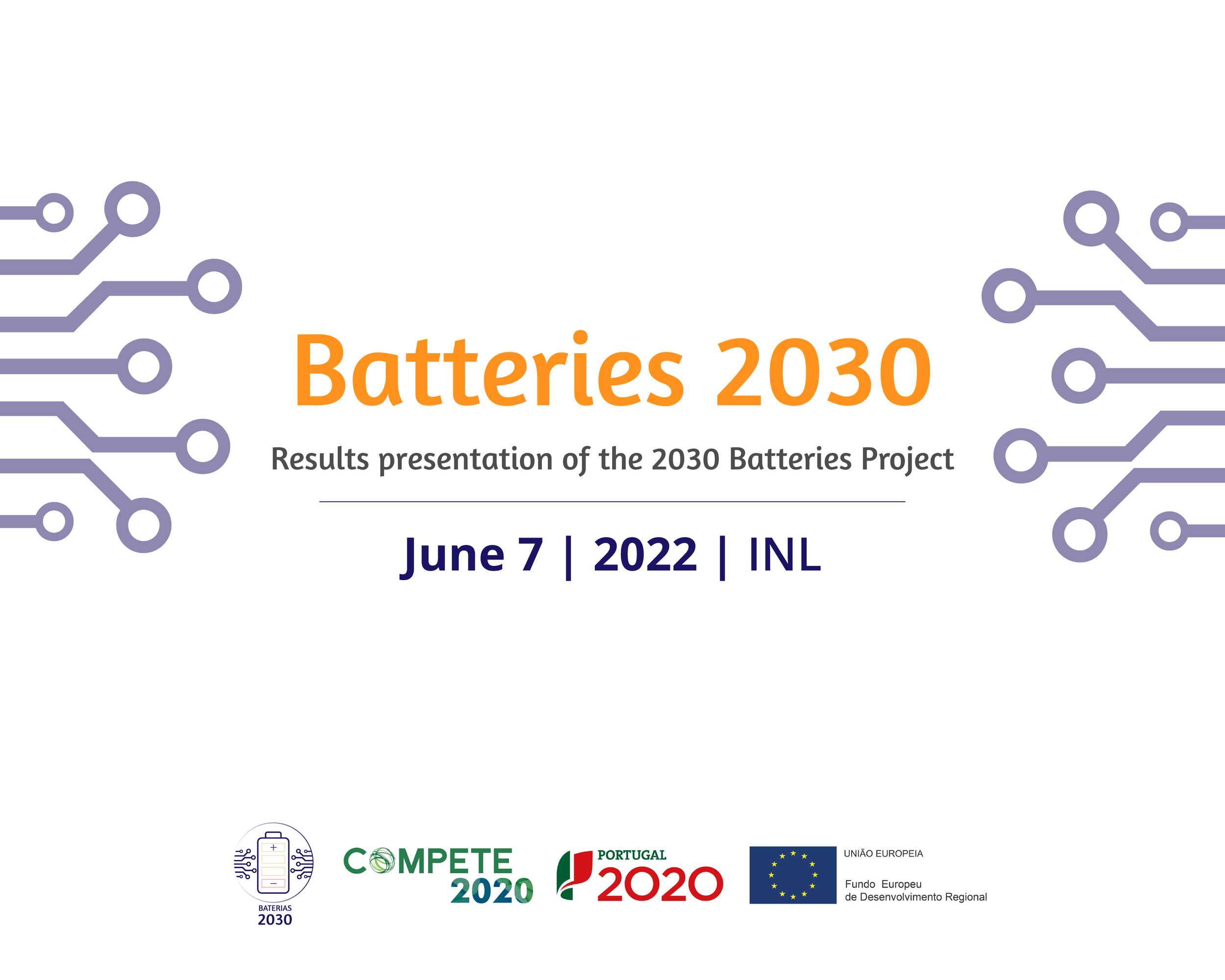
Baterias 2030 presents next Tuesday, June 7th, at the INL – International Iberian Nanotechnology Laboratory in Braga, the outcomes and results of the mobilizing project. This public presentation will serve two essential purposes: to reveal the scientific and technological advances of the project in the two years of activity, related to new technologies storage, management and distribution of energy and to present the demonstrators that will be installed in the Living Lab to be set in downtown Braga at gnration.
Pedro Salomé, the scientific Coordinator of the Project, highlights that “the project has been creating an important ecosystem in the battery sector by gathering 23 partners all working towards the integration of batteries in the urban energy system. And although the project started to be sketched back in 2019, the partners were already considering some energy trends that at the time were discarded but that currently are provided as the future. Examples are the energy communities, the production of hydrogen for long term energy storage, the use of gen3 Li batteries, lithium recycling, the use of second-life batteries, use of photovoltaics in buildings/facades, just to give some examples. Such early vision demonstrates that when the industry works closely with research and technology organizations, society’s technological development requirements can be developed early and on time for its deployment”.
Pedro feels quite proud to have such a diverse group of stakeholders developing such diverse technologies under the same umbrella and invites everyone to visit our living laboratory in downtown Braga at gnration when it opens in one year’s time.
This is the first large-scale initiative that integrates entities from the scientific and technological system with the national battery industry in a consortium, constituting a milestone in the development of new disruptive technologies in this area.
The success of this project is due to the close collaboration of several dstgroup companies such as dstsolar, innovationpoint, bysteel fs and dst sa together with INL – International Iberian Nanotechnology Laboratory, WATT-IS, Efacec, Addvolt, Secil, CDC New Cap, Visblue, FEUP – Faculdade de Engenharia da Universidade do Porto, IST – Instituto Superior Técnico, CeNTI – Centro de Nanotecnologia e Materiais Técnicos, Funcionais e Inteligentes, LNEG – Laboratório Nacional de Engenharia e Geologia, CEiiA, INESC-TEC, INESC-MN, Universidade do Minho, Omniflow, 3Drivers, ZEEV and Amnis Pura.
INL is proudly flying the Progress Pride Flag
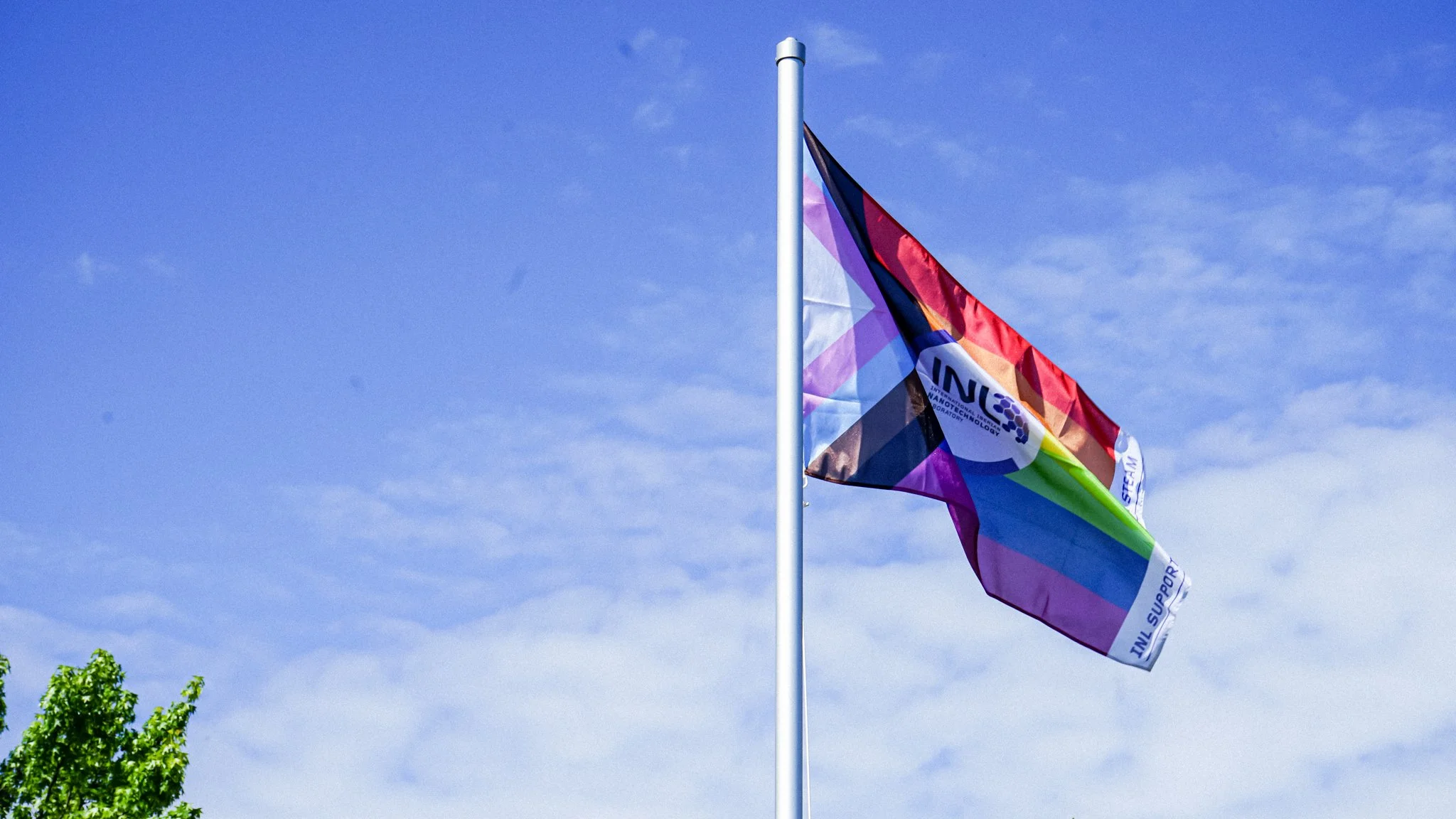
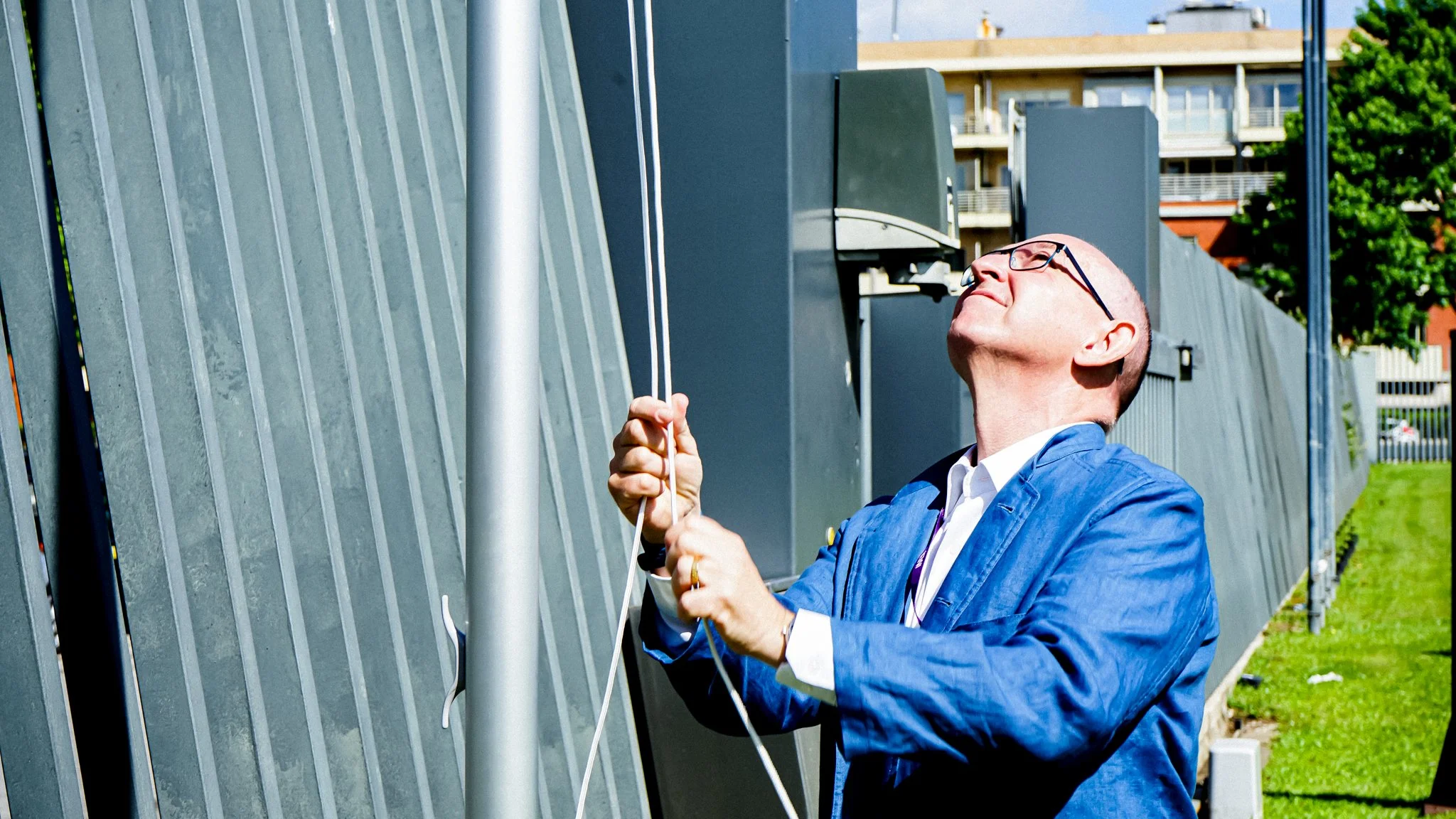
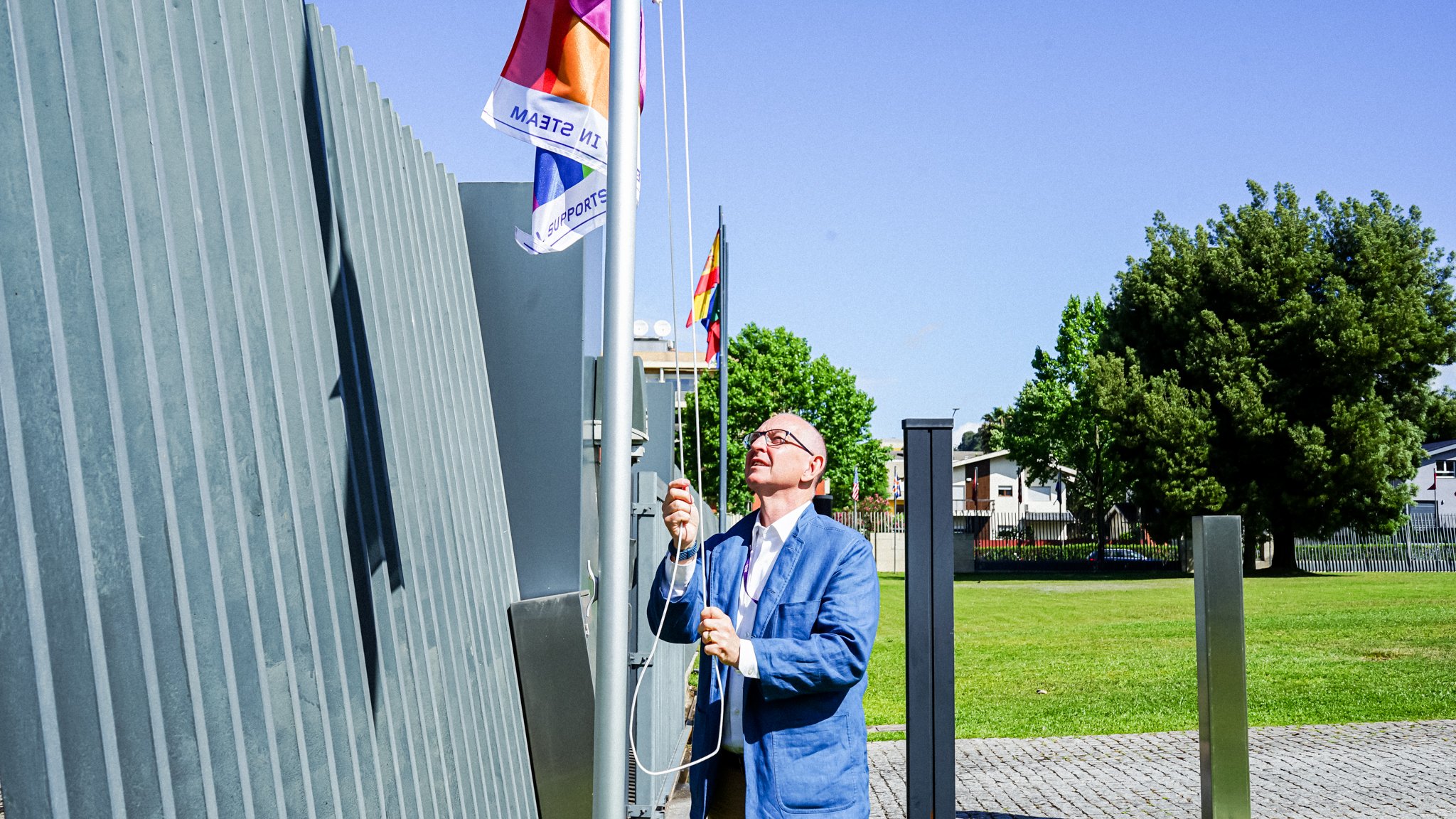
Today, INL is proudly flying the Progress Pride Flag at its headquarters in Braga. INL is committed to equality and to the promotion of inclusiveness and diversity in STEAM (science, technology, engineering, arts and maths). Each person should be treated equally and with dignity no matter their circumstances, and independently of their gender, sexual orientation, age, religion, disabilities, ethnic origin, or social background.
The Progress version of the pride flag was created by the artist and designer Daniel Quasar, and combines the LGBTQ+ rainbow flag with the transgender pride flag (white, pink, and light blue), and brown and black stripes representing marginalised communities. INL adapted this flag with permission from Quasar.
The INL Director General Lars Montelius highlights this moment by saying “our Progress Pride Flag will be a lighthouse to the world, signalling the importance of the INL values and its strong commitment to equality, diversity, fairness and inclusiveness, which enable us to contribute to making society a better place for all and everyone”.
Pride Month is celebrated every June to recognise the work made to achieve equal justice and opportunities for the LGBTQIA+ community. As well as being a time to celebrate, it is also a time to educate and raise awareness of issues still affecting our community.
Next Page » « Previous Page -->
Today, INL is proudly flying the Progress Pride Flag at its headquarters in Braga. INL is committed to equality and to the promotion of inclusiveness and diversity in STEAM (science, technology, engineering, arts and maths). Each person should be treated equally and with dignity no matter their circumstances, and independently of their gender, sexual orientation, age, religion, disabilities, ethnic origin, or social background.
The Progress version of the pride flag was created by the artist and designer Daniel Quasar, and combines the LGBTQ+ rainbow flag with the transgender pride flag (white, pink, and light blue), and brown and black stripes representing marginalised communities. INL adapted this flag with permission from Quasar.
The INL Director General Lars Montelius highlights this moment by saying “our Progress Pride Flag will be a lighthouse to the world, signalling the importance of the INL values and its strong commitment to equality, diversity, fairness and inclusiveness, which enable us to contribute to making society a better place for all and everyone”.
Pride Month is celebrated every June to recognise the work made to achieve equal justice and opportunities for the LGBTQIA+ community. As well as being a time to celebrate, it is also a time to educate and raise awareness of issues still affecting our community.