Any advice for students considering a career in science?
You should prepare yourself as best as possible. Science is as fascinating as it is challenging and hard work. Only people with a great capacity of work and resilience are capable of making a career in science. Prepare well and join the best institutions that can give you the right conditions to succeed.
Work, happiness, and success do not come alone. Science is teamwork and only the best teams win. INL has excellent conditions for doing science in Portugal, at the level of the best institutions in the world.

If you weren’t a Researcher, what would you be doing?
I’m especially touched by engineering challenges. I’m the happiest person putting my hands on the job and making it happen, I am more action than words. If I had to choose a different career, I think it would be in the field of architecture or landscape architecture. Not because I’m a good designer or a particularly creative person, but because I like to see things get out of my hands, to make them happen and see their impact on society and people’s lives.
SpinCat, Spin-Polarized Catalysts for Energy-efficient AEM Water Electrolysis

In accordance with the European Green Deal, for Europe to achieve climate neutrality by 2050, hydrogen has been identified as one of the priority areas for clean, affordable, and secure energy.
Water electrolysis, using renewable energy, is the leading candidate as a clean hydrogen source. However, its wide implementation is reduced by the requirement of rare and expensive platinum group metals to catalyse the cathodic hydrogen evolution reaction and the anodic oxygen evolution reaction.
In the SpinCat project, researchers are working on the development of efficient magnetic earth-abundant catalysts that, through spin polarisation, will boost the catalytic activity towards oxygen evolution reaction by a factor of three as compared to state-of-the-art catalysts.
This project will contribute to establishing Europe as the world leader in electrolyser technology for renewable HYDROGEN production and will help Europe to reach its decarbonisation objectives.
If you want to know more about this project, check the website https://www.spincat.eu/ and follow the twitter account SpinCat2021 for more details.
Thinking about taking your career to the next level? Join INL as a MSCA Fellow!
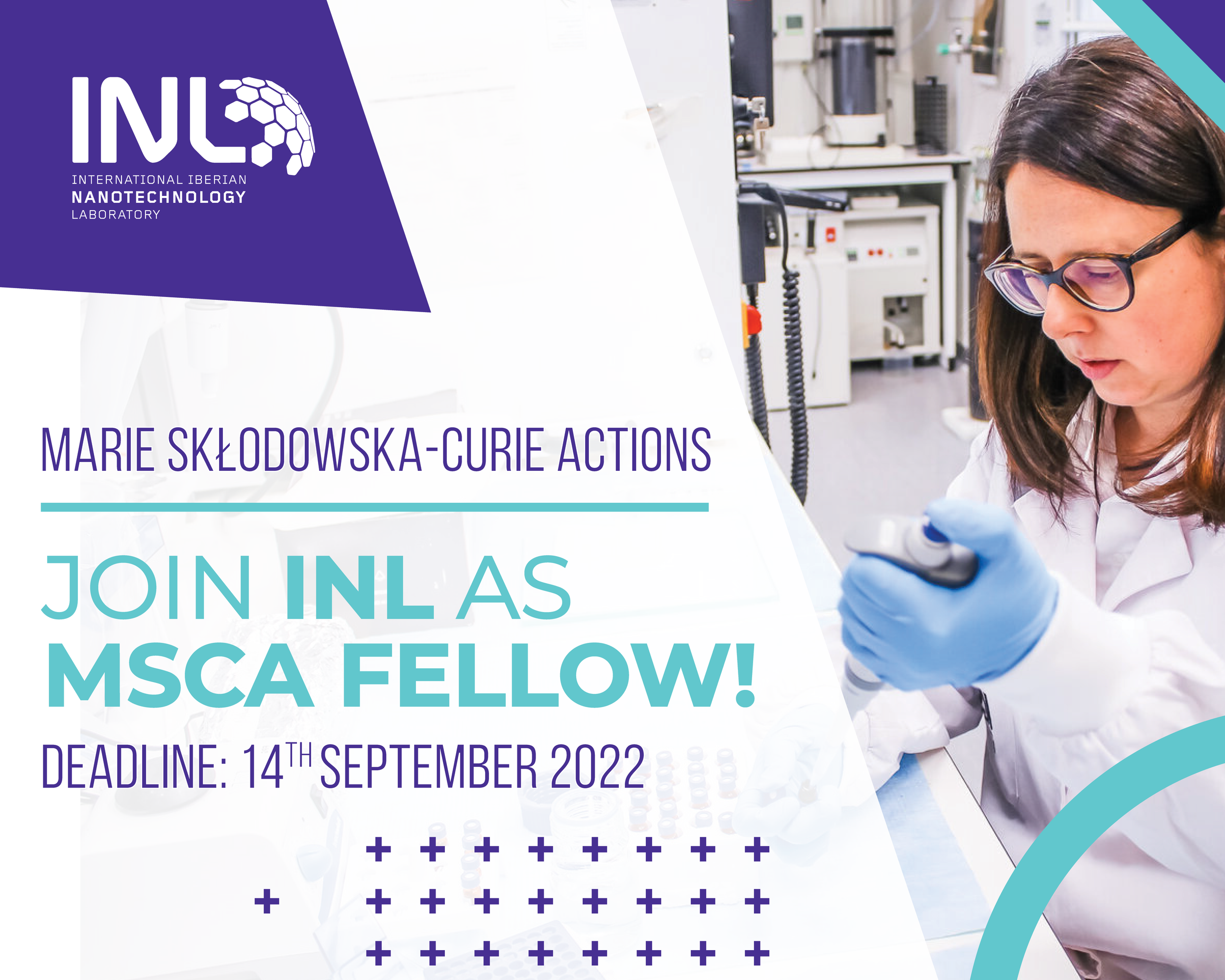
The INL- International Iberian Nanotechnology Laboratory is looking for talented researchers eager to work in our cutting-edge and inter-disciplinary organisation. The submission deadline to submit your application until September 14, 2022.
MSCA Individual Fellowship at INL gives researchers from all over the world unique career opportunities to:
-
Enjoy a fully funded research position for 1 or 2 years;
-
Work closely with an international and multidisciplinary team;
-
Acquire new skills at INL’s top-notch facilities;
-
At the end of the fellowship, have an optional additional placement of up to 6 months in a non-academic European organization;
The MSCA European Fellowship Grant Scheme
What?
Individual Fellowships (IF) provide funding to researchers of any nationality to acquire and transfer new knowledge and work on European research and innovation.
Who?
Candidates in possession of PhD at the call deadline. Up to 8 years of research experience after PhD (except for career breaks or work outside research). Mobility rule: not have spent at INL more than 12 in the 36 months.
Benefits?
The grant provides an allowance to cover living, travel and family costs.
NovaCell project, developing novel architectures of CIGS solar cells

New energy conversion devices such as solar cells are crucial for many reasons – electricity, heating or even transportation. CIGS solar cells (Cu(In, Ga)Se2) are already competitive in the photovoltaics market, but they are still more expensive than traditional technologies.
Project NovaCell is managed by the Nanofabrication for optoelectronic applications – NOA research group and they focus their work and research on the incorporation of nanotechnology in optoelectronic devices with a strong industrial and innovation potential
In this project, NOA research group is developing novel architectures of CIGS solar cells. By reducing the solar cell thickness, researchers want to reduce the fabrication costs by material savings and by increasing the machine throughput. The new optimised solar cell structure provided a 700 nm-thick CIGS solar cell with a light-to-power conversion efficiency above 16%. Before the project, typical values for such cells were around 5-8%.
These pioneering architectures will allow the production of solar cells which are flexible, and operate under adverse low light conditions, with the additional advantage that they can easily be fabricated in custom-made areas varying from large meters to a few millimetres.
TrustEat Summer School 2022

The second edition of the TrustEat Summer School will take place from September 19th to 22nd at 9h30.
TrustEat Summer School is an initiative inside the TrustEat project to gather Early Stage Researchers (ESRs) and Experienced Researchers (ERs) with state-of-the-art, first-hand knowledge from renowned experts of IBM and WUR in blockchain and agrifood.
The main goal is to share knowledge on how blockchain technology works and how it can be applied to the agrifood sector.
The final aim is to boost ESRs and ERs research profiles by learning concepts from leading experts and exchanging experiences with group leaders, scientific coordinators, and middle and senior management staff from INL, IBM and WUR.
Apply until September 15th and save your place!
MiconCell Project has come to an end!
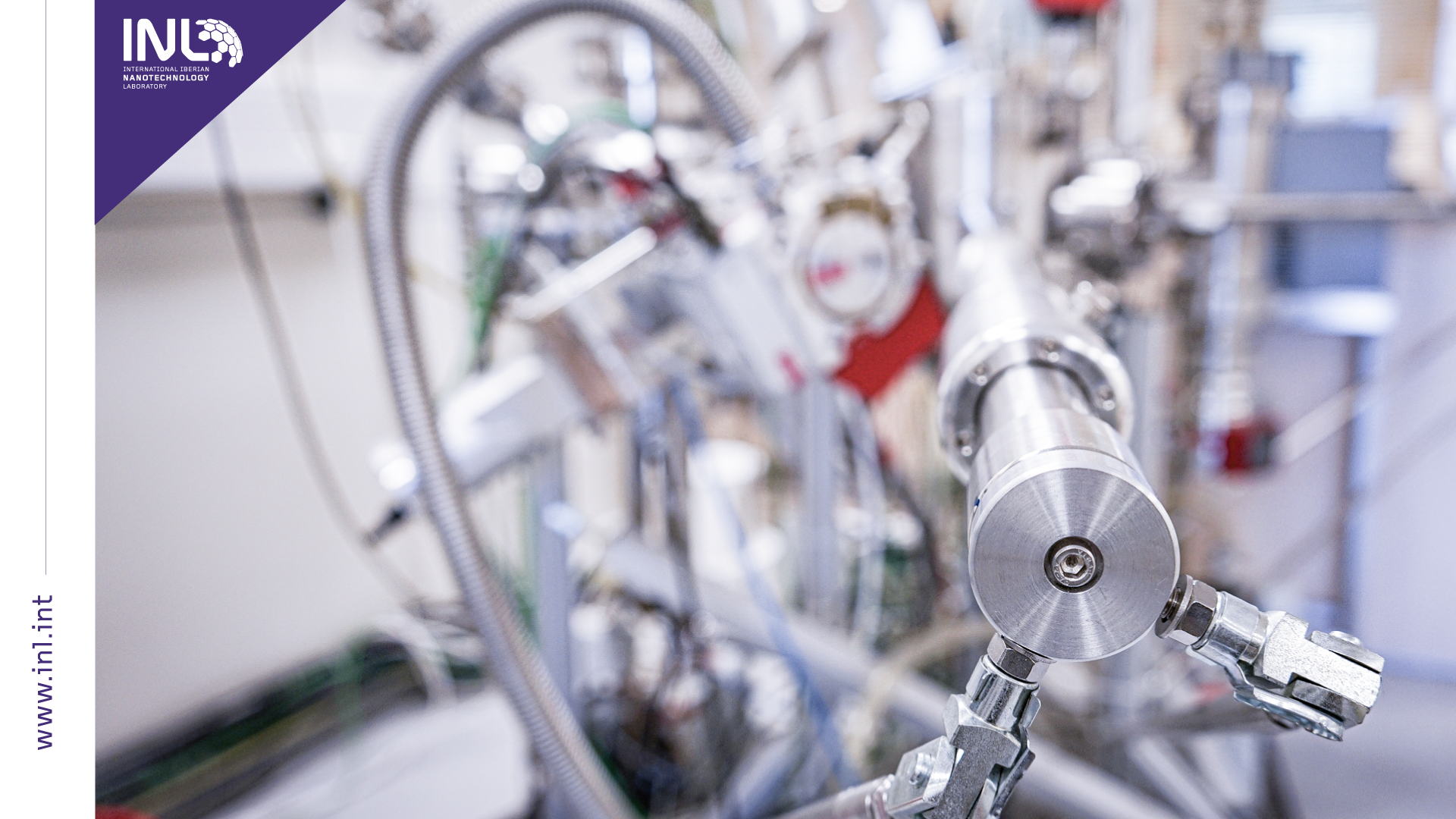
After 4 years, the FCT-funded project “MiconCell – Thin-film micro-concentrator solar cells” has successfully finished in June 2022. The innovative idea of the MiconCell project was to combine highly-efficient thin-film technology with the concentrator photovoltaic approach and shrink the size scale to the micrometre range.
CIGSe solar cells, which are thin-film solar cells based on Cu(In, Ga)Se2, present several advantages over the dominating silicon technology. However, the limited supply of the elements indium and gallium and related costs upon considerably increased production volumes present a constraint.
To reduce the use of scarce elements, the Laboratory for Nanostructured Solar Cells at INL, in collaboration with researchers from the University of Porto and the University of Luxembourg, worked on the development of micro-concentrator CIGSe solar cells within the Portuguese-funded project MiconCell.
The project idea was to combine the highly-efficient thin-film technology with the concentrator photovoltaics approach and shrink the size scale to the micrometre range.
The international team could demonstrate CIGSe solar cells with only a 200-micrometre diameter reaching up to 4.8% power conversion efficiency. Furthermore, a process for the low-cost manufacturing of concentrator optics by hot-embossing was developed and lens arrays with millimetre-sized lenses were fabricated.
The achieved results represent a stepping stone toward a materials-efficient photovoltaics technology, which uses 100-times less critical materials. This project contributes to research and development activities ensuring a future sustainable energy supply, in which photovoltaics will play a crucial role.
NANOCULTURE final event “Risk assessment and mitigation of the presence of engineered NANOmaterials in Atlantic aquaCULTURE”

The final event for the NANOCULTURE project will take place at INL – International Iberian Nanotechnology Laboratory on September 22nd, at 09h15 WEST and is open to aquaculture professionals, scientific profiles (analytical chemists, physical chemists, and molecular biologists) and anyone who finds curiosity in this area of study. This event will focus on the final results of the project.
You will have the opportunity to network with the Project Officer from the Atlantic Area Joint Secretariat, who will speak about future opportunities in the Atlantic Area programme and similar projects. Also, you’ll be able to participate in a workshop with EFSA, NIA and Blue Frog Scientific representatives, where the discussion will be about the future environmental impact of nanomaterials.
The objective of NANOCULTURE is to advance knowledge, risk assessment, and mitigation of the environmental presence of the most-used engineered nanoparticles (ENPs) in market products: titanium dioxide (TiO2) and silver (Ag).
You can submit your abstract by September 15th in the following subjects:
-
Quantification, identification and localization of the nanoparticles within a single cell and tissue;
-
Bioaccessibility and bioavailability of nanoparticles from aquaculture species;
-
Evaluation of molecular biology effects of the nanoparticle on seafood;
-
(Bio)sensors and analytical technologies for nanoparticle detection in aquaculture species and water.
If you can’t come to INL on September 22nd, you’ll have the opportunity to attend a webinar in your language! (more details and link TBD).
-
French: October 18th, 14-15.30h
-
English: October 24th, 14-15.30h
-
Portuguese: October 26th, 14-15.30h
-
Spanish: October 27th, 10-11:30h
MICRODIGEST, a Micro-device for Human Gastrointestinal Tract Simulation

Orally administered bioactive compounds (nutraceuticals, pharmaceuticals, among others) show their effects only after gastrointestinal digestion and intestinal absorption. GI digestion by gastric acid and/or enzymatic degradation may deactivate oral administered active compounds. Encapsulation is often required, using nanoparticles, nanocapsules, micelles, etc., to protect the bioactive compound.
In the MICRODIGEST project, INL researchers developed a tool to evaluate the safety and efficacy of new drugs or foods. The modular sensorised platform uses microfluidics to simulate human digestion (oral, gastric, and intestinal phases) and intestinal absorption in an automated and miniaturised manner. This allows for reducing sample size, increasing experimental throughput and potentially reducing costly failures in future clinical trials.
During the project, different coatings of the PDMS were tested to reduce the absorption of small molecules, since hydrophobic and fluorescent molecules tend to diffuse into the PDMS reducing their concentration in solution and consequently affecting the accuracy and reliability of the assay. Researchers combined and strengthened the knowledge of different research teams at INL: cell culture, microfluidics and microfabrication. It was its interdisciplinarity that made this project obtain great results.
Nffa.eu Pilot Training School Devoted to “Fine-analysis Tools for Nanocharacterization”

INL and Foundation for Research and Technology-Hellas (FORTH), are glad to announce the first edition of the Nffa.eu Pilot training school devoted to “Fine-analysis tools for nanocharacterization” on September 27-28, 2022 at INL – International Iberian Nanotechnology Laboratory.
This distinctive training school is open to graduate students, post-docs, young researchers, including technicians & engineers, and, in general, to all scientists from academic and industrial communities interested in acquiring knowledge and hands-on experience about the instruments and techniques offered by NFFA-Europe.
NFFA-EUROPE provides free access to state-of-the art tools for multidisciplinary, frontier research at the nanoscale, scaling up to the micro-world: available techniques range from nanocharacterization to theory and numerical simulation. Advanced infrastructures for growth, lithography, characterization, theory and simulation and fine-analysis with Synchrotron, FEL and Neutron radiation sources are integrated into a multi-site combination which users can access free of charge. This provides them with unique, integrated access which is not currently available at single specialized sites.
The training school will emphasize possibilities and synergies, using different Fine Analysis techniques for nanocharacterization of materials or devices.
Participants will be selected on the basis of their scientific and technical backgrounds.
Next Page » « Previous Page -->INL and Foundation for Research and Technology-Hellas (FORTH), are glad to announce the first edition of the Nffa.eu Pilot training school devoted to “Fine-analysis tools for nanocharacterization” on September 27-28, 2022 at INL – International Iberian Nanotechnology Laboratory.
This distinctive training school is open to graduate students, post-docs, young researchers, including technicians & engineers, and, in general, to all scientists from academic and industrial communities interested in acquiring knowledge and hands-on experience about the instruments and techniques offered by NFFA-Europe.
NFFA-EUROPE provides free access to state-of-the art tools for multidisciplinary, frontier research at the nanoscale, scaling up to the micro-world: available techniques range from nanocharacterization to theory and numerical simulation. Advanced infrastructures for growth, lithography, characterization, theory and simulation and fine-analysis with Synchrotron, FEL and Neutron radiation sources are integrated into a multi-site combination which users can access free of charge. This provides them with unique, integrated access which is not currently available at single specialized sites.
The training school will emphasize possibilities and synergies, using different Fine Analysis techniques for nanocharacterization of materials or devices.
Participants will be selected on the basis of their scientific and technical backgrounds.