News

INLer Sara Abalde-Cela wins ERC Consolidator Grant

INLer Sara Abalde-Cela wins ERC Consolidator Grant

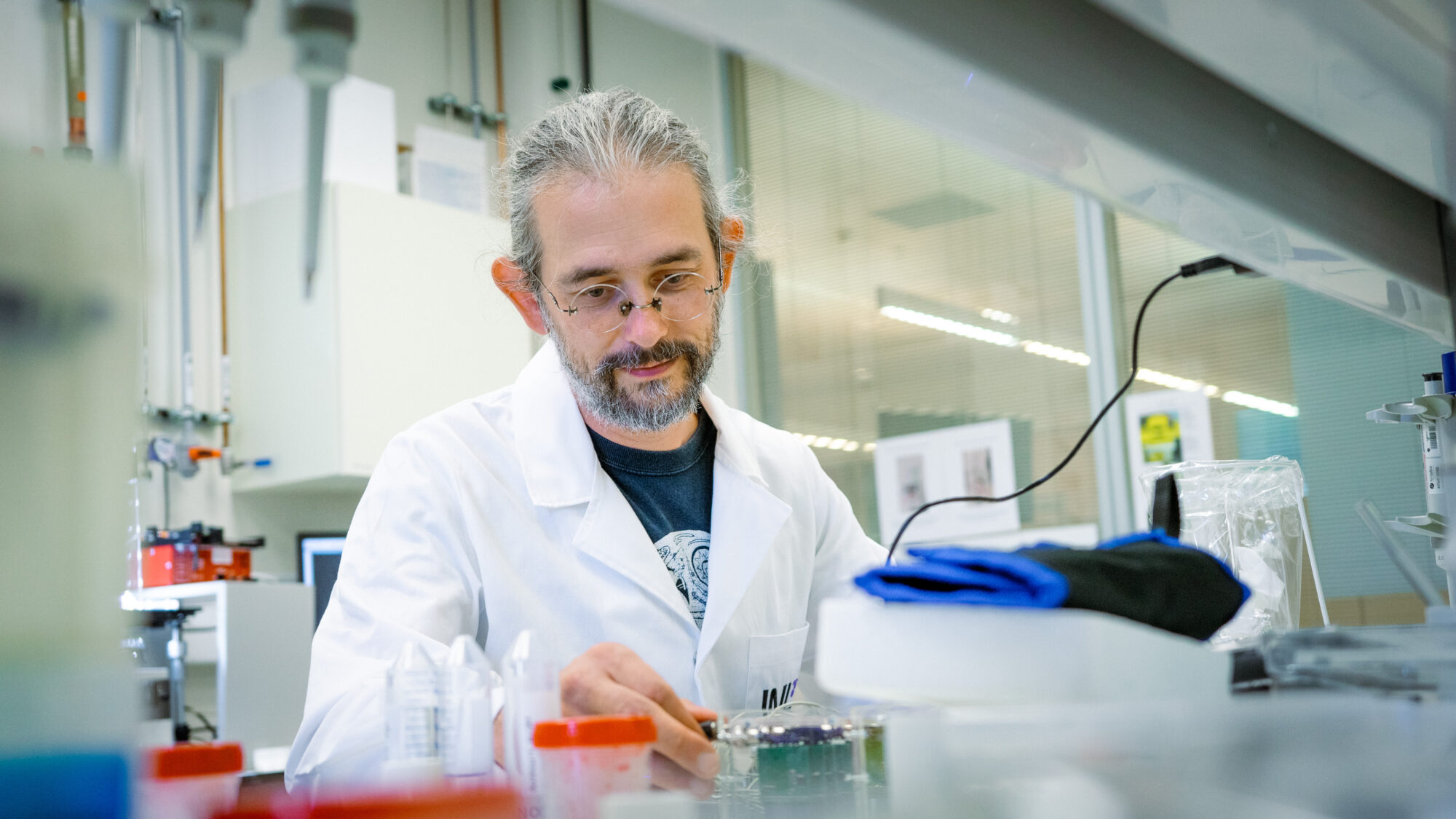
INL is honoured to announce that one of its researchers, Dr. Sara Abalde-Cela has been awarded with the prestigious ERC Consolidator Grant. On November 9th, the European Research Council revealed the 349 mid-career researchers selected to receive a total of €728 million in Consolidator Grants. This year’s recipients, including Dr. Abalde-Cela, represent universities and research centres across 25 EU Member States and associated countries. The ERC grant, first established by the European Union in 2007, is Europe’s leading funding organisation for frontier research. Supported by the EU’s Horizon Europe programme, the grants follow a bottom-up approach, enabling mid-career researchers in any field to pursue groundbreaking ideas. Consolidator Grants provide up to €2 million over five years. This year’s call attracted more than 3,000 applications, a 35% increase compared to last year. Dr. Sara Abalde-Cela, Research Scientist PI in the Diéguez group, earned the grant with her proposal titled “Deciphering multilevel cell-to-cell communication through microfluidic and plasmonic decoders” , marking the first ERC grant awarded to a researcher at INL. Academically, Dr. Abalde-Cela holds a PhD in Nanotechnology from University of Vigo and completed a postdoctoral fellowship at the University of Cambridge. She joined INL in 2017, as an Marie Skłodowska-Curie […]

Read more
Nanostars push SERS sensing to new performance levels

Nanostars push SERS sensing to new performance levels

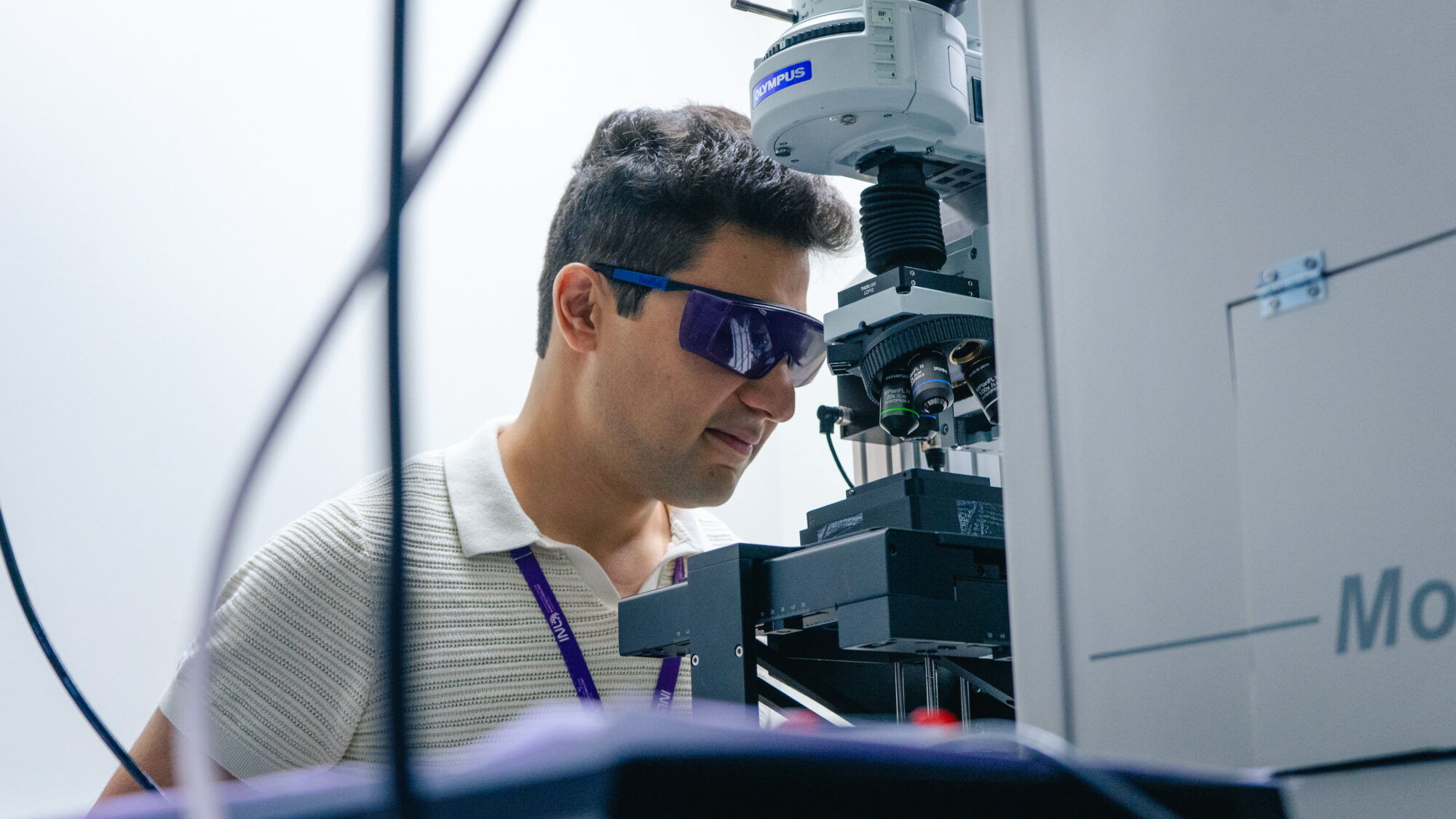
Surface-enhanced Raman scattering (SERS) spectroscopy has become a powerful tool for ultrasensitive and rapid chemical analysis. Its effectiveness comes from how light interacts with tiny metallic structures, generating electromagnetic fields that dramatically strengthen the Raman signal. However, turning this principle into reliable and scalable sensing platforms has been a long-standing challenge, limiting wider use of SERS in medical diagnostics, environmental monitoring, and molecular biosensing (if you would like to learn more about the current challenges of taking SERS into real-world applications, you can also read a previous review article published by the group). In a study led by Sara Abalde-Cela, INL researchers from the Diéguez group have developed a plasmonic substrate that notably improves the stability and reproducibility of SERS-based sensing. Their work, published in Advanced Optical Materials, introduces a fabrication approach that combines precision nanopatterning with controlled chemical growth. The process begins with electron beam lithography to create highly regular nanodisk arrays. These disks are then transformed into nanostars with sharp tips capable of producing extremely strong electromagnetic fields, leading into “hot spots”. “Compared to nanodisks, which produce weaker and more homogeneous field enhancements, the nanostars show highly localised electromagnetic intensification at their tips,” explains Sara Abalde-Cela. “Both simulations, […]

Read more
Becoming a learning hub: INFRACHIP Research Accelerator hosted at INL

Becoming a learning hub: INFRACHIP Research Accelerator hosted at INL

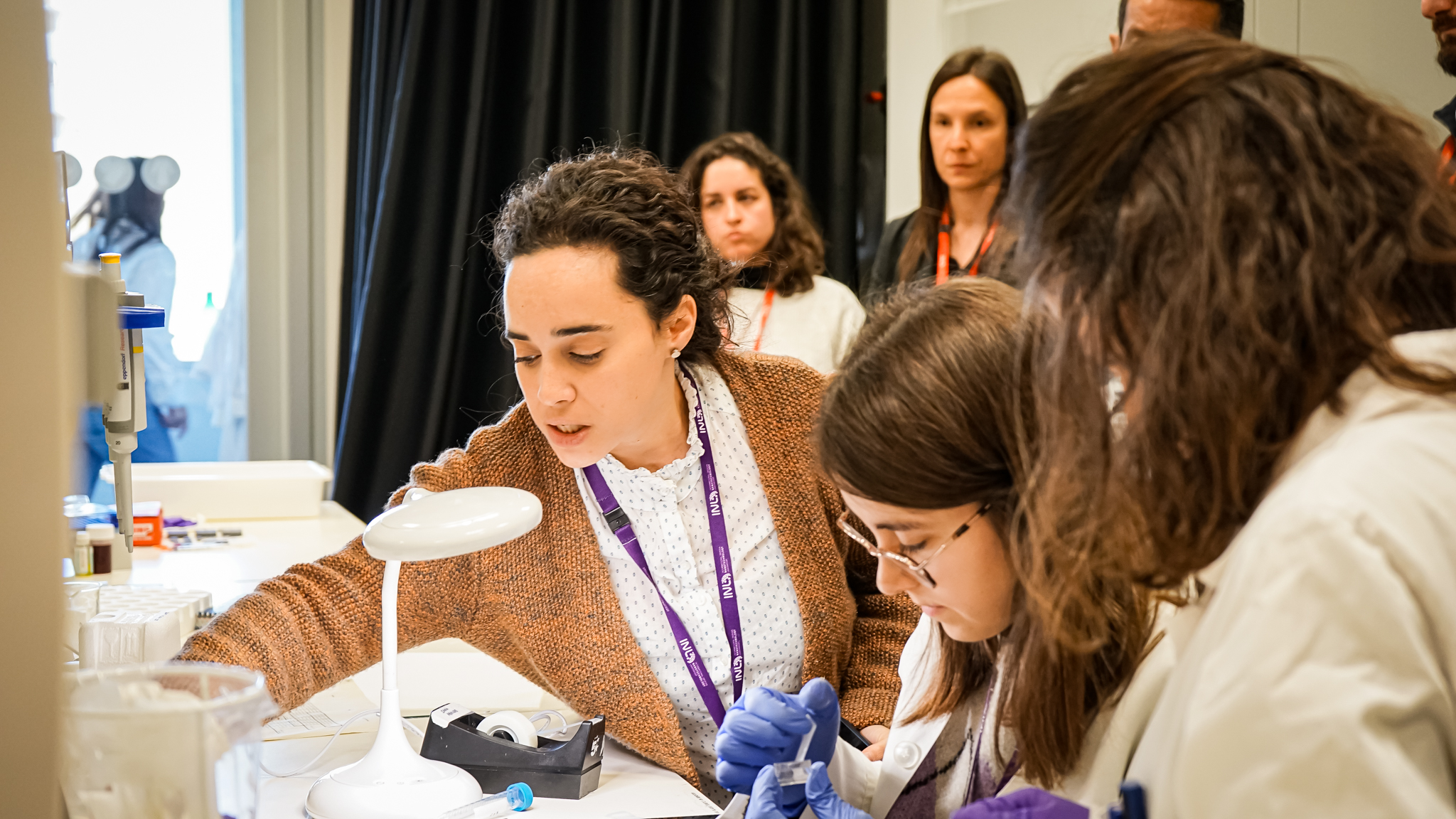
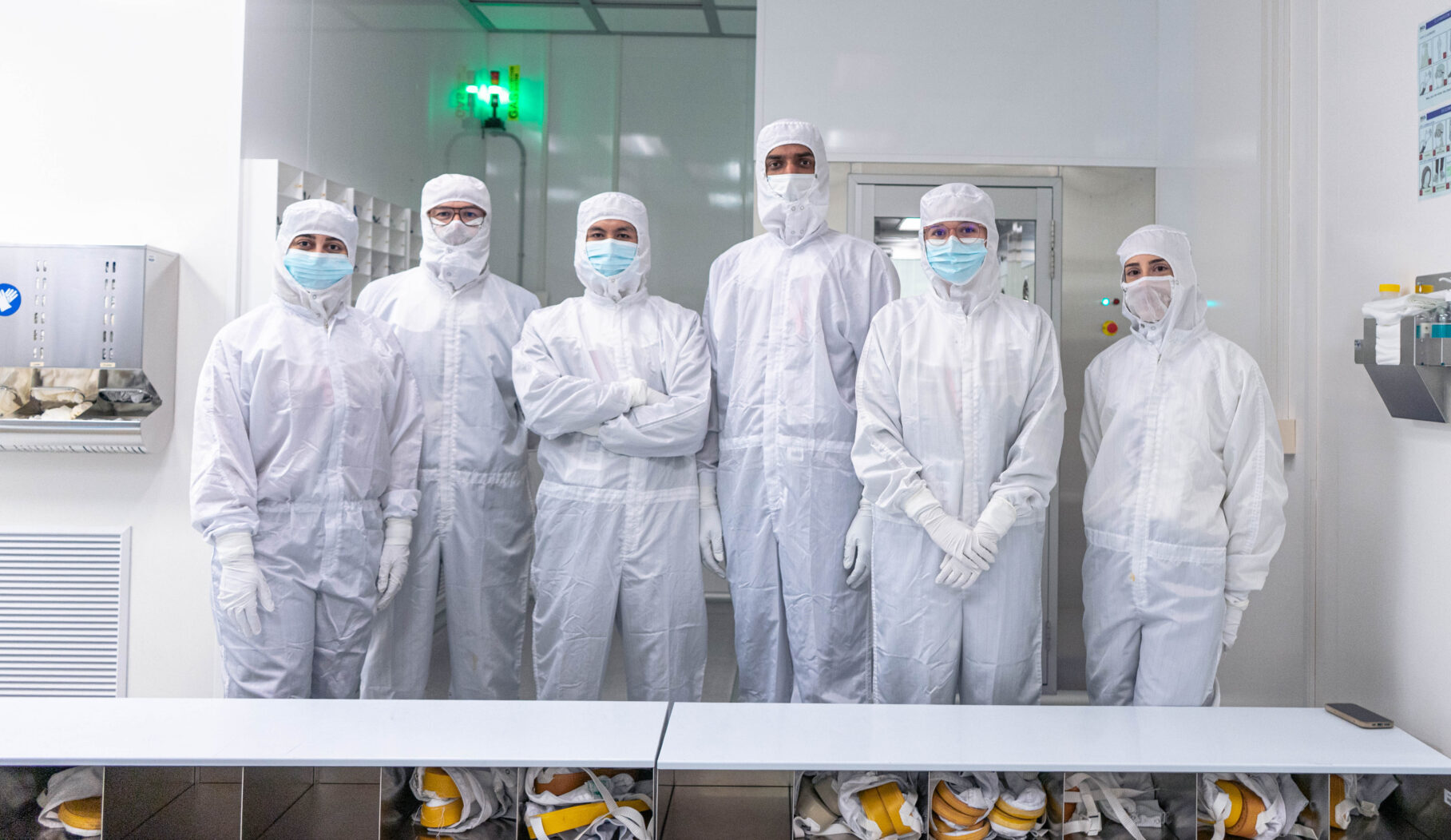
From 18 to 20 November, INL transformed into an insightful learning hub for early-career researchers, as it proudly hosted the INFRACHIP Research Accelerator Programme. The short course on “Micro/Nanofabrication and Characterisation for Nanoelectronics” brought together 5 external early-stage researchers and 8 INLers, eager to deepen their knowledge and gain hands-on experience in advanced nanofabrication and nanocharacterisation techniques. About the programme This intensive training forms part of the broader INFRACHIP initiative, a platform designed to expand access to nanoelectronics infrastructures and strengthen the European research ecosystem. By sponsoring PhD students and early-stage postdoctoral researchers, INFRACHIP encourages participants to apply for transnational access to facilities available through their network, integrating these advanced, and newly acquired skills into their research. Training at INL At INL, participants engaged in a dynamic mix of theoretical lectures and live demonstrations across two core facilities: Micro and Nanofabrication (MNF) and Electron Microscopy and X-Rays (EMX). From the MNF facilities, INL experts Carlos Calaza, Jérôme Borne, Paulo Coelho, and André Cardoso delivered lectures on fundamental processes in micro- and nanofabrication, including deposition, patterning (optical and electron beam lithography), and etching (RIE). Beyond theory, Helder Fonseca and José Rodrigues challenged participants to fabricate a wafer featuring the INL and […]

Read more
Joana Araújo Honoured with Best Shotgun Poster Award at International Caparica Conference PTIM

Joana Araújo Honoured with Best Shotgun Poster Award at International Caparica Conference PTIM

INL is honoured to announce that Joana Araújo, a member of the Kolen’ko research group, has been awarded the prize for Best Poster Presentation at the 6th International Caparica Conference on Pollutant Toxic Ions & Molecules. Held biennially in Costa de Caparica, Portugal, this prestigious event brings together leading experts from the environmental sciences, biology, chemistry, and health research communities. The conference serves as a dynamic platform for showcasing latest technologies, innovative methodologies, and advances in pollution detection, contamination control, and remediation. The sixth edition of the conference took place from 2 to 6 November, featuring an extensive programme of plenary lectures, keynote presentations, oral communications, and poster sessions. Joana Araújo earned her recognition in the Shotgun Poster category, receiving a certificate and a gift from the PROTEOMASS Scientific Society. Her award-winning poster, titled “Covalent Organic Frameworks and Composites for Efficient Adsorption of Pharmaceuticals in Natural Waters”, explored the potential of covalent organic frameworks (COFs) and COF-based composites as efficient adsorbents for monitoring and removing persistent pharmaceutical contaminants from natural water sources. Further contributions from the Espiña Research Group strengthened INL’s presence at the conference. Begoña Espiña, the group leader, delivered a plenary lecture, while Miguel Sousa presented a poster […]

Read more
A new tool being developed at INL can explore electrical effects on cells

A new tool being developed at INL can explore electrical effects on cells

While we usually consider electronics as a fruit of human engineering, electrical signalling is also fundamental in biology, playing an essential role in cellular functions from neuronal communication and muscle contraction to cell migration, proliferation and differentiation. Electrical stimulation activating these biological functions is therefore also a powerful tool for both fundamental research and for therapeutic applications. Alar Ainla, research scientist at INL, in collaboration with the Life and Health Sciences Research Institute (ICVS) at the University of Minho, has developed a novel multi-channel in vitro electrical stimulator to help study these effects in a versatile and accessible way. Their work was published in BMC Biomedical Engineering. Cells can sense and respond to the electric fields. Exposure to an electric field changes the electrical potential across the cell membrane, influencing voltage-gated ion channels and calcium signalling, which can trigger nerve impulses, muscle contraction, and even long-term processes like synaptic plasticity, cell proliferation, and differentiation. In stem and neuronal cells, electrical stimulation can promote axon growth, enhance the expression of neuronal markers, and trigger the release of molecules that guide the differentiation of neighbouring cells. In other words, cells behave like tiny sensors and communicators, adjusting their internal processes in response […]

Read more
Shedding light on ultrafast heat transport in graphene

Shedding light on ultrafast heat transport in graphene

Managing heat efficiently is one of the great challenges in the development of next-generation electronic and optoelectronic devices. At the nanoscale, energy moves in ways that defy classical descriptions of heat transfer. Houssem Rezgui, researcher from the Sotomayor research group at INL, has now provided new insights into how energy flows in graphene when excited with ultrafast laser pulses. Their work, published as a Letter in Journal of Physics D: Applied Physics, explores how electrons and vibrations in the lattice (known as phonons) interact in timeframes shorter than a trillionth of a second. Graphene, with its remarkable electronic and thermal properties, is an ideal platform for probing these processes. When struck by a femtosecond laser pulse, graphene enters a highly non-equilibrium state: electrons absorb the incoming energy almost instantly, and only afterward begin to share it with the lattice. Traditionally, this sequence has been described by the two-temperature model, which assumes that electrons and phonons equilibrate in a straightforward way. However, the INL researcher shows that reality is more complex. Using an extended temperature model, Rezgui revealed that different phonon branches respond at distinct timescales, with longitudinal acoustic phonons playing a key role in energy absorption and redistribution. Strikingly, their […]

Read more
Magnetic nanowires take hydrogen production to the next level

Magnetic nanowires take hydrogen production to the next level

As the world looks for cleaner ways to produce energy, green hydrogen (fuel made from water and renewable electricity) is gaining attention as a promising solution. To make green hydrogen affordable and efficient, better catalysts are needed to speed up the chemical reactions involved. Researchers at INL – International Iberian Nanotechnology Laboratory have developed a new type of magnetic catalyst that could change the game. Their findings, recently published in ACS Nano, reveal how these magnetic nanowires efficiently catalyse the oxygen evolution reaction, a key reaction in hydrogen production from water. The research team led by Yury Kolen’ko created cobalt ferrite (CoFe2O4) nanowires using a technique called electrospinning, which forms ultra-thin fibres by using an electric field to draw solid threads from a liquid solution; imagine sugar being spun into cotton candy, but at the nanoscale. By precisely controlling the calcination temperature, the team transformed the fibres into nanowires with excellent magnetic properties, critical for their catalytic performance. Why does magnetism matter? The oxygen molecules, which are formed during the water-splitting process, have a special triplet spin state. When the catalyst is magnetic, it can influence the spin alignment of the reaction intermediates, guiding the reaction to proceed faster and […]

Read more
Eco-friendly sensor developed at INL enables rapid detection of pharmaceutical contaminants in water

Eco-friendly sensor developed at INL enables rapid detection of pharmaceutical contaminants in water

Pharmaceutical waste in water sources is becoming a growing environmental concern. Among the most common pollutants are paracetamol and 4-aminophenol, a related compound that can appear as a contaminant or breakdown product. These substances persist in urban wastewater and surface waters, potentially harming aquatic ecosystems and human health. Detecting them accurately and efficiently is crucial for environmental protection and risk management. Researchers at INL from Espiña’s research group have designed an innovative electrochemical sensor that can simultaneously detect both pharmaceuticals at very low concentrations. The sensor uses carbon screen-printed electrodes modified with specially functionalised carbon nanofibers, which enhance sensitivity and selectivity. This study published in the journal Sensing and Bio-Sensing Research, describes a solution for portable, cost-effective, and environmentally friendly tool for water quality monitoring. Traditional methods for identifying pharmaceutical contaminants often rely on complex laboratory techniques such as chromatography and spectrometry. While highly precise, these require expensive equipment, trained personnel, and time-consuming sample preparation, limiting their use for routine or on-site testing. In contrast, electrochemical sensors like the one developed by the INL team led by Raquel Queirós, provide rapid, real-time results with minimal costs. The research team compared different transducer materials, finding that carbon-based ones performed better than […]

Read more
1 2 3 50