News

Hazal Gergeroglu: Advancing Science as a Research Engineer and Advocating for Women in STEM

Hazal Gergeroglu: Advancing Science as a Research Engineer and Advocating for Women in STEM

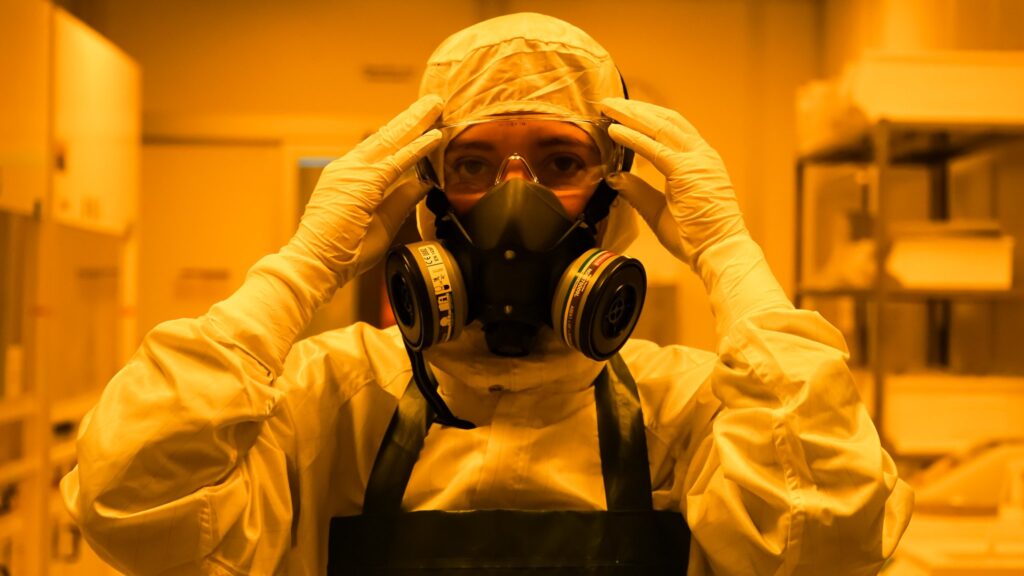
At INL, research engineers are at the forefront of scientific innovation, bridging the gap between research and practical applications. Meet Hazal Gergeroglu, a Research Engineer in the Piteira Research Group, working on cutting-edge sensor technologies for lithium-ion batteries while also advocating for greater inclusivity in STEM. In this interview, Hazal shares how her role has evolved, the impact of her research on energy storage solutions, and the challenges in her field. She also reflects on the barriers women in STEM still face and the importance of fostering a more equitable and inclusive scientific community. How has your role as a Research Engineer evolved over time? When I started at INL as a research engineer, my work focused primarily on experimental research, sensor design, and data analysis. Over time, I took on additional responsibilities in project management, team coordination, and interdisciplinary collaborations. As part of these advancements, I am currently producing various sensor components and assembling these sensors into lithium-ion batteries to improve their safety and performance. In the future, I aim to keep participating in projects integrating scientific research into the industry, focusing on microsensors for batteries, ensuring more efficient and reliable energy storage solutions. Can you describe your work in the […]

Read more
INL Hosts Insightful Session with Professor Manuel Heitor on European Research and Innovation

INL Hosts Insightful Session with Professor Manuel Heitor on European Research and Innovation

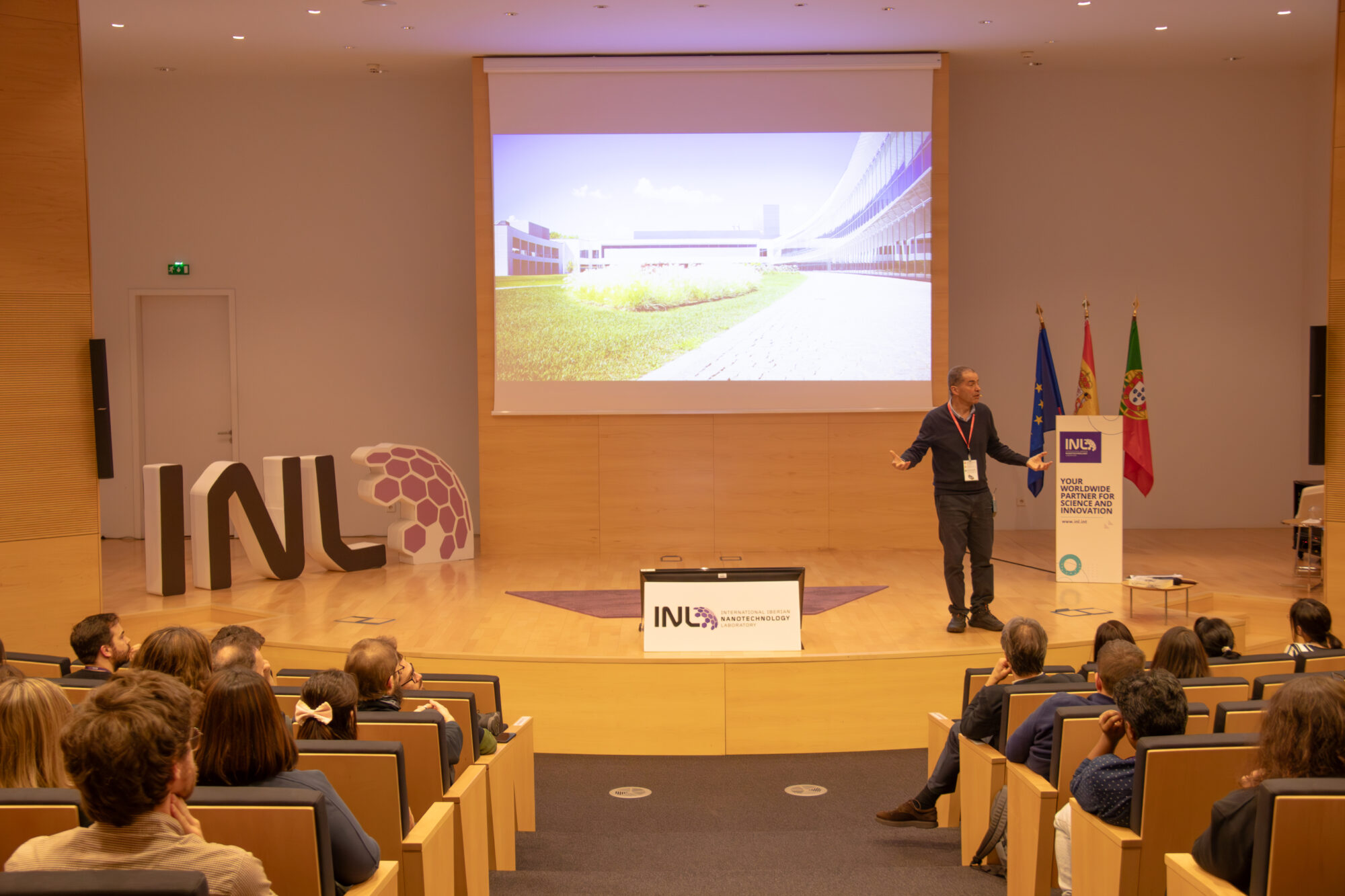
On Friday, February 28th, INL had the distinct privilege of welcoming back Professor Dr. Manuel Heitor, former Minister of Science in Portugal (2015-2022), an important figure following closely the conception, growth, and continued success of INL. Professor Heitor addressed a nearly full auditorium, sharing his profound insights into the dynamic evolution of research and innovation across Europe. The discussion revolved around the “Align, Act, Accelerate (AAA) Report,” which critically examines the current and emerging challenges facing European research and innovation. The report offers strategic recommendations to refine European funding frameworks, ensuring adaptability within an increasingly complex and fast-paced global landscape. The AAA Report has garnered significant attention and endorsement from leading publications, including Times Higher Education and Science Business. Professor Heitor’s ongoing efforts, such as coordinating the workgroup that delivered the AAA Report, or the survey for CESAER, further reinforce his pivotal role in shaping European research and innovation strategies. Science for PolicyProfessor Heitor’s presentation provided an extensive analysis of the key themes explored in the AAA Report, with a strong emphasis on “science for policy”—the integration of scientific knowledge into policymaking to drive forward-looking strategies in times of transformation. One of his central messages was to “Choose Europe,” advocating […]

Read more
Maria Relvas Awarded LPCC-NRN Research Grant to Advance Cancer Diagnostics

Maria Relvas Awarded LPCC-NRN Research Grant to Advance Cancer Diagnostics

Maria Relvas, a PhD student and Associate at the International Iberian Nanotechnology Laboratory (INL) in the Diéguez Research Group, supervised by Sara Abalde-Cela, has been awarded a Research Initiation Grant by the Portuguese Cancer League – North Branch (LPCC-NRN) to advance cancer diagnosis. The project builds upon findings from SENTINEL and 3DSecret, two prior research initiatives that have contributed to the development of novel diagnostic technologies. Her innovative project applies a novel nanosensor for the classification and prediction of cancer patterns, aiming to improve early detection and patient outcomes. As part of the funded project, Maria is leveraging the ex-vivo potential of this nanosensor to analyze two distinct cohorts of plasma samples from prostate and breast cancer patients from Hospital de Braga and CCA-Braga. The research seeks to demonstrate the effectiveness of this nanosensor in cancer monitoring while also exploring its potential to predict cancer outcomes by integrating clinical data from patients. This study aligns with the broader mission of advancing oncology through technology-driven solutions, particularly in developing personalized medicine approaches. By combining nanosensing capabilities with patient-specific data, the project has the potential to contribute significantly to more precise and effective cancer diagnostics and treatment strategies. The recognition of Maria Relvas’ research highlights INL’s commitment to pioneering nanotechnology solutions for healthcare, reinforcing the importance of early […]

Read more
2024: A Year of Stories, Driven by INL’s People

2024: A Year of Stories, Driven by INL’s People

At INL, our people are at the heart of everything we do. Behind every breakthrough in nanotechnology, every innovative solution in sustainability, and every step forward in quantum science, there are passionate individuals whose dedication and creativity fuel our success. Throughout 2024, we had the privilege of showcasing some of the exceptional individuals who make INL what it is—a hub of talent, innovation, and collaboration. From scientists and researchers to team leaders and support staff, their stories reflect the drive and diversity that define our community. Celebrating INL’s People, a Year of Interviews This year, we launched a series of interviews that offered a closer look at the people behind the science. These conversations captured not only professional accomplishments but also personal journeys, passions, and aspirations. + From Wildlife to Molecules and Science Communication, an interview with Bernardo Nogueira + Pedro Silva, Innovating Sustainable Food Solutions through Nanotechnology + Diana Alves’ Journey: Pioneering Superhydrophobic Coatings for Sustainability + Denis Santos explores the critical role of sensors in ensuring safety and efficiency within the H2 Green Valley Agenda + Revolutionising Water Quality Monitoring: An Interview with Najib Ben Messaoud + Engineering the Future: Patrícia Sousa on the Challenges and Innovations in Micro […]

Read more
From Wildlife to Molecules and Science Communication, an interview with Bernardo Nogueira

From Wildlife to Molecules and Science Communication, an interview with Bernardo Nogueira

Bernardo A. Nogueira is a Postdoctoral Fellow in Begona’s Group – Water Quality at the International Iberian Nanotechnology Laboratory (INL), contributing to the Blue Bioeconomy Pact project under the guidance of Dr. Begoña Espina and Dr. Laura Rodriguez-Lorenzo. With a strong academic background, he holds degrees in Medicinal Chemistry, Chemistry, and an MSc in Advanced and Industrial Chemistry from the University of Coimbra. Bernardo completed his PhD in Chemistry in 2022, specializing in Molecular Spectroscopy, with part of his studies conducted at Politecnico di Milano under Prof. Chiara Castiglioni. He has published over 35 scientific articles and book chapters and actively engages in peer-reviewed journals as an editor and reviewer. In this interview, Bernardo reflects on his journey into science, the role of chemistry in addressing global challenges, his passion for science communication, and his aspirations for the future. What sparked your early interest in science, and how did it shape your path toward becoming a chemist and researcher? My interest in science began at a very young age. Initially, at around 4 or 5 years old, I was particularly captivated by ecology, with a special interest in the large animals of the jungle and the oceans. I would spend […]

Read more
Pedro Silva, Innovating Sustainable Food Solutions through Nanotechnology

Pedro Silva, Innovating Sustainable Food Solutions through Nanotechnology

Pedro Silva, a Postdoctoral Researcher at the International Iberian Nanotechnology Laboratory (INL), has dedicated his career to exploring the intersection of bioengineering, nanotechnology, and sustainable food systems. In this interview, he shares his journey, the challenges of dispelling myths about nanotechnology, and his vision for a healthier, more sustainable future in food science. What inspired your journey and led you to join the Pastrana Research Group at INL? When I started my PhD in Food Science, the Food Processing and Nutrition Group, led by Lorenzo Pastrana, seemed like the perfect opportunity to expand my expertise in food personalization via the use of micro-nano encapsulation technologies aiming at the development of functional food ingredients. Under the supervision of Miguel Cerqueira, I had an amazing four years at INL, where I explored the use of electrohydrodynamic processing to develop functional ingredients, validated them with in vitro testing, and explored their sensory impact, in an international collaboration with University of Gent. Later, I jumped on the opportunity to join as a postdoctoral researcher in the VIIAFOOD project, which focuses on the development of sustainable and intelligent food packaging solutions. If you could address one misconception about nanotechnology in food, what would it be? […]

Read more
Diana Alves’ Journey: Pioneering Superhydrophobic Coatings for Sustainability

Diana Alves’ Journey: Pioneering Superhydrophobic Coatings for Sustainability

We are thrilled to have Diana Alves with us today. Diana joined the Kolen’ko’s Group at INL as a Research Fellow in February 2022, where her groundbreaking work focuses on developing paint functional additives based on nanomaterials with hydrophobic properties. Diana’s journey in science began with a master’s degree in Biomedical Engineering from the University of Minho in 2011. Her international experiences include pivotal research stints at the University Medical Centre of Groningen and Innocore Pharmaceuticals in the Netherlands. She later pursued a PhD in Chemical and Biological Engineering, also at the University of Minho, focusing on functionalizing biomaterials to impart antimicrobial properties. During this time, she collaborated with the prestigious Messersmith Research Group at Northwestern University in the USA. Her postdoctoral and junior research years further showcased her versatility, as she delved into areas such as bacteriophage encapsulation for food safety and antimicrobial coatings for medical devices. Let’s dive into her inspiring journey and groundbreaking research! 1. Your career has taken you from Portugal to the Netherlands and the USA, working with institutions like Innocore Pharmaceuticals and Northwestern University. How have these international experiences shaped your approach to research and innovation?” Both international experiences – first in the Netherlands […]

Read more
Denis Santos explores the critical role of sensors in ensuring safety and efficiency within the H2 Green Valley Agenda

Denis Santos explores the critical role of sensors in ensuring safety and efficiency within the H2 Green Valley Agenda

At INL, innovation is at the core of our mission to address global challenges. Dr. Denis Santos, a Research Engineer in the Piteira Research Group since 2023, is advancing sensor technology with applications ranging from biomedical fields to energy systems. In this interview, Denis Santos explores the critical role of sensors in ensuring safety and efficiency within the H2 Green Valley Agenda, Portugal’s leading green hydrogen initiative. He discusses how working on large-scale projects shapes innovation, balancing cutting-edge research with market needs, and emphasizes the importance of public trust in the scalability of hydrogen systems. With experience at CERN, Denis Santos offers a unique perspective on transforming research into real-world applications through industry partnerships and technology transfer. His work highlights the power of collaboration in building a sustainable, safe energy future. Dive into this interview to learn how advanced sensor technologies are shaping the path toward a greener tomorrow. In what ways could your work in sensors contribute to monitoring safety and efficiency in the green hydrogen value chain for the H2 Green Valley Agenda? Hydrogen holds great promise in both the stationary and transportation energy sectors since no harmful emissions are produced during its combustion and it is generally considered […]

Read more
Revolutionising Water Quality Monitoring: An Interview with Najib Ben Messaoud

Revolutionising Water Quality Monitoring: An Interview with Najib Ben Messaoud

We’re excited to introduce Dr. Najib Ben Messaoud, a Research Fellow in the Water Quality Research Group at INL. With a distinguished background in nanotechnology and sensing strategies, Najib’s work focuses on developing advanced methods for detecting water contaminants. His dedication to creating reliable tools for water monitoring spans health, environmental, and agricultural applications. In this interview, Najib shares insights into his journey, recent projects, and the impact of urbanization on water quality monitoring. Could you briefly describe your academic and professional background in water quality research? I hold a PhD in Engineering Physics with a specialization in nanotechnology sciences from the High School of Sciences and Technologies, Hammam Sousse, Tunisia. During my PhD, I focused on designing nanostructured electrodes and electrochemical (bio)sensors to detect carcinogenic substances in water. My journey in water quality research began about a decade ago during my master’s project, which involved detecting perchlorate in water. In 2019, I joined INL as a Research Associate, where I contributed to developing a portable system to quantify Aeromonas salmonicida in water. Since 2021, in my role as a Research Fellow, I have engaged in multiple projects related to water quality, including those focused on detecting nanomaterials, nitrite, and nitrate in […]

Read more
1 2 3 4 21