3DSecret kicked off in the last week of February in Braga – Portugal, under the coordination of INL – International Iberian Nanotechnology Laboratory together with the other remaining partners and teams. The event was a hybrid event, in which the consortium met and discussed the challenges and strategies for the project and how we will work together to leverage novel microfluidic platforms to isolate CTCs and, following their culture into 3D spheroids, enable their multi-parametric analysis.
The 3DSecret consortium has been designed in its multidisciplinarity to perfectly match the proposal’s objectives and involves 3 European countries (PT, ES, IT) and one associated country (UK) During the two days of the kick-off, teams were able to present the people involved in the 3DSecret project, their technologies and knowledge.
3DSecret is funded through the EIC Pathfinder Open 2022. The EIC has been established under the EU Horizon Europe programme. It has a budget of €10.1 billion to support game-changing innovations throughout the lifecycle from early-stage research, to proof of concept, technology transfer, and the financing and scale-up of start-ups and SMEs.
This unique project is coordinated by Dr Sara Abalde-Cela, a Staff Researcher at the INL – International Iberian Nanotechnology Laboratory since 2019. She works within the Medical Devices group, and her research focuses on the development of optofluidic platforms for the diagnosis and monitoring of cancer. Mainly, she applies Raman spectroscopy as an interrogation technique to develop novel biosensors, mostly directed to the detection of single cells and metastasis underlying mechanisms.
New updates will be shared here – www.3dsecret.eu
PITCCH Project final event

PITCCH project final event took place on March 7th, 2023, in Stuttgart, Germany. The purpose of this final event was to present the project results, share good practices from PITCCH collaborations and provide a stage for companies to debate about open innovation strategies and a panel for funding agencies to discuss support programs.
After the opening session with EISMEA Project Officer, DG GROW Policy Officer and PITCCH Project Coordinator, welcomed the keynote speaker, John Fahlteich, CEO at KETMarket Open Innovation Ecosystem.
All interventions and contributions helped us better understand the potential of open innovation and how to overcome the hurdles of collaborative projects successfully. PITCCH seeked to accelerate the market uptake of advanced technologies through different sectors and all PITCCH partners are part of an established network ecosystem of multiple stakeholders, from companies to Technology Centres, from private investors to public authorities, and are involved in many international projects, including EU-funded collaborations.
ChipAI Neuromorphic System Simulator

In the framework of the ChipAI project, a collection of three apps that simulate the dynamics of neuromorphic nanophotonic devices was developed. The app is intended for users interested in simulating the generation and transmission of excitable optical pulses in artificial nano-optoelectronic spiking neurons. The apps are available on the ChipAI project website and are to be used by other researchers/stakeholders for them to have an understanding of how optical pulses (spikes) are generated in these systems, and how these are affected by the systems’ parameters and hardware specifications.
The app contributes to disseminating the project’s research concepts and outputs in a practical, interactive way, as well as serving as a tool for other scientists to use in their own research.
The simulator is based on the physical model of the hardware, which consists of nanoscale resonant tunnelling diode (RTD) elements coupled to either nanolaser diodes (LD) and nanophotodetector (PD) components forming respectively spiking transmitter (TX) and receiver (RX) modules.
ChipAI project laid the foundations of the new field of neuromorphic optical computing and enabled new non-AI functional applications in biosensing, imaging and many other fields where masses of cheap miniaturized pulsed sources and detectors are needed.
Better Plastics: transitioning to a circular economy
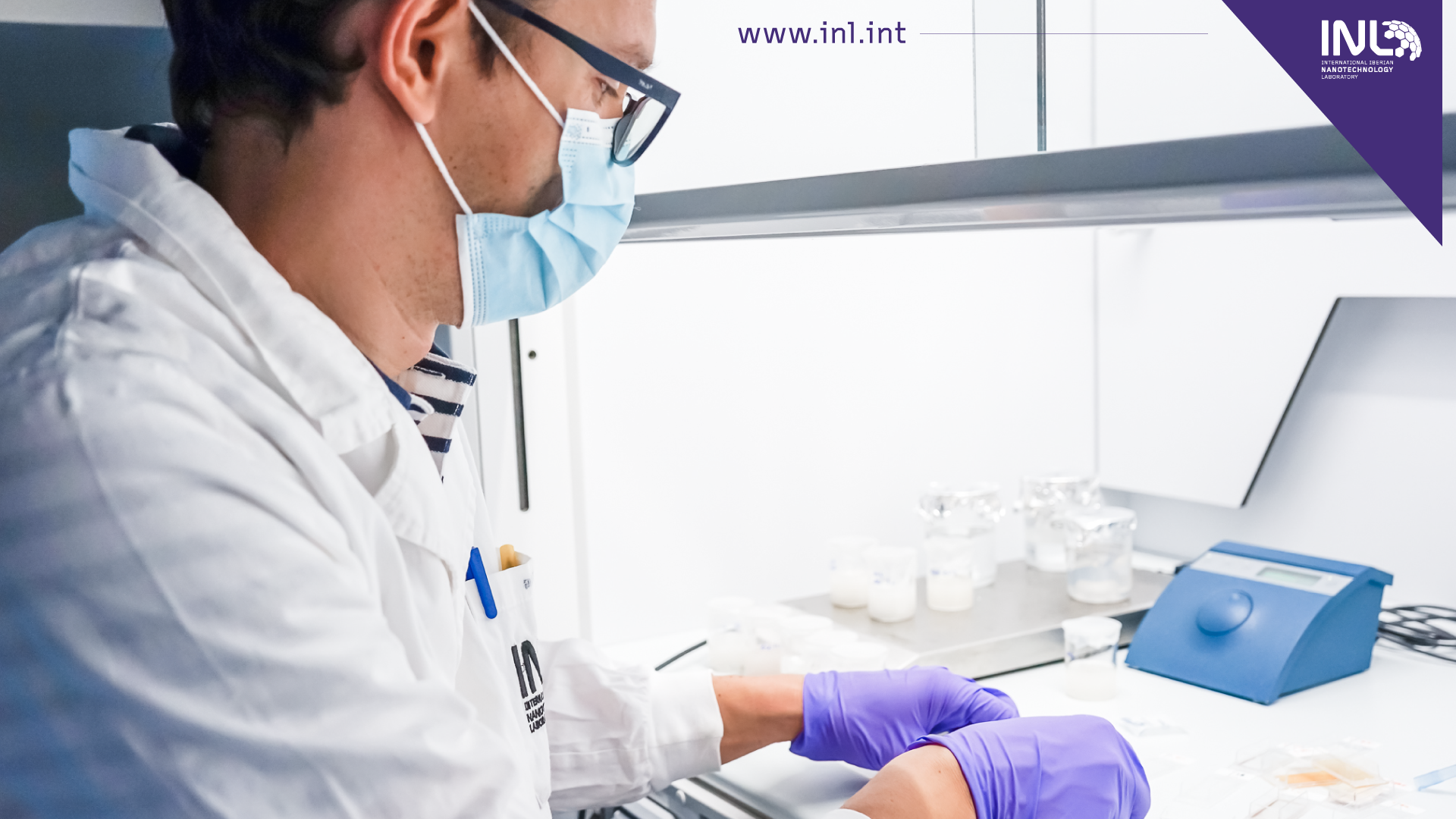
A circular economy is restorative and regenerative by design. This means materials constantly flow around a ‘closed loop’ system, rather than being used once and then discarded. In the case of plastic, this means simultaneously keeping the value of plastics in the economy, without leakage into the natural environment and reducing material usage and re-designs products to be less resource intensive.
BetterPlastics project aims to create new products, processes or services with high technological and innovative content, that contribute to the plastics value chain. At INL, researchers from the Food Processing and Nutrition group are using micro- and nanomaterials to control and improve the composting process of compostable bags.
Additionally, the INL team has developed food packaging solutions with improved barrier properties. Nanotechnology is the secret behind this novel approach – by incorporating nanomaterials and nanocoatings, researchers are designing new packaging materials with a good level of recyclability and maintaining their barrier properties to oxygen and water vapour.
According to Miguel Cerqueira, “the project BetterPlastics is one of the great initiatives in the area at the national and international levels. Plastic materials are one of the most fascinating materials used nowadays, however, their use is seen by some as a problem for the environment and society. In BetterPlastic, we looked at the challenges and tackled them with innovation and developing new products, processes and systems.“
FORGING – first scenario workshop on artificial intelligence

On the 16 and 17 February 2023 took place in Barcelona on the premises of i2CAT the first workshop on “Constructing Societal Scenarios for Artificial Intelligence (AI) ” organised in the framework of the FORGING Project.
AI, tech and social sciences experts worked together on a co-creation approach reflecting on the human and societal impacts of AI. The primary aim of this workshop was to confront societal futures with possibilities that emerging AI technologies may enable.
On the first day, together with the experts, the consortium partners focussed their efforts on identifying drivers and characteristics that define the societal futures of four different scenario skeletons, which are: group 1: continued growth; group 2: collapse; group 3: discipline; and group 4: technological transformation.
On the second day, all participants started creating narratives that describe the possibilities of AI applications for these scenarios. The overall workshop and the discussions in each group were facilitated by VTT.
In addition, this workshop gave the opportunity for exchanges between the project team and the experts and start the co-creation with the following underlying question: what is the role of Artificial Intelligence in society?
FORGING Project propose a new methodology that breaks linear innovation trajectories to stimulate new technological visions and pathways attentive to the environment and society, and human-centred in alignment with Industry 5.0. technological frameworks. FORGING will create enabling frameworks to accelerate the pick-up of novel and responsible enabling technologies: through the development of 6 Technological Pathways, emerging enabling technologies will be positioned at their maturity levels and their deployment and industry absorption will be promoted for positive societal impact.
For more information visit the FORGING Project, website.
Photovoltaics programme: developing novel materials and processes to improve the performance of solar cells
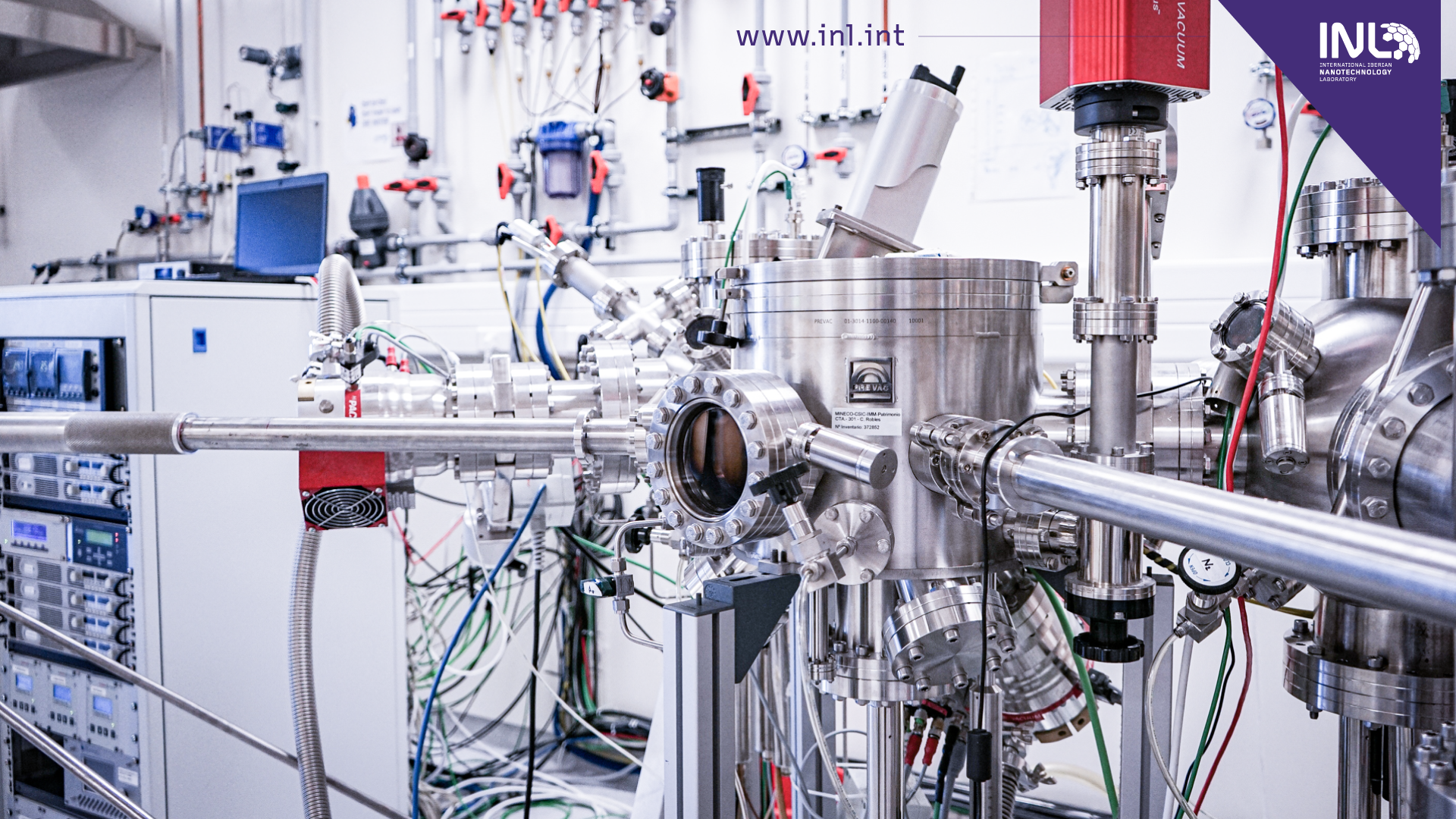
Solar cells, also called photovoltaic cells, convert sunlight directly into electricity. Crystalline silicon photovoltaic cells are the most common solar cells used in commercially available solar panels, and they benefit from decades of know-how and synergies with the microelectronics industry.
Even though silicon photovoltaic cells are extremely cost-competitive, current silicon manufacturing sites are mostly based in Asia and require extremely large investments. Moreover, silicon photovoltaic technology has poor low-light sensitivity, uses rigid modules, and the aesthetics are conservative and have other limitations that need to be addressed if photovoltaic is to be deployed in a larger number of applications.
The Clean Energy cluster at INL – International Iberian Nanotechnology Laboratory has different activities within the photovoltaics programme: developing novel materials and processes to improve the performance of solar cells – such as low-weight, flexible materials, and low-cost methodologies; enhancing photovoltaics by integrating new solar cell architectures with different micro- and nano-structures; expanding the photovoltaics use-cases such as developing agrivoltaics and neural networks/artificial intelligence for asset management.
We have several ongoing projects on photovoltaics. These projects are all highly collaborative, both with academia and industry, at different stages and technology readiness levels (TRL) and comprise both Portuguese (PRR, FCT) and European funding programmes (Horizon Europe).
-
Baterias 2030 (PT2020) The main objective is the development of urban energy generation, storage and management technologies. We are developing large-area and low-cost deposition techniques for perovskite solar cells and studying new approaches for interface passivation of semiconductors.
-
Design-Solar (FCT) We perform in-situ experiments to improve the performance of thin film Cu(In,Ga)Se2 (CIGS) solar cells, namely microstructural processes, phase transformations, defect formation and annihilation, elemental segregations, crystallinity and electronic properties.
-
REMAP (Horizon Europe) Emerging green technologies like micropatterned photovoltaics require high-quality patterning at scale/throughput that is hardly attainable economically and sustainably. REMAP envisions a new and green surface patterning technique based on the spontaneous formation of reusable magnetic masks.
-
R2UTechnologies (PRR) R2U or ‘ready to use’ aims to develop modular construction. INL will be developing tailored solar modules for building integrated photovoltaics that is flexible and low-weight – i.e. easy to install.
-
SITA (Horizon Europe) The main objective of the project is the development of tandem solar cells based on silicon and chalcopyrite technologies. INL is working towards the development of interface passivation strategies, developing solar cell architectures, and performing state-of-the-art characterisation to fully understand these new devices.
-
Enertex (GreenAuto) (PRR) INL will research, design and develop CIGS thin film solar cells that exhibit high performance. The work will also focus on the research of a method for the incorporation of cells in textile materials.
-
SmartPV (PT2020) We are developing a platform for the management of large photovoltaic assets by introducing advanced algorithms based on neural networks to evaluate the thermal imaging of photovoltaic modules.
-
ATE (PRR) The ‘alliance for the energy transition’ project aims to develop a number of renewable technologies. INL will work towards the implementation of agrivoltaics and support the implementation of a management asset platform.
INL Team together with The European agrodigitalization project HIBA at the Transfiere Forum

INL – International Iberian Nanotechnology Laboratory team and the Interreg HIBA-HUB IBERIA AGROTECH project were present until today, Friday, February 17, at the Foro Transfiere, the largest European forum for science, technology and innovation, which was held at the Malaga Trade Fair and Conference Center (Fycma).
In the forum, professionals of diverse institutional profiles (academic centers, technology centers, startups, public administrations, investors, etc.) have exchanged experiences and perspectives.
INL – International Iberian Nanotechnology Laboratory team and the Interreg HIBA-HUB IBERIA AGROTECH project were present in a booth and our teams showcased our latest technologies, we also organized a seminar in collaboration with the partners Finnova and INTEC. During the last three days, we also promoted the Iberia Conecta platform and the Iberia Conecta Startup Contest – a contest to identify startups that are making digitization proposals in the agri-food sector.
With more than 500 companies and more than 200 exhibitors, Foro Transfiere was a great opportunity to value the science, technology and innovation developed at INL and establish and foster new collaborations.
Next Page » « Previous Page -->INL – International Iberian Nanotechnology Laboratory team and the Interreg HIBA-HUB IBERIA AGROTECH project were present until today, Friday, February 17, at the Foro Transfiere, the largest European forum for science, technology and innovation, which was held at the Malaga Trade Fair and Conference Center (Fycma).
In the forum, professionals of diverse institutional profiles (academic centers, technology centers, startups, public administrations, investors, etc.) have exchanged experiences and perspectives.
INL – International Iberian Nanotechnology Laboratory team and the Interreg HIBA-HUB IBERIA AGROTECH project were present in a booth and our teams showcased our latest technologies, we also organized a seminar in collaboration with the partners Finnova and INTEC. During the last three days, we also promoted the Iberia Conecta platform and the Iberia Conecta Startup Contest – a contest to identify startups that are making digitization proposals in the agri-food sector.
With more than 500 companies and more than 200 exhibitors, Foro Transfiere was a great opportunity to value the science, technology and innovation developed at INL and establish and foster new collaborations.