News

Inl Global Local Photonics Meetup

Inl Global Local Photonics Meetup

On November 13th and 14th, INL joined the global initiative Photonics Online Meetup (POM) as a POM-hub, bringing together 100 photonics enthusiasts from 24 organizations across Northwestern Iberia for two days of insightful discussions and engaging sessions. The conference was broadcast from the auditorium, while the lobby provided a platform for networking and socializing. The event was attended by representatives from various academic institutions, including the University of Minho, University of Porto, University of Aveiro, University of Vigo, University of Santiago de Compostela, University of Coimbra, University of Lisbon, FCT NOVA Lisbon, as well as representatives from local photonics-related industries and small and medium-sized enterprises (SMEs). There were 42 poster submissions, and the best poster prize included student registration for the conference AOP2024 and the opportunity to be featured in the program as an invited speaker, sponsored by the Sociedade Portuguesa de Óptica e Fotónica. This event was sponsored by MT Brandão Lda and Izasa Scientific.

Read more
Revolutionising micro optics: INL researchers develop open-source software for advanced design and modelling

Revolutionising micro optics: INL researchers develop open-source software for advanced design and modelling

INL researchers, in collaboration with Bosch Car Multimedia and Bosch Security Systems, recently published an article on Computer Physics Communications, where they introduce a new open-source Python software that democratises the design and modelling of micro optical elements and flat optics. Micro optics can replace bulky traditional optics with sleek, micro and nanostructured alternatives, enabling more advanced optical functions. These components, produced with semiconductor microfabrication techniques, require precise binary or multilevel lithography masks to translate computed designs into physical components. However, no existing tool offers a complete solution for designing, simulating, and generating these masks – until now. INL researchers developed an open-source software package to fill this gap, by providing an end-to-end solution that allows users to design, simulate, and generate lithography masks for micro optical elements. João Cunha, a Marie Skłodowska-Curie Postdoctoral Fellow at INL, explains “with this new development it is possible to create masks directly from your desired optical functions, and export them as binary or multilevel lithography files (such as GDSII and DXF) compatible with standard microfabrication tools.” “This package addressed the challenge of producing surface relief diffractive optics by discretisation of continuous topographies into mask layers, required for specific micro and nanofabrication approaches, such […]

Read more
FUNLAYERS SUMMER SCHOOL

FUNLAYERS SUMMER SCHOOL

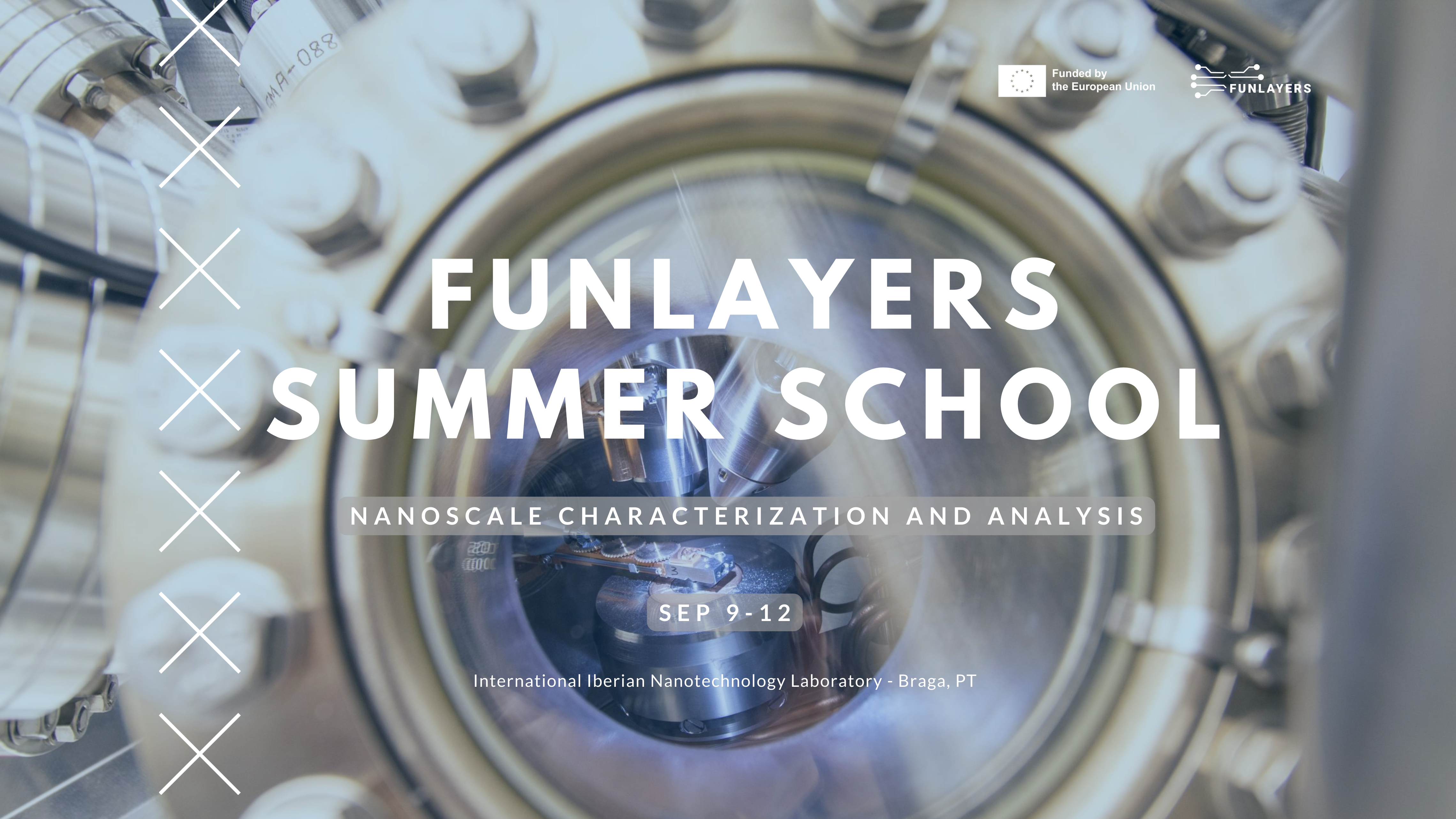
Training on Nanoscale Characterization and Analysis + Workshop on Transferable Skills In September, FUNLAYERS promotes a four-day initiative focused on Nanoscale Characterization and Analysis. The initiative is focused on students and early-stage researchers in nanoscience and materials science, and covers a wide range of subjects – from the basics to in-depth theoretical background and lab visits. The comprehensive programme is complemented by an insightful Workshop on Transferable Skills that will explore relevant competencies in communication, management, business, networking, and others. More information and registration link available at funlayersproject.eu/summer-school-2024

Read more
Advanced electron microscopy to investigate magnetic layered materials

Advanced electron microscopy to investigate magnetic layered materials

In a recent study published in Nature Communications, INL researchers Loukya Boddapati and Francis Leonard Deepak, along with an international team from Korea, Spain, the U.S., and the U.K., used cutting-edge electron microscopy, including low-temperature Cryo-TEM, to explore the structural phase transitions of CrI₃. CrI₃ is a novel magnetic material which has attracted significant attention for its unique ferromagnetic properties and potential applications in spintronics. The stacking configurations in van der Waals crystals significantly influence several material properties. Previous research has shown that stacking engineering is a powerful method for achieving desired properties through layer-by-layer crystal engineering. Controlling the twist angle between artificially stacked two-dimensional (2D) materials has led to the discovery of unconventional phenomena, ranging from superconductivity to strongly correlated magnetism. This study clarifies the complex relationship between these transitions and the material’s magnetic properties. In this study, cross-sectional TEM analysis was used to identify interlayer stacking disorders in CrI3. According to Francis Leonard Deepak, “the study provides evidence of twisted stacking faults in CrI₃ and reveals changes in the relative population of twisted domains, without the anticipated transition to the rhombohedral phase at low temperatures”. “These findings underscore the importance of understanding layer-dependent stacking order and magnetic properties […]

Read more
Researchers achieve quantum breakthrough with novel quantum-to-quantum Bernoulli factory design

Researchers achieve quantum breakthrough with novel quantum-to-quantum Bernoulli factory design

Unlike classical computers, which use bits to process information as either 0s or 1s, quantum computers use quantum bits, also known as qubits, which can represent and process both 0 and 1 simultaneously thanks to a quantum property called superposition. This fundamental difference gives quantum computers the potential to solve some complex problems much more efficiently than classical computers. INL researcher Ernesto Galvão, in collaboration with Sapienza Università di Roma (Rome) and Istituto di Fotonica e Nanotecnologie (Milan), recently published a groundbreaking study in the journal Science Advances, where they describe a new set-up for a quantum-to-quantum Bernoulli factory. A Bernoulli factory is a method to manipulate randomness, using as inputs random coin flips with a certain probability distribution, and outputting coin flips with a different, desired distribution. Let us imagine we have a coin that lands on heads with some unknown probability. Now, we want to create a new coin that lands on heads with a different probability, possibly described by a function of the initial probability. The Bernoulli factory is an ingenious way to flip our original coin multiple times and use the different outcomes to simulate the new coin with the desired probability. Ernesto Galvão adds “This […]

Read more
Instruct Hands-on Workshop

Instruct Hands-on Workshop

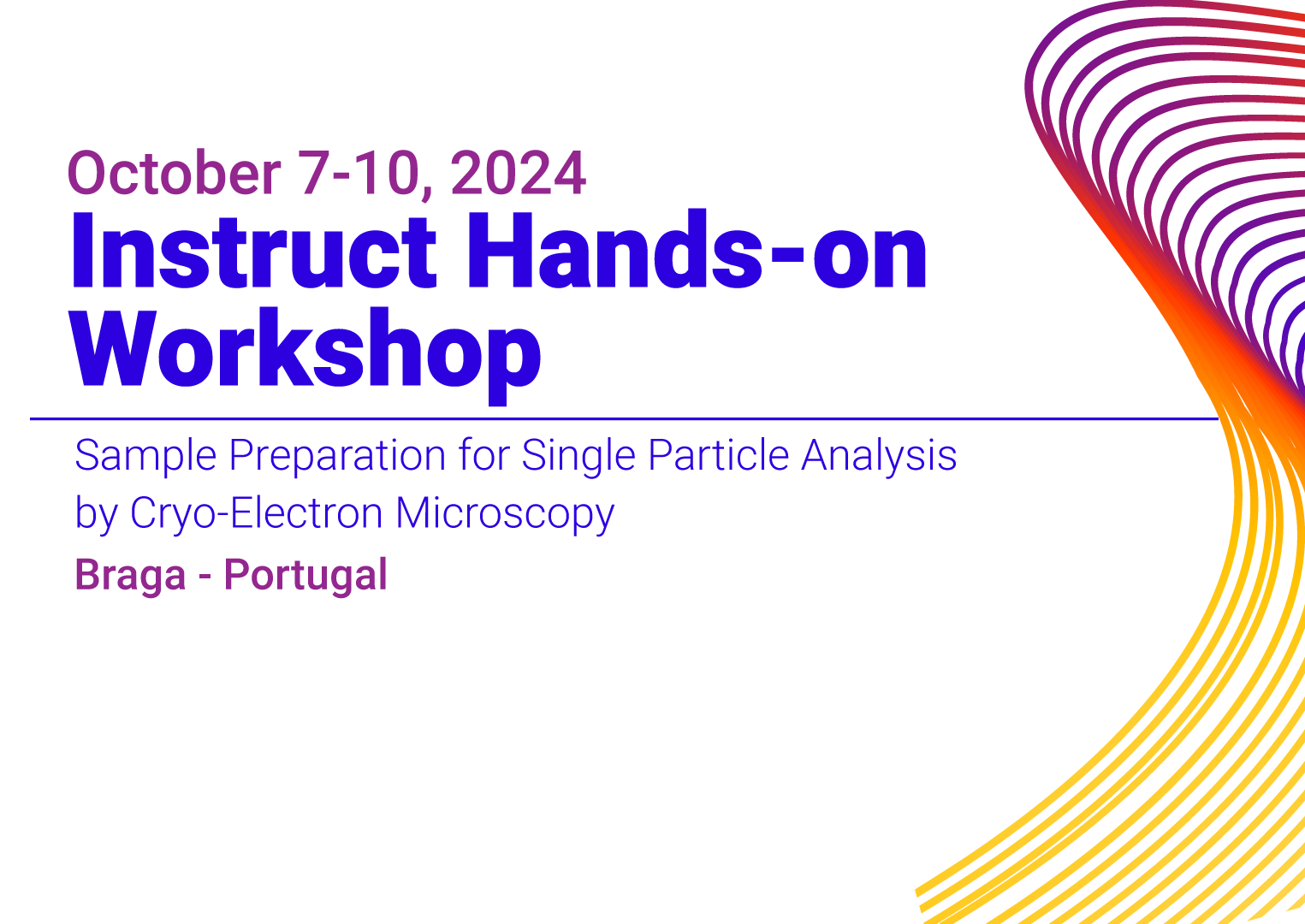
The Instruct Hands-on Workshop, held from October 7 to 10, 2024, is set to provide in-depth training on sample preparation for single particle analysis (SPA) by cryo-electron microscopy (cryo-EM). The workshop, hosted by a team of experts from ITQB NOVA, INL, and CNB–CSIC, aims to equip participants with best practices and the latest techniques in cryo-EM imaging. Participants will engage in a comprehensive course featuring a blend of lectures and hands-on tutorials. The lectures will delve into the principles of SPA, covering theoretical and practical aspects of preparing biological samples for negative staining and quality assessment. Practical sessions will offer hands-on experience with vitrification using a plunge-freezing device and optimising grids for sample screening with a cryo-transmission electron microscope (TEM). Attendees are encouraged to bring their samples, providing a unique opportunity to apply newly acquired skills to their specific research needs. The workshop will highlight recent advancements in protein production and stabilisation, as well as the latest technological innovations in grid preparation and sample manipulation. This integrative approach will be crucial for addressing challenging scientific projects. The workshop aims to provide participants with a holistic understanding of the integrated use of biophysics, biochemistry, and cryo-EM for protein structure determination and analysis. […]

Read more
Researchers Inspire Young Minds at Schools

Researchers Inspire Young Minds at Schools

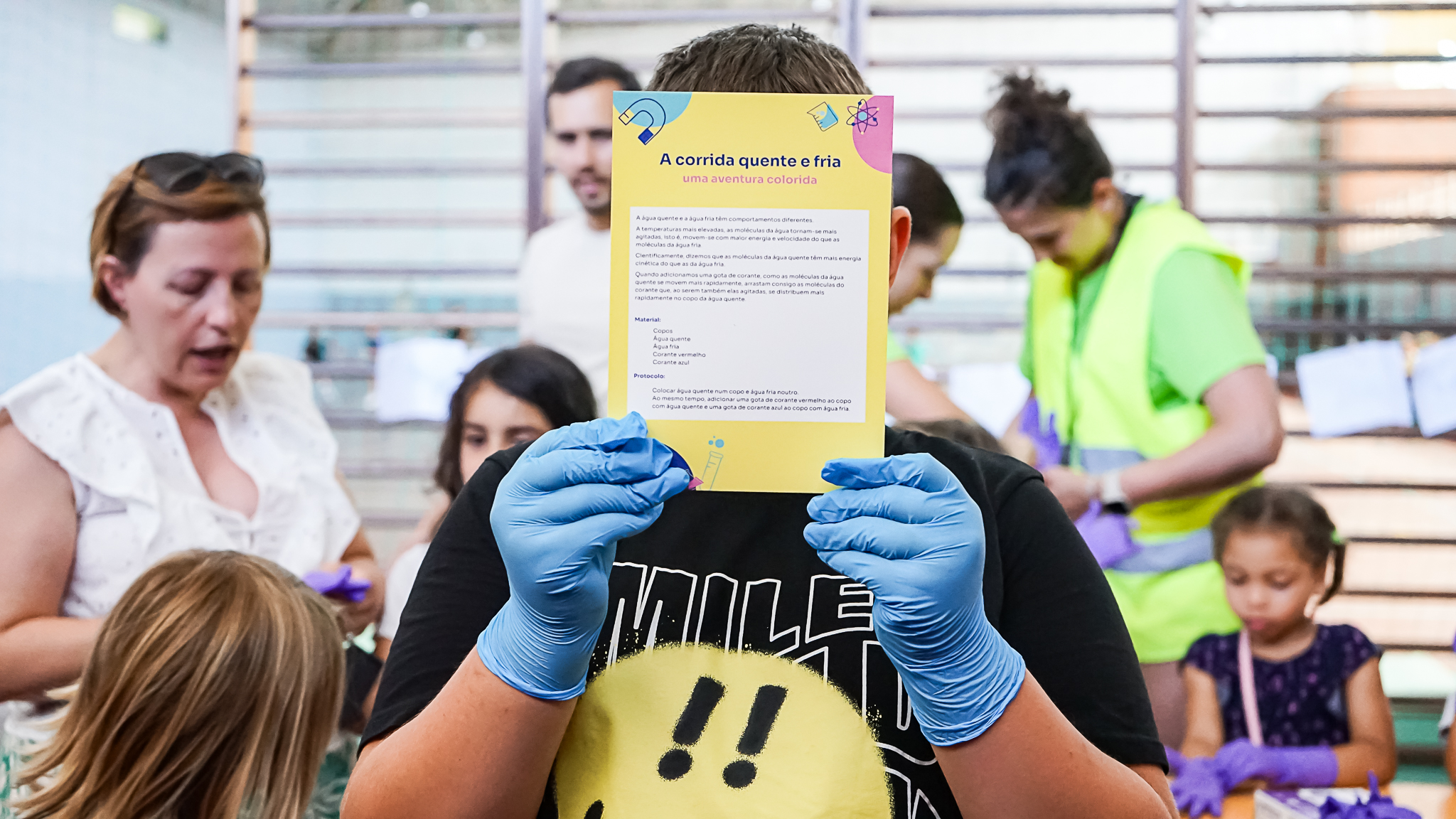
As part of the European Researchers’ Night initiative, researchers visited several schools in the summer camp program in Tadim-Braga to promote science and engage young students. These visits are part of the ongoing efforts to celebrate science and bring it closer to citizens, aligning with ERN’s 2024-2025 theme of “Science for Global Challenges.” July 4: Engaging the Young MindsOn July 4, a team of INL researchers, including Catarina Moura, Carlos Honrado, Adriana Carneiro, Bernardo Nogueira, Maria Relvas, and Tiago Moura, prepared different experiences for students of EB1 Tadim, EB2,3 Tadim, and Alfacoop schools. 45 students participated and built on their knowledge and interest in scientific topics. The activities conducted were designed to illustrate how science can address major global and European challenges in environmental, economic, and social sustainability. July 18: Continuing the Journey of DiscoveryOn July 18, researchers João Henriques, João Rodrigues, Lurdes Gonçalves, Diana Oliveira, Mariam Debs, Carlos Rosário, and Catarina Moura prepared different experiences, once again, for students of EB1 Tadim, EB2,3 Tadim, and Alfacoop schools. Students, aged between 4 to 14, participated in interactive sessions that sparked their curiosity and enthusiasm for science. These activities were tailored to suit the varied age groups, ensuring that each student […]

Read more
Filipa Lebre: Exploring the Frontier of Nanosafety

Filipa Lebre: Exploring the Frontier of Nanosafety

Filipa Lebre is a Research Fellow in the Nanosafety Research Group at INL, and her research focuses on the complex interactions among the immunological system and different organs, using novel technologies and in-house developed systems. Filipa has a background in Pharmaceutical Sciences and holds a PhD in Pharmaceutical Technology from the Faculty of Pharmacy, University of Coimbra, focused on the development and optimization of a polymeric nasal vaccine against hepatitis B to be used for mass immunization. She moved to Ireland during her postdoc to conduct her research at the interface between biomaterial and immunology, studying key aspects of immunomodulation by a relevant spectrum of materials with applicability in the regenerative medicine field. Could you share with us your professional trajectory and what inspired you to embark on a career in nanosafety? I’m very curious by nature and always had this passion and interest in science. When I did my degree in Pharmaceutical Science, I was fortunate enough to find a teacher who was working in the vaccine field and made me realize how I could use my passion to impact millions of lives. That was when I started to work with nanoformulations. I obtained my PhD in formulation development, […]

Read more
Can we cut the energy consumption of current AI technologies?

Can we cut the energy consumption of current AI technologies?

As artificial intelligence, commonly referred to as AI, becomes increasingly integrated into various aspects of our daily lives, the energy demands of AI systems continue to rise. Despite AI being inspired by the human brain, it is significantly less energy efficient because most tasks are implemented on computer hardware that is not specifically tailored for this purpose. The human brain remains an exemplar of energy-efficient computation, a standard that modern technology strives to replicate. INL researchers are studying advanced materials and devices aimed at revolutionising AI systems. Carlos Rosário, ERA fellow at INL (Marie Skłodowska-Curie actions (MSCA)), focuses his research on reducing the substantial energy consumption required by current AI technologies. Carlos’ work is grounded in the field of neuromorphic computing, which seeks to mimic the brain’s intricate network of neurons and synapses using artificial equivalents. The goal is to create an electronic brain capable of performing complex computations with minimal energy use. One of the key areas of Carlos Rosário’s research is the exploration of 3D topological insulators for novel electronic devices. These cutting-edge materials exhibit unique properties: while they are insulators and do not conduct electricity through their bulk, their surfaces behave like metals, allowing for efficient electrical […]

Read more
1 8 9 10 11 12 53