News

Denis Santos explores the critical role of sensors in ensuring safety and efficiency within the H2 Green Valley Agenda

Denis Santos explores the critical role of sensors in ensuring safety and efficiency within the H2 Green Valley Agenda

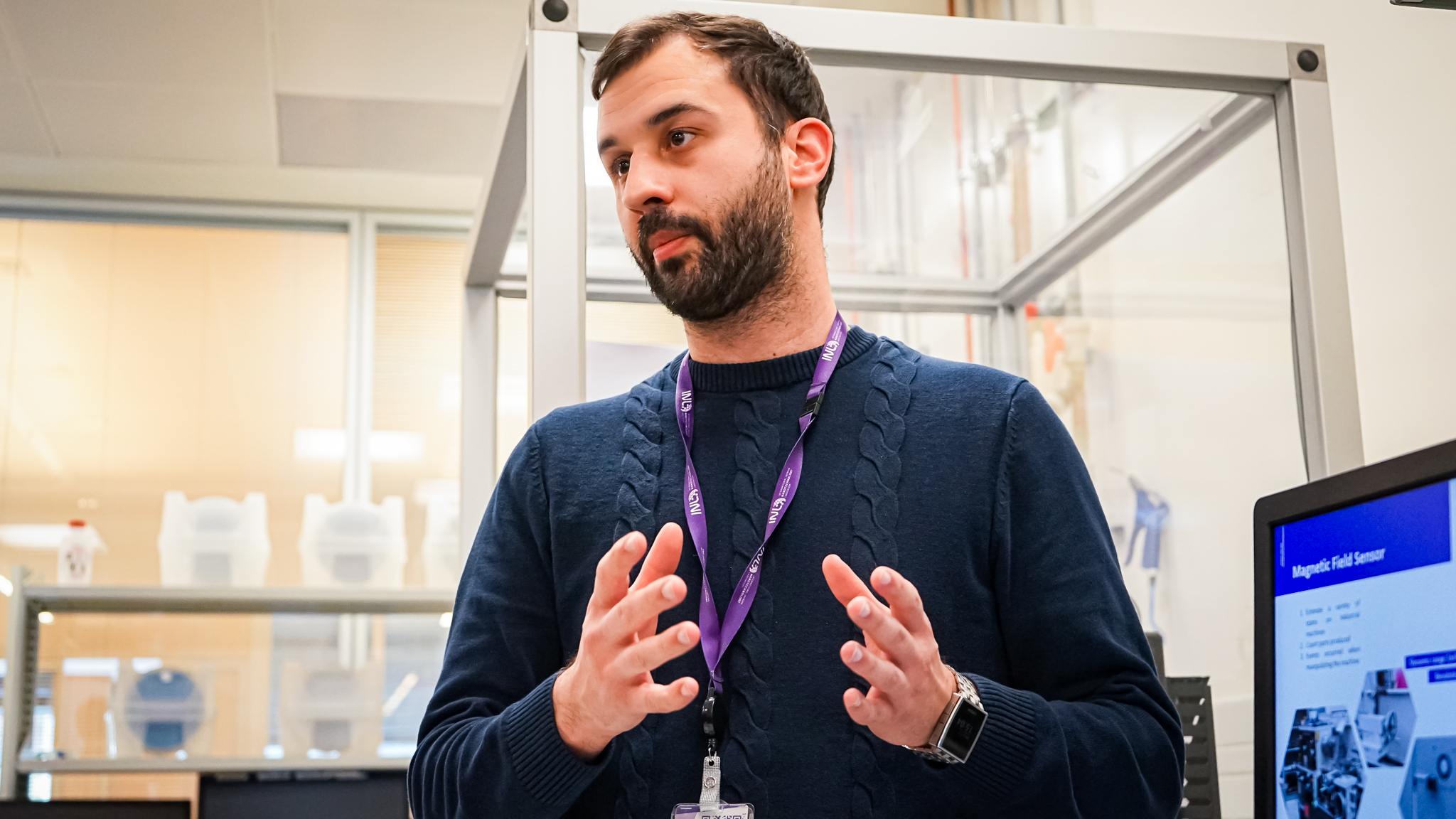
At INL, innovation is at the core of our mission to address global challenges. Dr. Denis Santos, a Research Engineer in the Piteira Research Group since 2023, is advancing sensor technology with applications ranging from biomedical fields to energy systems. In this interview, Denis Santos explores the critical role of sensors in ensuring safety and efficiency within the H2 Green Valley Agenda, Portugal’s leading green hydrogen initiative. He discusses how working on large-scale projects shapes innovation, balancing cutting-edge research with market needs, and emphasizes the importance of public trust in the scalability of hydrogen systems. With experience at CERN, Denis Santos offers a unique perspective on transforming research into real-world applications through industry partnerships and technology transfer. His work highlights the power of collaboration in building a sustainable, safe energy future. Dive into this interview to learn how advanced sensor technologies are shaping the path toward a greener tomorrow. In what ways could your work in sensors contribute to monitoring safety and efficiency in the green hydrogen value chain for the H2 Green Valley Agenda? Hydrogen holds great promise in both the stationary and transportation energy sectors since no harmful emissions are produced during its combustion and it is generally considered […]

Read more
Revolutionising Water Quality Monitoring: An Interview with Najib Ben Messaoud

Revolutionising Water Quality Monitoring: An Interview with Najib Ben Messaoud

We’re excited to introduce Dr. Najib Ben Messaoud, a Research Fellow in the Water Quality Research Group at INL. With a distinguished background in nanotechnology and sensing strategies, Najib’s work focuses on developing advanced methods for detecting water contaminants. His dedication to creating reliable tools for water monitoring spans health, environmental, and agricultural applications. In this interview, Najib shares insights into his journey, recent projects, and the impact of urbanization on water quality monitoring. Could you briefly describe your academic and professional background in water quality research? I hold a PhD in Engineering Physics with a specialization in nanotechnology sciences from the High School of Sciences and Technologies, Hammam Sousse, Tunisia. During my PhD, I focused on designing nanostructured electrodes and electrochemical (bio)sensors to detect carcinogenic substances in water. My journey in water quality research began about a decade ago during my master’s project, which involved detecting perchlorate in water. In 2019, I joined INL as a Research Associate, where I contributed to developing a portable system to quantify Aeromonas salmonicida in water. Since 2021, in my role as a Research Fellow, I have engaged in multiple projects related to water quality, including those focused on detecting nanomaterials, nitrite, and nitrate in […]

Read more
Engineering the Future: Patrícia Sousa on the Challenges and Innovations in Micro and Nanotechnologies

Engineering the Future: Patrícia Sousa on the Challenges and Innovations in Micro and Nanotechnologies

Introducing Patrícia Sousa, a pioneering Research Engineer in Integrated Micro and Nanotechnologies at INL. With a strong foundation in Chemical Engineering and a Ph.D. in Chemical and Biological Engineering from the University of Porto, Patrícia has specialized in microfluidics and advanced fabrication techniques that address critical challenges in micro and nanotechnologies. Patrícia’s dedication extends beyond the lab, as she actively participates in public outreach initiatives, including the European Researcher’s Night and educational programs in local schools. There, she shares her expertise in accessible and inspiring ways, illustrating how nanotechnology can transform fields such as medicine, electronics, and sustainability. In this interview, Patrícia offers insight into her career journey, the challenges and triumphs in her work, and her passion for making science accessible and impactful for all. Could you briefly describe your academic and professional background in micro and nanotechnologies? My academic background includes a first degree in Chemical Engineering, from the Faculty of Engineering, University of Porto followed by a PhD in Chemical and Biological Engineering, also from the Faculty of Engineering, University of Porto. Since my PhD studies focused on microfluidics, at that time I started deepening my knowledge in the field of micro and nanotechnology and in particular, micro […]

Read more
Innovative water repellent material to cut waste in the auto industry

Innovative water repellent material to cut waste in the auto industry

A groundbreaking project is underway to develop hydrophobic sleeves for painting robots, aimed at extending their lifespan and reducing waste in the automotive sector. Diana Alves, a researcher at INL – International Iberian Nanotechnology Laboratory, is working in the GreenAuto Agenda, and is working towards the development of super-hydrophobic coatings, specifically tailored for the automotive industry. These coatings possess unique properties that repel water. Instead of spreading, droplets form into spheres and roll off the surface, preventing the accumulation of moisture. Currently, the sleeves need to be regularly replaced, generating non-reusable waste. However, with the addition of superhydrophobic coatings, paint would be repelled, significantly extending the lifespan of the sleeves. Many current solutions for hydrophobic protection depend on PFAS, a group of fluorinated compounds known for their toxicity and environmental persistence. These chemicals degrade very slowly, remaining in the environment for extended periods. Despite their widespread use, the long-lasting nature of PFAS makes them a growing concern for health and environmental safety. To address this issue, Diana Alves and Kolen’ko’s research group are developing an alternative solution using nanomaterials that provide the same superhydrophobic benefits without the use of fluorine-based chemicals. The morphological properties of nanomaterials are engineered to control […]

Read more
INL researchers recognised among top 2% of scientists worldwide

INL researchers recognised among top 2% of scientists worldwide

INL researchers have received prestigious recognition by Stanford University, placing them among the top 2% of scientists globally. On the 16th September 2024, Stanford University published its latest global list of highly acclaimed scientists from various fields. The university maintains an accessible database featuring scientists with significant academic impact, providing standardised details on citations, h-index, co-authorship-adjusted hm-index, citations by authorship position, and a composite indicator (c-score). This data is made available separately to assess both career-long impact and the achievements of the year 2023. Remarkably, the following INL members have earned a place on the ‘World Ranking Top 2% Scientists’ list for 2023: Bruno Romeira, Joaquín Fernández-Rossier, Miguel A. Cerqueira, Nuno Peres, Paulo Ferreira, Sanna Sillankorva, Victor Souza, and Zhongchang Wang. Additionally, Joaquín Fernández-Rossier, Francis Leonard Deepak, Miguel A. Cerqueira, Nuno Peres, Paulo Ferreira, Sascha Sadewasser, and Zhongchang Wang, were recognised in the career-long analysis of the ‘World Ranking Top 2% Scientists’ list. Congratulations to INL researchers for their remarkable achievement! For the complete list, you can visit the following link.

Read more
Espiña and Kolen’ko Groups at XI NyNA 2024 in Santiago de Compostela

Espiña and Kolen’ko Groups at XI NyNA 2024 in Santiago de Compostela

From September 3 to 6, 2024, members of the Espiña (Water Quality) and Kolen’ko (Nanochemistry) groups from INL (International Iberian Nanotechnology Laboratory) participated in the XI International Congress on Analytical Nanoscience and Nanotechnology (NyNA 2024), held in Santiago de Compostela, Spain. The event brought together experts in analytical chemistry and nanotechnology to exchange cutting-edge developments and research under key topics such as Nano(bio)sensors, Nanomaterials for sample preparation, Analytical Nanometrology, and Detection, characterization, and quantification of nanomaterials. The INL researchers made a significant impact, presenting one plenary talk, two oral presentations, and one poster, demonstrating their leading role in these fields. Begoña Espiña from the Water Quality group delivered the Plenary Lecture (PL5) entitled “Nanotechnology-based sensors and materials for water contaminants monitoring,” discussing innovative approaches to the detection of harmful substances in water using nanotechnology. The talk highlighted advanced solutions for water quality management, showcasing the increasing importance of nanosensors in environmental monitoring. Javier Terán and Carlos Gonçalves contributed with oral presentations, further elaborating on analytical methods and strategies involving nanomaterials, while Joana Araújo presented a poster detailing recent research advancements. NyNA 2024 focused on fostering the growth of analytical chemistry concepts applied to nanoscience, with discussions spanning across nanotechnological applications and miniaturized nanosystems. With their substantial contributions, the Espiña and Kolen’ko groups continue to pave the way for innovation in the realms of water quality and nanochemistry. […]

Read more
INL welcomes the new Deputy Director-General

INL welcomes the new Deputy Director-General

Professor Doctor Ado Jório de Vasconcelos appointed to be the new Deputy Director-General of INL The Council of the International Iberian Nanotechnology Laboratory (INL) has announced the appointment of Prof. Dr. Ado Jório de Vasconcelos as Deputy Director-General of INL, effective from the 2nd of September 2024. He will join the Director-General of INL, Prof. Dr. Clivia M. Sotomayor Torres, to provide strategic direction and leadership. Together, they will bring INL into a new phase that is fit for the challenges faced by research organisations in a rapidly changing world that requires bespoke science excellence and innovation as expressions of social engagement. As Deputy Director-General, Prof. Dr. Jório de Vasconcelos will be responsible for driving innovation, fostering the institute’s mission of advancing nanotechnology research and innovation and promoting the organisation’s global impact on society. Professor Dr. Ado Jório de Vasconcelos has a distinguished career as internationally acclaimed researcher, university teacher and administrator, innovator, and policy maker. He brings a particular international dimension based on his career path in the Americas. The INL community looks forward to his arrival and to working with him. INL Directorate Office

Read more
Filipa Lebre: Exploring the Frontier of Nanosafety

Filipa Lebre: Exploring the Frontier of Nanosafety

Filipa Lebre is a Research Fellow in the Nanosafety Research Group at INL, and her research focuses on the complex interactions among the immunological system and different organs, using novel technologies and in-house developed systems. Filipa has a background in Pharmaceutical Sciences and holds a PhD in Pharmaceutical Technology from the Faculty of Pharmacy, University of Coimbra, focused on the development and optimization of a polymeric nasal vaccine against hepatitis B to be used for mass immunization. She moved to Ireland during her postdoc to conduct her research at the interface between biomaterial and immunology, studying key aspects of immunomodulation by a relevant spectrum of materials with applicability in the regenerative medicine field. Could you share with us your professional trajectory and what inspired you to embark on a career in nanosafety? I’m very curious by nature and always had this passion and interest in science. When I did my degree in Pharmaceutical Science, I was fortunate enough to find a teacher who was working in the vaccine field and made me realize how I could use my passion to impact millions of lives. That was when I started to work with nanoformulations. I obtained my PhD in formulation development, […]

Read more
André Araújo, an Electronics Engineer among Physicists

André Araújo, an Electronics Engineer among Physicists

André is a Research Engineer working in the Spintronics Research group at INL, and his focus is to provide technical hands-on expertise on advanced embedded systems and techniques, delivering solutions to interface sensors developed by the group. André holds an MSc in Electrical and Electronical Engineering from Universidade do Minho, specialising in embedded systems and technology systems and information. What are you currently focusing on in your work? Spintronics is a research group that has at its core the creation and fabrication of nanodevices, these devices comprise magneto-resistive sensors, oscillators, memristors and so on. Besides these research lines, there was always the need and interest to take this technology to the real world, testing it in a wide range of fields, and having industrial applications as the major target. Within this context, the group developed internally a hardware solution to acquire data from magneto-resistive sensors and software to accompany it, to serve as a data logger, a real-time data visualizer and an interpreter of data, both in time and frequency domains. The data can be analyzed, processed with filters and can be fed to AI algorithms to detect events and patterns which are relevant to the end user.  The need to […]

Read more
1 2 3 4 5 21