News

A microfluidic platform that simulates human digestion

A microfluidic platform that simulates human digestion

In a recently published study, INL researchers developed an innovative microfluidic platform that is capable of replicating key human gastrointestinal processes, offering a game-changing tool for the assessment of newly-developed drugs and/or food supplements. The innovation combines a ‘Digestion-Chip’ and a ‘Gut-Chip’, each enabling sequentially the simulation of digestion through the gastrointestinal tract and the evaluation of intestinal permeability. The study ‘From mouth to gut: microfluidic in vitro simulation of human gastro-intestinal digestion and intestinal permeability’, introduces a miniaturised setup that allows studies of sample bioaccessibility and simplified bioavailability using minimal sample amounts. In addition, the outflow from the ‘Digestion-chip’ can be exposed to the cell-based Gut-Chip, which replicates the intestinal epithelium, using unprecedentedly low sample dilutions thus allowing the detection of ‘rare’ compounds. Both devices work in continuous flow requiring very little user interfacing. In this work, casein – a milk protein that is widely used as a supplement in sports nutrition – was tested as a model compound. And critically, the Gut-Chip can be used to evaluate intestinal permeability offering reference permeability values that are in line to those found using human ex vivo models. Miguel Xavier, one of the first authors of the research study adds “the […]

Read more
INL Hosts Open Session to Explore Breakthroughs in Single-Cell Analysis for Personalized Oncology

INL Hosts Open Session to Explore Breakthroughs in Single-Cell Analysis for Personalized Oncology

On April 4th, INL – International Iberian Nanotechnology Laboratory, in collaboration with the BIOCELLPHE project, is set to host an Open Session focused on pioneering advancements in single-cell analysis. This exclusive event presents a platform to delve into the challenges and opportunities within the field of single-cell analysis. Participants will have the opportunity to engage in discussions with leading experts and researchers, exploring the potential impact of these advancements on personalized oncology. INL’s partnership in the BIOCELLPHE project underscores its commitment to driving innovation and fostering collaboration at the forefront of nanotechnology research. By hosting this Open Session, INL aims to facilitate knowledge exchange and stimulate dialogue among stakeholders invested in the future of healthcare and diagnostics. Don’t miss this opportunity to be part of a transformative discussion on the cutting-edge developments in single-cell analysis for personalized oncology. Join us at INL on April 4th and be a part of shaping the future of healthcare. BIOCELLPHE, a project funded by the European Union’s Horizon 2020 FET-OPEN programme under Grant Agreement No #965018, aims to revolutionize the identification of proteins as diagnostic biomarkers at the single-cell level, boasting unparalleled sensitivity, multiplexing capabilities, and portability. Registration for the event is now open. […]

Read more
Is greenhouse farming releasing microplastics into water?

Is greenhouse farming releasing microplastics into water?

In a recent study conducted by INL researchers, in collaboration with University of Alcalá, Madrid, it has been revealed that greenhouse plastic cover films, commonly composed of polyethylene (PE), are releasing microplastics into the environment during their usage, significantly impacting ecosystems. Microplastics are tiny plastic particles that can result from commercial product development or from the breakdown of larger plastics, and may take hundreds or thousands of years to decompose. Microplastics, defined as plastic particles smaller than 5 millimeters, and nanoplastics, typically smaller than 1 micrometre, have been identified in various ecosystems, including water bodies, soil, and even food and beverages. Their ability to penetrate biological barriers and interact with organisms raises significant concerns about their long-term impacts on biodiversity and human health. The study was conducted over a six-month period in Almeria, Spain, where extensive greenhouse farming is practiced, to better understand the consequences of plastic degradation. Most vegetables grown in these greenhouses are sown and harvested within 6 months, and water analysis was performed at several time points. Researchers from the Water Quality research group at INL and the University of Alcalá applied advanced characterisation techniques to assess the chemical fingerprint, size distribution, and concentration of plastic particles released […]

Read more
Nanotechnology for predicting and preventing seizures in neurological diseases

Nanotechnology for predicting and preventing seizures in neurological diseases

INL researchers are part of the European consortium CROSSBRAIN – a groundbreaking project aimed at developing microbots to predict and prevent seizures in individuals suffering from conditions such as epilepsy or Alzheimer’s disease. Within the complexity of our brains, neurons communicate through various signalling mechanisms, including chemical, thermal, and electrical changes. Many neurological disorders affecting the brain originate from abnormal electrical activity, leading to conditions such as epileptic seizures. When these abnormalities in electrical activity occur, prompt identification and swift intervention are vital for effective treatment. However, current technologies for monitoring and modulating brain activity with precision are very limited. CROSSBRAIN brings together leading researchers from across Europe to develop a new solution for predicting and preventing seizures in neurological conditions. Coordinated by researchers from Tor Vergata University of Rome, the consortium aims to create micro-sized robots that can be implanted in our brains. By combining cutting-edge computing and nanomaterials, CROSSBRAIN will enable precise modulation of brain tissue using various stimulation methods, including electrical, mechanical, thermal, and optical principles. The microbots, powered wirelessly by a compact central unit, will then be implanted through blood vessels, with the capability to deliver genetic material. Once integrated into the network of neurons, these […]

Read more
Detecting food allergens with paper microfluidics and a smartphone

Detecting food allergens with paper microfluidics and a smartphone

Every day, millions are at risk of falling ill due to undetected allergens or contaminants in their food. However, a groundbreaking solution may be on the horizon, as researchers investigate a game-changing technology to combat foodborne risks. The Food Quality and Safety research group recently published a study describing a cutting-edge technology that provides faster, cheaper, and more reliable detection of allergens like β-lactoglobulin in our food. Traditionally, detecting allergens in food products has been a complex and costly process. Current methods, including enzyme-linked immunosorbent assays (ELISA) and polymerase chain reaction (PCR), require specialised equipment and highly-trained personnel, making them difficult to use. INL researchers are contributing to reshaping the landscape of food safety with a new nanotechnology approach. Their pioneering approach? Fluorescent carbon quantum dots combined with aptamers, which are short, single-stranded DNA or RNA molecules that can bind to specific target molecules with high affinity and specificity. By leveraging the unique properties of carbon quantum dots and aptamers, the researchers have developed a highly sensitive and portable detection method for β-lactoglobulin, the primary allergenic whey protein found in cow’s milk. What sets this technology apart is its simplicity and effectiveness. The team has created a user-friendly platform that […]

Read more
INL advances heavy metal detection in industrial wastewater

INL advances heavy metal detection in industrial wastewater

The advances in industrial modernisation are driving research towards the development of new sensors for the Industrial Internet of Things (IIoT) or Internet of Robotic Things (IoRT), aiming to enhance efficiency, production rates, and quality standards. However, current solutions face technical limitations in accuracy, and adaptability to real-world conditions. The Next-Gen Quality Control (NGQC) IoRT project focuses on developing an automated monitoring system to detect heavy metals in industrial effluents. This ecosystem includes environmental monitoring, as well as wastewater. Pilot testing is currently underway at Stellantis in Mangualde, embracing the principles of Industry 4.0. The monitoring system is integrated into a wastewater treatment plant to understand its evolution and whether water quality limits are being exceeded. Raquel Queirós, staff researcher in the Water Quality Group, explains, “This system collects a small sample from the tank at the beginning and end of the process. This sample is then filtered to detect the presence of the heavy metals”. Samuel Silva, research fellow in the Water Quality research group, adds, “The developed electrochemical sensors have been optimised to detect nickel and zinc.” The prototype has integrated an algorithm that calculates and estimates the concentration of the heavy metals. “The system is able to […]

Read more
INL hosts ASCENT+ Research Accelerator Program

INL hosts ASCENT+ Research Accelerator Program

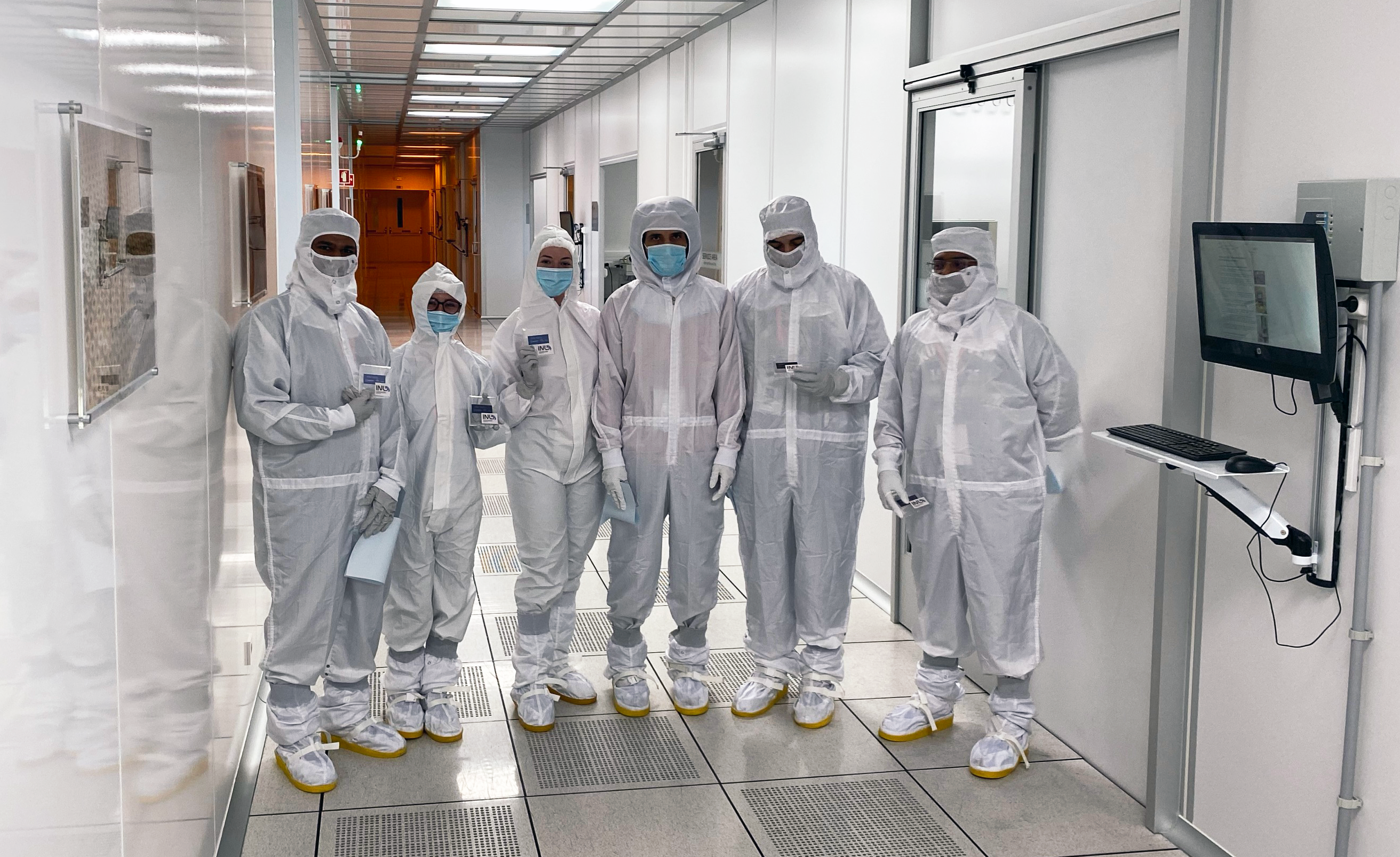
In January, the INL Research Core Facilities – Micro and Nanofabrication (MNF) and Advanced Electron Microscopy, Imaging & Spectroscopy (AEMIS) – hosted a special event focused on micro- and nanofabrication, electron microscopy, and spectroscopy techniques.  The event saw six participants from the ASCENT+ Research Accelerator come together for two and a half days of lectures and demos. During the event, participants were given a chance to see first-hand the different processing steps involved in microfabrication: deposition, lithography/patterning, and etching and electron microscopy and spectroscopy: SEM, FIB, XPS and TEM. The week’s highlight was an extended live demo of a microfabrication process inside the INL’s cleanroom.  The INL team was pleased to share their knowledge and contribute to the training of these promising researchers. Overall, the event provided an excellent opportunity for researchers to come together and learn about the latest techniques in micro- and nanofabrication. More about the project here. Text by Margaret Costa, Chief Operations Officer for Research Core Facilities and Patricia Barroso, Communication, Conferences, and Marketing Officer Photography by Andrea Gouvêa, Research Engineer, Micro and Nanofabrication Facility

Read more
INL researchers developed an autonomous monitoring system for grape ripening

INL researchers developed an autonomous monitoring system for grape ripening

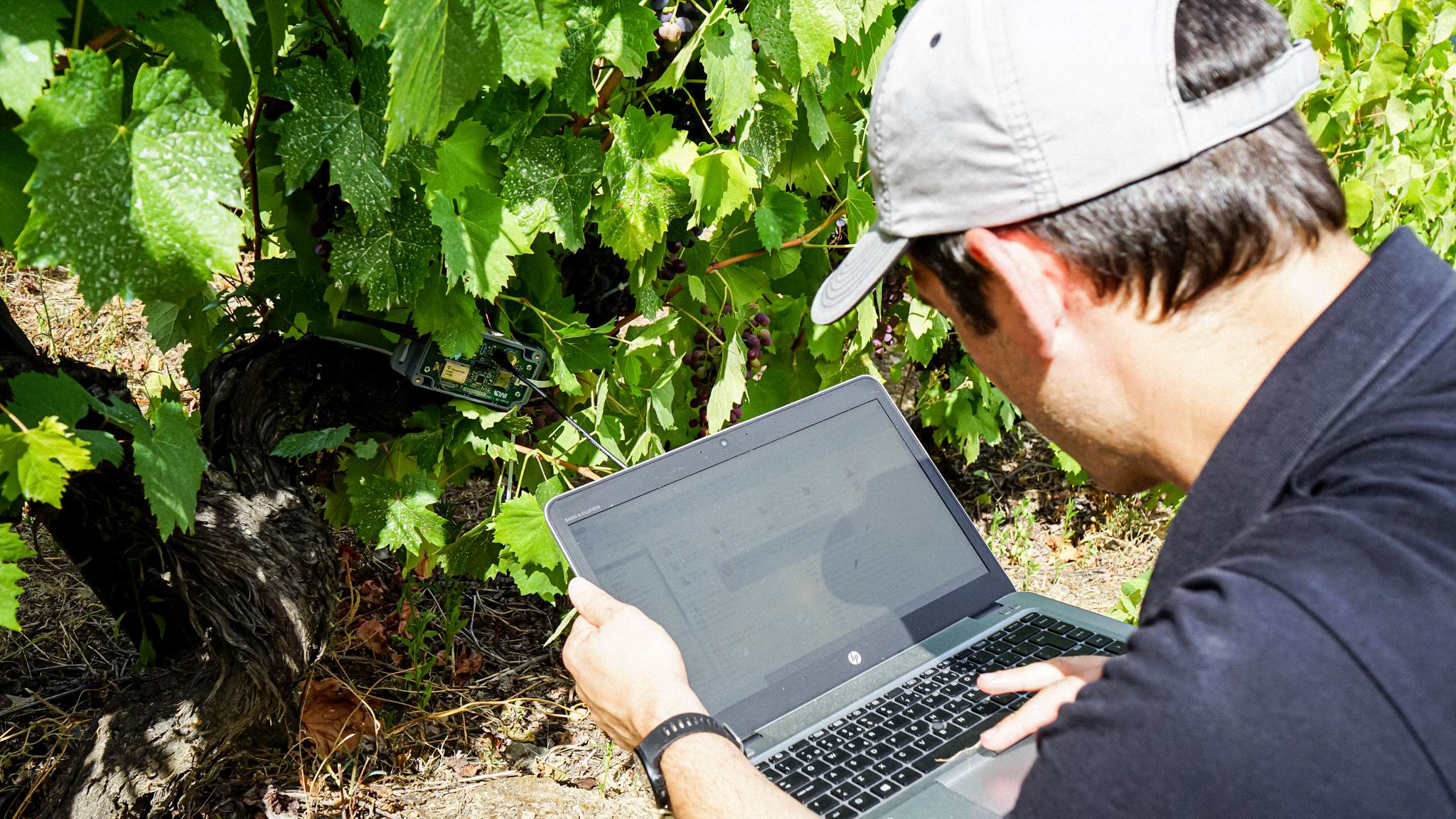
INL researchers have published a new study describing a novel prototype of a stand-alone system designed to autonomously collect grape ripening measurements. Climate change and the rapid transformation of economic value chains are driving the need for advanced decision-support systems in viticulture. The traditional method of monitoring grape maturation involves manual sampling and lab assays, but there’s a shift towards using optical techniques in agriculture. The Internet of Things (IoT) plays a key role in agriculture by connecting sensors, networks, and data processing. IoT is also one of the main drivers of precision viticulture, where the combination of multiple data sources can create complex tools for monitoring the vineyard. Hugo Oliveira, the main author of this study, explains “this IoT application involves using simplified spectral sensors to monitor grape ripening in real-time, providing analytical information about the grapes’ status. This work established the technology ground to achieve this objective”. The research work developed by INL researchers of the Systems Engineering and the Nanodevices groups, in collaboration with University of Milano, IMTEK, Sogrape, INESC-MN, and Automation, introduces a novel prototype of a stand-alone system which uses simplified spectral sensing to autonomously collect reflectance measurements directly from grape bunches. The system comprises […]

Read more
Nanotechnology uncovering the hidden secrets of cancer

Nanotechnology uncovering the hidden secrets of cancer

Metastasis, the spreading of cancer cells to other parts of the body, contributes to 9 out of 10 cancer-related deaths. However, the intricate mechanisms triggering this process remain a mystery. 3DSecret is on a mission to change that. The European consortium 3DSecret, coordinated by INL researchers from the Medical Devices research group, is approaching metastasis in a new way, focusing on single cells and aiming to uncover hidden patterns that can predict and forecast how cancer spreads. “By studying individual circulating tumour cells, or CTCs, 3DSecret hopes to transform how cancer is diagnosed and/or treated, making significant strides in clinical sciences”, says Miguel Xavier, technical coordinator of the 3DSecret project. In response to this challenge, 3DSecret has outlined specific objectives. At the forefront is the development of the ‘3Dsecret-chip,’ a sophisticated tool designed to facilitate the controlled creation of 3D cancer cell models from individual cells. This innovative approach promises reproducibility and precision, enhancing one’s ability to examine the details of cancer cell behaviour. Furthermore, 3DSecret is incorporating ‘SERS metabolomics profiling’, an advanced technology providing continuous insights into the growth kinetics of these 3D cancer cell models. Sara Abalde-Cela, leader of the Medical Devices research group and coordinator of the […]

Read more
1 3 4 5 6 7 9