News

Solar energy solutions inspired by nature

Solar energy solutions inspired by nature

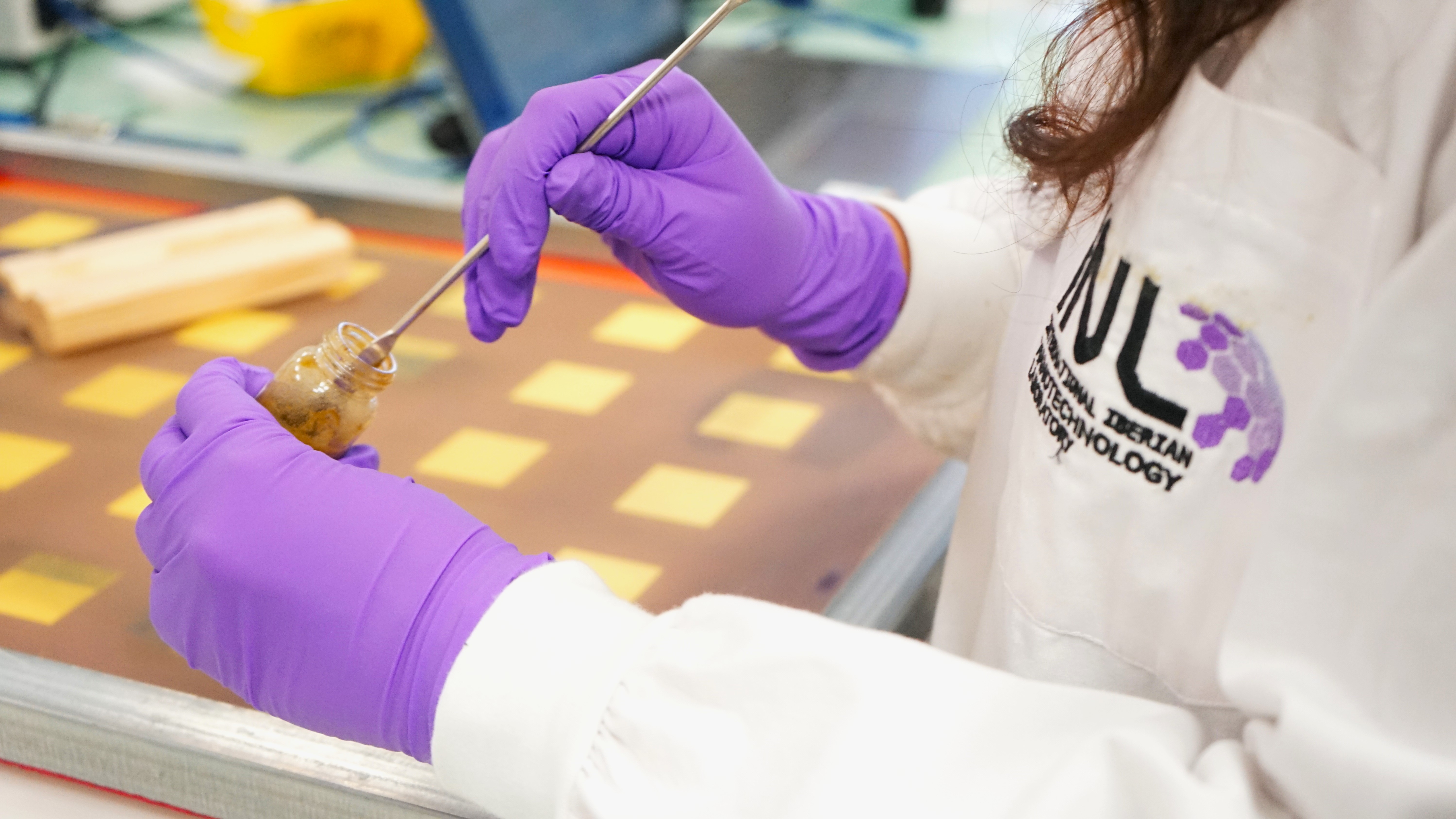
ADAPTATION is the new European-funded project, which involves collaborative efforts from Spain and Portugal. This Iberian consortium combines the scientific expertise from INL, Consejo Superior de Investigaciones Científicas (CSIC), University of Minho, and University of Vigo. ADAPTATION draws inspiration from nature, more precisely from photosynthesis. The project aims to develop an innovative technology to absorb solar energy for electricity generation while incorporating self-cooling capabilities to mitigate energy losses. Sara Núñez-Sánchez, researcher at the University of Minho and coordinator of the project, explains that “the survival of plants does not depend so much on the amount of energy they absorb but on how efficiently they transport that energy”. This mechanism is what the ADAPTATION project aims to mimic, creating a new concept for a solar energy conversion device. The efficiency of devices that convert energy into electricity, such as solar panels, tends to decrease as heat accumulates. “The integration of photovoltaic or solar energy capture technologies is incompatible with technologies that allow efficient temperature management”, says Pedro David García, a researcher at ICMM-CSIC. The Iberian team will focus on mimicking, at the molecular level, how natural photosynthetic tissues are organised to generate new materials at the nanoscale. “All the structures we […]

Read more
Understanding quantum entanglement

Understanding quantum entanglement

INL researchers have recently published a scientific paper describing a new method to confirm the presence of quantum entanglement. Similar to electricity and magnetism, quantum entanglement is a natural phenomenon that plays a central role in the most fascinating aspects of quantum mechanics. Quantum entanglement is a peculiar and counterintuitive occurrence that describes the intricate connection between two subatomic particles, even when they are separated by large distances. Any alteration made to one of these particles will instantaneously impact the other, defying the conventional expectation that distance should limit such influences. The idea that quantum entanglement can be used as a resource is fundamental to fields like quantum computing, quantum sensing, and quantum communications. To make use of quantum entanglement, it is crucial to develop tools for investigating it, which can be particularly challenging at the nanoscale. INL researchers have recently described a new technique to identify quantum entanglement, by using state-of-the-art equipment – electron spin resonance using scanning tunnelling microscopy (STM). Joaquín Fernández-Rossier, Theory of Quantum Nanostructures research group leader, says that “our proposal adds a completely new functionality to STM, establishing a connection between quantum information and surface science”. This work was supported by the Quantum Portugal Initiative […]

Read more
Solar-powered textiles in automotive innovation

Solar-powered textiles in automotive innovation

Exploring the integration of solar cells into textiles for the automobile industry presents an intriguing prospect. This innovation could extend to practical applications, such as using solar-charged fabrics to power electronic devices like phones, thereby enhancing the sustainability and functionality of future automotive designs. While textiles are primarily associated with clothing, they have a rich historical use in sailcloth, tents, and sacks. Leveraging textiles as substrates for solar cells could further expand their potential applications. However, the adoption of fabrics as photovoltaic substrates raises pertinent questions. Textiles must endure the necessary processing conditions to become photovoltaics; resulting solar textiles must withstand wear and tear, as well as washing and drying cycles. There might be a risk of solar cells compromising crucial physical or aesthetic features of textiles. Most commonly known photovoltaics typically consist of solar cells mounted on glass. However, their weight and fragility may pose challenges in certain applications. The exploration of lighter and more flexible solar cells presents potential advantages, including enhanced durability, cost-effectiveness, and resilience in harsh environments. “Integrating solar cells into textiles is technologically challenging,” explains Roma Raj, a researcher in the Nanochemistry research group. “A critical issue is the adhesion of thin photovoltaic films to […]

Read more
Regeneration after spinal cord injury, a project financed by CaixaResearch Health Research 2023 Contest

Regeneration after spinal cord injury, a project financed by CaixaResearch Health Research 2023 Contest

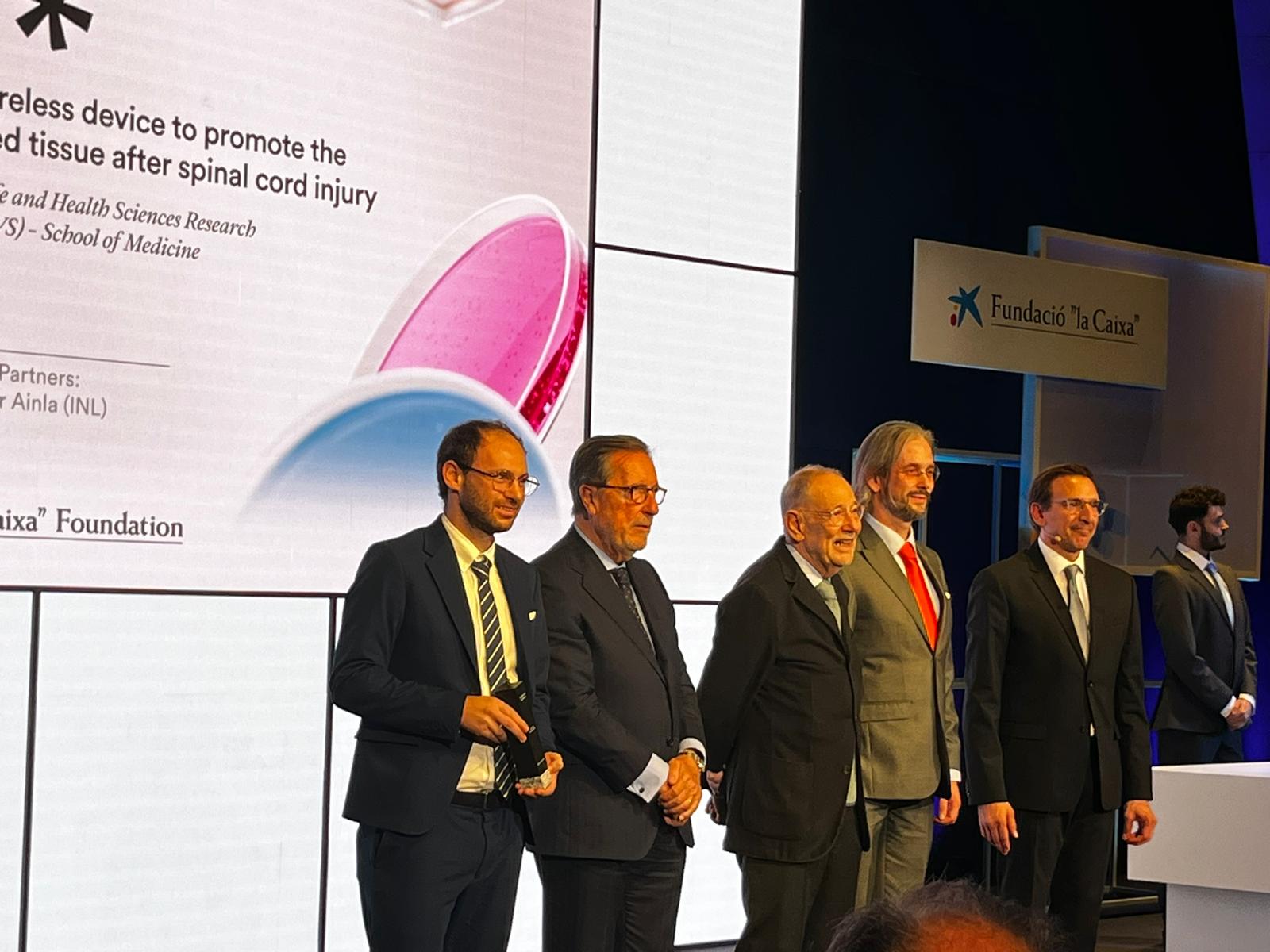
Alar Ainla from INL and Nuno Silva from the Institute of Research in Life and Health Sciences (ICVS) at the School of Medicine (EMed) won the CaixaResearch Health Research 2023 award, an initiative promoted by the “la Caixa” Foundation. The awardees were granted a prize of around one million euros for a project on spinal cord injuries that is based on the creation of a new device and treatment in order to regenerate nervous tissue leading to functional gains. ICVS leads this unique project and will allow a close collaboration between both institutes that will enable the interaction between experts in biology and technology in an area where it will be possible to boost innovation and the development of advanced solutions for the regeneration of spinal cord injuries. The World Health Organization (WHO) estimates that, annually, there are between 40 and 80 cases of spinal cord injuries per one million inhabitants. Although the survival rate of these people has increased significantly in recent decades, this type of injury continues to cause neurological disorders with enormous repercussions on the lives of affected individuals. Although some treatments allow partial recovery of neuronal functions, taking advantage of an intrinsic property of the central […]

Read more
Recent research reveals neuro-behavioural changes associated with exposure to diesel exhaust particles

Recent research reveals neuro-behavioural changes associated with exposure to diesel exhaust particles

Air pollution is known to increase the likelihood of neurodegenerative conditions such as Alzheimer’s and Parkinson’s disease. However, the exact mechanism involved in this relationship remains poorly understood. Diesel exhaust particles stand out as a prominent air pollutant with proven human carcinogenic properties, posing significant health risks, especially in the context of neurodegenerative diseases. Nivedita Chatterjee, a researcher from the Nanosafety research group at INL, is studying how diesel exhaust particles affect neurodegeneration, i.e. the slow and progressive loss of neurons. The INL team found that exposure to diesel exhaust particles causes significant neuro-behavioural alterations. Ernesto Alfaro-Moreno, Nanofatey research group leader explains that “this research work was developed under the project iCare – one of the objectives of this EU-funded project is to develop an integrated model system that can characterise and predict the potential impact of nanomaterials on brain health, thereby preventing nanomaterials toxicity”. Nivedita adds “to establish these models, we use Caenorhabditis elegans, often referred to as C. elegans, which is a very small and transparent roundworm that has been extensively studied in the field of biology. The knowledge gained from these studies on C. elegans often has broader implications for understanding more complex organisms, including humans.” The […]

Read more
Matryoshka-like MEMS accelerometer

Matryoshka-like MEMS accelerometer

Nowadays, MEMS (Micro-Electro-Mechanical Systems) accelerometers play a crucial role in various applications such as inertial navigation, earthquake detection, spacecraft guidance, geophysical sensing, and structural monitoring. These microfabricated structures offer advantages such as small size, lightweight, low cost, low power, and easy integration with semiconductor technology, making them widely adopted in different fields. Researchers at INL have recently published a study introducing a micromachining technique to create complex MEMS structures for multi-axis sensing. The developed sensor uses a capacitive open-loop operation and features a hierarchical design resembling matryoshka dolls. This design allows for simple fabrication and operation, making it suitable for structural monitoring systems. The sensor comprises a double proof-mass hierarchical design with separate electrode sets for in-plane differential measurements. It operates based on changes in capacitance resulting from accelerations in different directions – accelerations in the xx and yy directions affect the gap of the differential sensing electrodes, leading to a differential capacitance change, while zz acceleration affects non-differentially their overlapping area. To detect zz acceleration direction, out-of-plane parallel plates are added to the device using suspended metallic membranes. Inês Garcia, one of the authors of this study and a member of the IMiNa research group, explains that “the proposed […]

Read more
Advancing artificial intelligence using nanophotonics

Advancing artificial intelligence using nanophotonics

Nanophotonic Spiking Neural Networks (SNNs) are essential for creating efficient artificial intelligence (AI) systems inspired by the brain. These networks use tiny, efficient devices, that are smaller than a micron, to mimic the behaviour of neurons. However, there are challenges in developing compact and efficient components for generating and detecting spiking signals in these networks. In this recently published paper, a result of the European Union funded research project ChipAI, researchers discuss the difficulties, early successes, and opportunities for building a crucial photonic neural architecture using specific nanoscale devices called resonant tunnelling diodes, also known as nanoRTDs. These diodes act as artificial neurons that can generate rapid spikes. The INL team explores the potential for integrating nanoRTDs with small light-emitting diodes and nanolaser diodes to create both spiking signal emitters and receivers, all of which would be compact, fast, and energy-efficient. Bruno Romeira, one of the authors of this perspective article, explains “this paper addresses the benefits and challenges of developing small brain-inspired light-based computing systems, where the key feature is the use of light pulses, or spikes, to encode information. This approach is inspired by the way biological brains process information, as spikes are used to encode and transmit […]

Read more
Evaluating the “quantumness” of a quantum computer

Evaluating the “quantumness” of a quantum computer

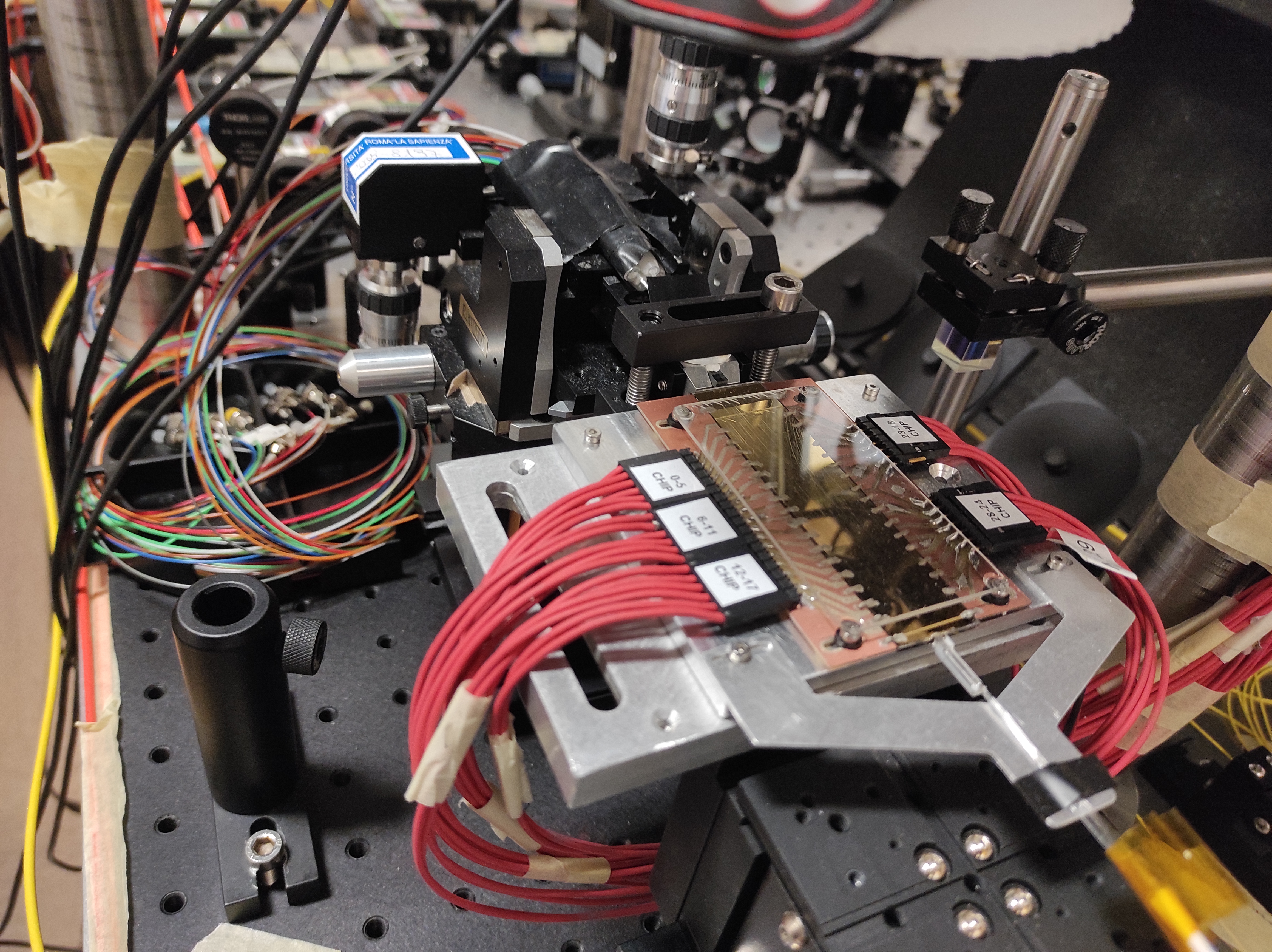
Programmable optical circuits are one of the leading architectures for quantum information processing. They enable tests of key aspects of quantum mechanics, and they have various applications in fields like metrology, cryptography, and computation. These devices handle information in a non-traditional way, using quantum states of light. As programmable optical circuits become larger and more complex, there is an increasing need for reliable methods to confirm their quantum capabilities and determine the most effective ways to use them for information processing. INL researchers, in a strong collaboration with Sapienza University of Rome, CNR-INF (Consiglio Nazionale delle Ricerche e Instituto Nazionale di Fotonica), and Politecnico di Milano, have recently published a new study that demonstrates how to certify several quantum properties of devices of increasing complexity. The paper was published on November 3rd in the journal Science Advances (full publication here). The experiments, led by Prof Fabio Sciarrino and carried out at the Quantum Lab group in Sapienza University, certified the presence of genuine quantum characteristics such as contextuality and coherence in a programmable integrated optical circuit. Dr Taira Giordani, lecturer at Sapienza University and member of the Quantum Lab team, explains that “this work is the first experimental application of […]

Read more
uPGRADE project meeting takes place at INL

uPGRADE project meeting takes place at INL

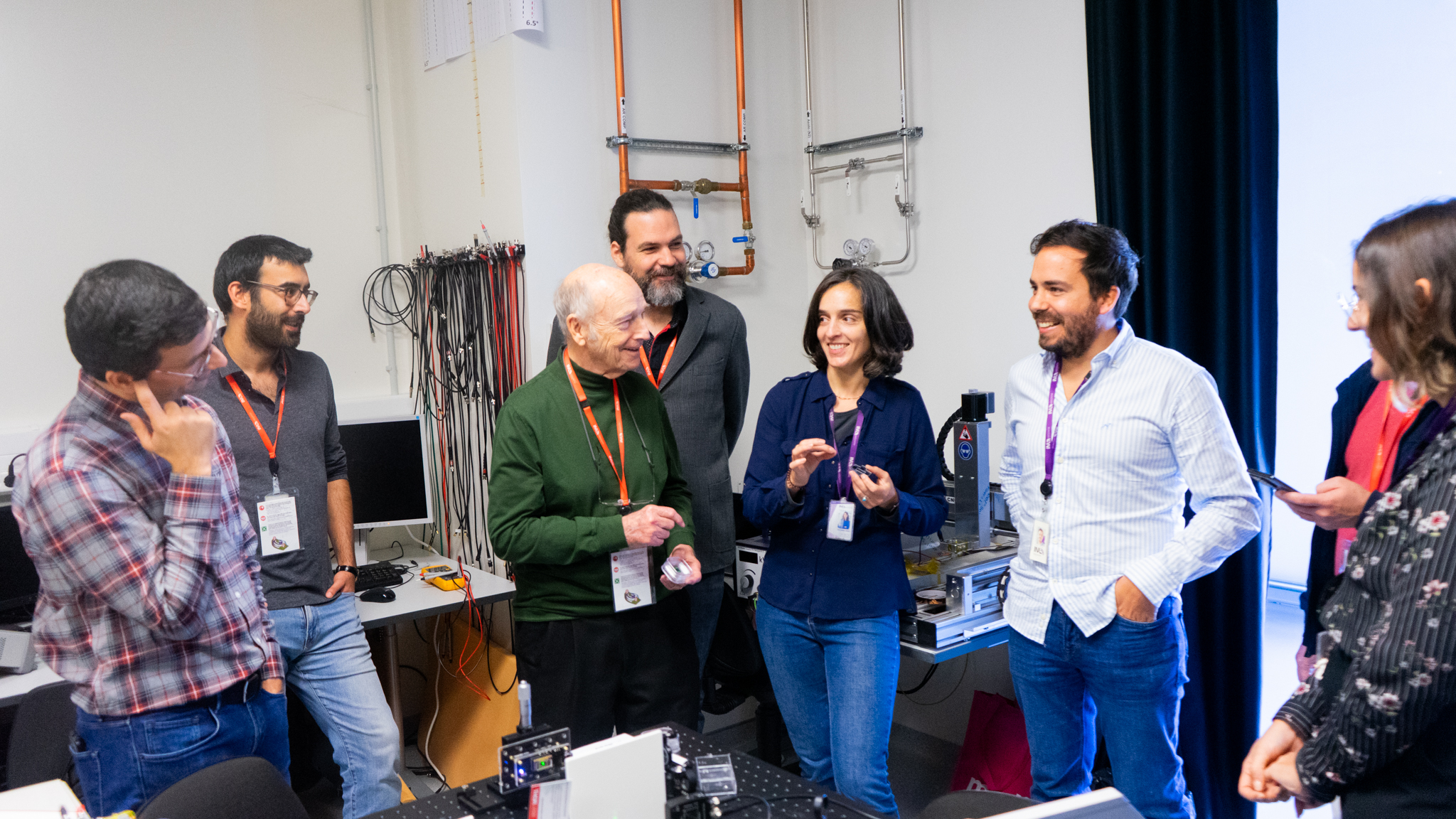
The final meeting of the uPGRADE project was held on Monday, October 23, at INL – International Iberian Nanotechnology Laboratory.  The meeting attendees included Spin.Works, the leading company, ISQ – Instituto de Soldadura e Qualidade, and a team from the University of Texas Center for Space Research at Austin, represented by Dr João Encarnação (currently at TU Delft) and the distinguished Professor Byron Tapley. Professor Tapley is responsible for the major space missions GRACE and GRACE-FO, which have provided instrumental gravimetric data for the understanding of climate change in recent decades. Rosana Dias and Filipe Alves from the Integrated Micro and Nanotechnologies Research Group coordinated INL and UMinho’s work on the uPGRADE project.  The uPGRADE CubeSat is part of the ‘goPortugal – Global Science and Technology Partnerships Portugal’ initiative and is co-financed by the FEDER program, through Compete2020 of the European Union, by the Regional Operational Programs, and by the Foundation for Science and Technology (FCT).  During the meeting, the team members reviewed the project’s significant conclusions and hurdles, as well as the next steps and plans for further collaboration, including planning the uPGRADE satellite launch.  Both Portugal and Texas team members considered the project a success, and uPGRADE is […]

Read more
1 4 5 6 7 8 9