News

INL strengthens collaborative ties with Argentine researchers

INL strengthens collaborative ties with Argentine researchers

The governments of Argentina, Portugal and Spain signed a memorandum of understanding to strengthen scientific and technical cooperation between the three countries in the area of nanotechnology. The objective is to develop joint projects in the area of nanotechnology and encourage the training of highly qualified human resources. The document will facilitate the access to Argentine institutions of science, technology and innovation, researchers, students and companies to the research facilities of the International Iberian Nanotechnology Laboratory. The memorandum was signed by the Argentine Minister of Science, Technology and Innovation, Lino Barañao, the Portuguese Minister of Education and Science, Nuno Crato, and the Spanish Ambassador Eduardo Junco, representing the Spanish Secretary of State for Research, Development and Innovation, Carmen Vela, on March 11th in Lisbon.

Read more
Theory Group Research on “Control of single-spin magnetic anisotropy by exchange coupling” published in Nature Nanotechnology

Theory Group Research on “Control of single-spin magnetic anisotropy by exchange coupling” published in Nature Nanotechnology

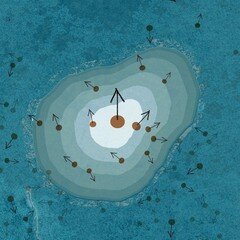
When directly on a metal surface, the magnetism (black arrows) of a single cobalt atom (orange circles) is screened by strong interactions with the surrounding metallic sea (blue). By moving these atoms towards the centre of an island of thin insulator material (white), we can gradually decrease that strength of that interaction, which results in a remarkable enhancement of the magnetic anisotropy. Image Credit: Alfaro Cuevas (http://alfarocuevas.blogspot.com/) The energy needed to change the magnetic orientation of a single atom can be modified by varying the atom’s electrical coupling to nearby metals. The capability to determine an atom’s magnetic orientation provides control over its magnetic stability and therefore its usefulness in a variety of future device applications. This striking result was published in the current edition of the journal Nature Nanotechnology by an international group of scientists working at International Iberian Nanotechnology Laboratory (Portugal), the London Centre for Nanotechnology (LCN) at UCL (UK), the University of Zaragoza (Spain), and the Max Planck Institute of Microstructure Physics (Germany). Read more here. Journal link: Control of single-spin magnetic anisotropy by exchange coupling. doi: 10.1038/NNANO.2013.264

Read more
10 research projects selected under INL-Brazil collaboration

10 research projects selected under INL-Brazil collaboration

10 nanotechnology research projects were selected within the INL-Brazil collaboration agreement (CAPES/INL call). The projects will be developed in Brazilian research centers in collaboration with the International Iberian Nanotechnology Laboratory. This initiative arises from the Memorandum of Understanding signed at the International Iberian Nanotechnology Laboratory (INL), earlier this year, between the governments of Brazil, Portugal and Spain. The results of the 1st call launched by the Brazilian Ministry of Education (CAPES) can be found here. The collaboration agreement allows the access of Brazilian researchers and students to INL’s state of the art facilities and promotes increased awareness and mobility among the different centers. The main areas of cooperation are electronic nanodevices, nanostructures and nanoparticles for applications in nanomedicine, environment control and water and food quality monitoring.

Read more
Spintronics in Graphene – 11 PhD & 4 Post-Doctoral Positions available

Spintronics in Graphene – 11 PhD & 4 Post-Doctoral Positions available

The SPINOGRAPH – “Spintronics in Graphene” is a Marie Curie Initial Training Network (ITN) providing state-of-the-art training for early-stage researchers (ESR) and Experienced Researchers (ER) in the field of Spintronics in Graphene. The network brings together 9 world-leading partners and offers a total of 11 Early Stage Research (ESR) PhD positions for 36 months and 4 Experienced Researcher (ER) post-doctoral positions for 24 months. Host institutions are INL, Braga, Portugal-Coordinator (2 PhD), AMO GmbH, Aachen, Germany (1 postdoc), CIC Nanogune, San Sebastian, Spain (2 PhD), CNRS, Paris, France (1 postdoc), CSIC Madrid, Spain (2 PhD), Graphenea, San Sebastian, Spain (1 postdoc), University of Aachen, Germany (1 PhD, 1 Postdoc), University of Groningen, Netherlands (2 PhD), University of Manchester, UK (2 PhD). The recruited researchers will participate in challenging and exciting projects at the forefront of research on Spintronics in Graphene and benefit from several network-wide schools, workshops and specific training courses. More information here.

Read more

Brazil, Portugal and Spain Begin Major Collaboration at INL

A call for projects involving Brazilian companies as well as Brazilian research, technology and innovation organisations have been launched. This is the result of the Memorandum of Understanding signed at the International Iberian Nanotechnology Laboratory (INL), March 8th. The agreement signed between the governments of Brazil, Spain and Portugal is based on previous cooperation agreements and establishes the framework for the role of INL in the development of training and research activities in Nanotechnology. The Memorandum of Understanding was signed during the visit of the Brazilian and the Portuguese Ministers of Science and Education, Aloizio Mercadante and Nuno Crato, to INL and it will facilitate the access for Brazilian science, technology, and innovation centres as well as for students, researchers and companies to INL state of the art facilities. The main areas of cooperation are nanodevices, nanoelectronics, nanoparticles applied to nanomedicine, environment control and water and food quality monitoring. link to call Photo: (L-R) Jose Rivas, Director General of INL; Aloizio Mercadante, Brazilian Minister of Education and Science; Nuno Crato, Portuguese Minister of Education and Science; and Paulo Freitas, Deputy Director-General of INL – credit – WAPAphoto.

Read more
INL involved in EC´s coordinated approach to promote the safety of nanomaterials

INL involved in EC´s coordinated approach to promote the safety of nanomaterials

The International Iberian Nanotechnology Laboratory (INL) participates in the European Commission’s NANoREG project on the safety of nanomaterials. At INL, the goal of this four-year project is to establish and test specific measurement and characterization methods and offer a wide set of well‐characterized manufactured or engineered nanomaterials (MNMs). The industrial use of nanomaterials has grown significantly, therefore more knowledge about the health and environmental hazard impacts of nanomaterials is necessary. Interest in the use of nanomaterials is considerable, as they can be used to improve product characteristics; for example, nanoparticles help make a surface self-cleaning through a hydrophobic coat of paint; but the safety of these nanoparticles raises questions. The fast development of nanomaterials and their presence on the market make it necessary to evaluate their environmental and health impacts. The project aims at developing guidelines for safe usage, risk management and safety instructions while assessing the need for new legislation. NANoREG is a FP7 project aiming to deliver the answers needed by regulators and legislators on EHS by linking them to scientific evaluation of data and test methods. The NANoREG consortium joins governmental authorities, research institutes and companies from 14 European countries. With this project, we will get not […]

Read more
INL facilities open to external users

INL facilities open to external users

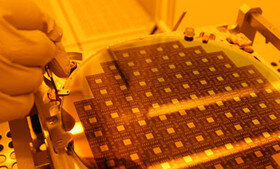
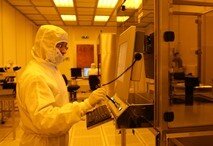
The International Iberian Nanotechnology Laboratory provides 22,000 m2 of laboratory space and state-of-the-art equipment for various research areas. INL scientific facilities are fully operational since the beginning of 2011 and cleanroom processes and laboratory equipment are now available for external users. The cleanroom provides class 100 and class 1000 laboratory space dedicated to nanolithography, photolithography, wet process, planarization, reactive Ion etching, deposition, and analytical instrumentation for process and device characterization. A separate biology bay completes cleanroom key capabilities. The central Biology and Biochemistry facility provides support for groups developing research in these areas, including specific facilities for molecular biology, microbiology, bio-imaging facility. The high accuracy laboratories offer a detailed structural characterization of thin films, interfaces, nanostructures, and biological structures. Available techniques include atomic force microscopy, surface analysis by XPS, electron microscopy including a probe corrected TEM, FIB and environmental SEM. Other support labs provide state-of-the-art equipment for optical imaging, spectral ellipsometry, magnetometry, radiofrequency device characterization, MEMS, and nanochemistry/spectroscopy. External users can check equipment and process availability at INL website, as well as the contact person for the particular item. Conditions of use are as follows: 1 -external users coming to INL within approved collaborative projects (FCT, CSIC, European union, companies, […]

Read more

Chad S. Korach delivered talk on the Mechanics of Dental Enamel and Mineralized Bio-Nanocomposites at INL

«Mechanics of Dental Enamel and Mineralized Bio-Nanocomposites» is the title of the talk delivered by Dr Chad S. Korach, June 28th, at the International Iberian Nanotechnology Laboratory (INL), in Braga. Dr Chad S. Korach is Assistant Professor and the Director of the Laboratory for Nanotribology and Wear Mechanics in the Department of Mechanical Engineering at Stony Brook University. Abstract Enamel, the hardest substance in the human body, takes the form of a protective crown on teeth and is a human’s only exposed hard tissue. Though enamel is a robust biological composite with high hardness and rigidity, it is susceptible to significant localized wear in the form of cervical lesions. The aetiology of the lesions is attributed to high mechanical stresses in the cervical region and the abrasion of the surface combined with erosive. The unique hierarchical microstructure of enamel plays an important role in the wear process. Here, the mechanics of enamel is studied by instrumented micro scratching and atomic force acoustic microscopy (AFAM) to observe the effects of erosive application on surface damage formation. Relationships between applied stress and enamel erosion are developed. In addition, quantitative AFAM is used to measure the nanomechanical properties of enamel associated with microstructural […]

Read more
INL installs LPX Pegasus ASE, a Deep Silicon Etch (DRIE) with a broad range of challenging applications

INL installs LPX Pegasus ASE, a Deep Silicon Etch (DRIE) with a broad range of challenging applications

Advanced Silicon Etch (ASE) is a deep reactive ion etching (DRIE) technique used to rapidly etch deep and high aspect ratio structures in silicon. LPX Pegasus is the continuation of STS’ Advanced Silicon Etch (ASE) technology. Through an in-depth understanding of the Bosch process and with the required hardware, Pegasus is able to provide excellent profile control and selectivity. The increased etch rate and improved uniformity lead to higher throughput and device yield, resulting in increased productivity. This inductively de-coupled plasma (IDP) system uses fluorine-based gases for anisotropic deep silicon trench etching. The 13.56 MHz RF power supply produces high-density, low-pressure, low-energy plasma. This type of plasma allows high selectivity and aspect ratio etching for depths greater than 150 microns and has an expected etch rate better than 15 microns/ min. Used primarily for MEMs devices, the typical materials used in this etcher are silicon wafers covered with photoresist and thin films of silicon dioxide and silicon nitride. The performance improvements that Pegasus brings have numerous benefits for research as well as for end-users. At the moment, the tool is being installed in the INL’s facilities and it is expected that the final validation process will take place the first […]

Read more
1 78 79 80