Celebrating “Topological Matter: 10 Years after the Nobel Prize”
April 21, 2026
A decade after the theoretical discovery of topological phases of matter earned its place in scientific history with a Nobel Prize, the International Iberian Nanotechnology Laboratory (INL) brought together leading researchers from across the globe to take stock of the field’s remarkable journey. From 29 March to 2 April, INL proudly hosted the Iberian-German WE-Heraeus Seminar “Topological Matter: 10 Years after the Nobel Prize”.
Funded by the Wilhelm and Else Heraeus Foundation, the seminar was awarded to and co-directed by a distinguished scientific committee comprising INL’s Director-General Clivia Sotomayor, Professor Maia Vergniory from the Université de Sherbrooke, and Professor of Physics Niels Schröter from Martin-Luther University.
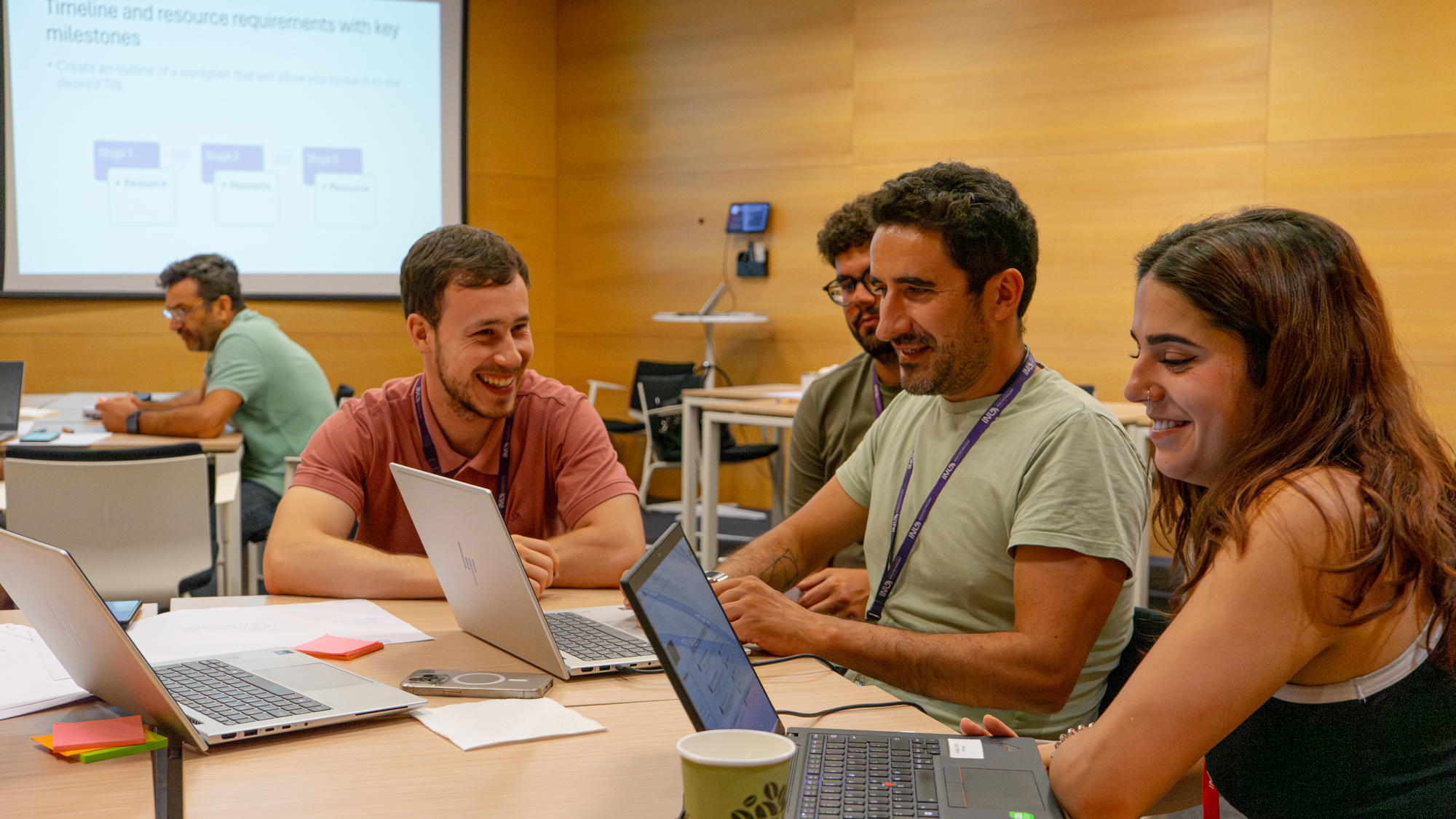
The programme was built around a clear ambition: to evaluate a decade of discoveries in topological materials and to chart the most promising directions for future research and real-world applications. Talks spanned a rich range of topics across a diverse roster of 32 speakers from leading research institutions, with strong representation from Germany, Portugal, and Spain. In addition, a dedicated poster session, featuring 18 presenters, fostered scientific exchange among participants. The session’s standout contribution came from Omid Ranjbar, who took home the best poster award for “Topologically Protected Hypersonic Phonon Flow at 2 GHz”.
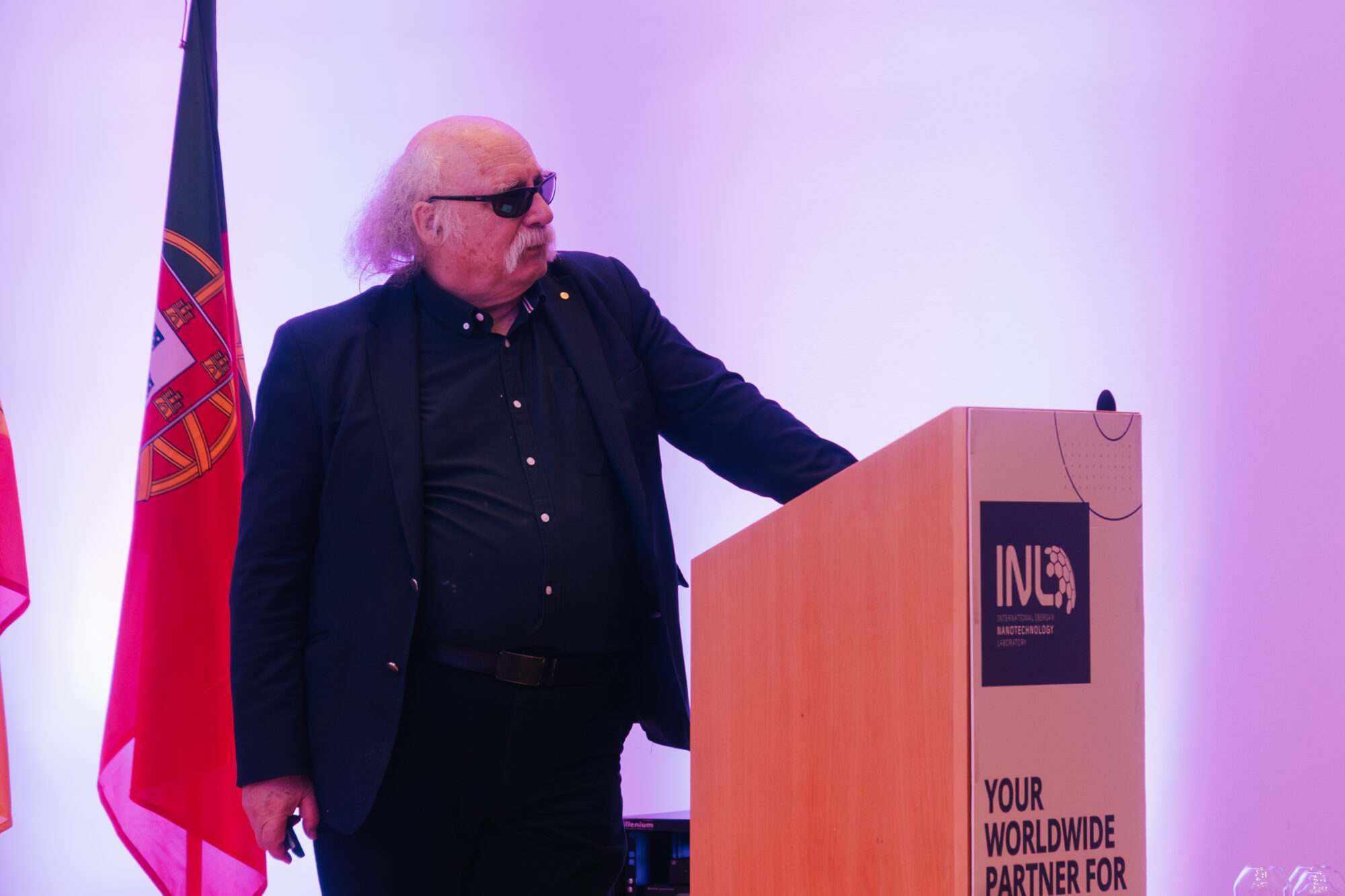
The event opened on a memorable note, with a public lecture by Nobel laureate Prof. Dr. Duncan Haldane addressing a decade’s worth of progress in subject matter. The moment set the tone for a seminar combining foundational insight with forward-looking application. Participants left with strengthened research networks, new collaborative initiatives, and a clearer roadmap for translating topological concepts into practical technologies.
A particularly significant outcome was the deepening of cross-disciplinary ties between topological electronics, photonics, and phononics. The link underscores the potential of robust, defect-tolerant platforms for energy-efficient devices and advanced information processing.
Beyond scientific exhange, the seminar reaffirmed INL’s standing as a convening hub for high-impact international collaboration at the interface of nanotechnology and quantum materials. A decade on, the field of topological matter continues to gain both depth and direction, and INL is honoured to be at the frontier of that journey.
Text by Iliona Wolfowicz & Clara Miranda