How magnetic interactions shape MRI contrast
February 16, 2026
Magnetic resonance imaging (MRI) is key in modern medical diagnostics, offering detailed images of the body without exposing patients to ionising radiation. Yet, despite its strengths, MRI still faces an important limitation – it’s sensitivity. Detecting subtle differences between healthy and diseased tissues often requires contrast agents – materials designed to locally modify the magnetic environment and make specific features stand out more clearly.
Iron oxide nanoparticles, widely explored as safer and targeted alternatives to traditional gadolinium-based agents, generate contrast by disturbing the local magnetic field around them. These disturbances cause nearby water protons to lose magnetic synchrony faster, darkening the MRI signal. While this principle has been known for years, one key question has remained unanswered: how do magnetic interactions between neighbouring nanoparticles influence MRI contrast?
Researchers at INL, led by Manuel Bañobre-López, addressed this challenge by focusing on something deceptively simple: distance. Instead of changing the composition or size of the nanoparticles, they carefully tuned the distance between them. INL group leader Manuel Bañobre explains that “by coating iron oxide nanoparticles with silica shells of different thicknesses, we were able to create a model system in which magnetic interactions could be tuned with nanometre precision.”
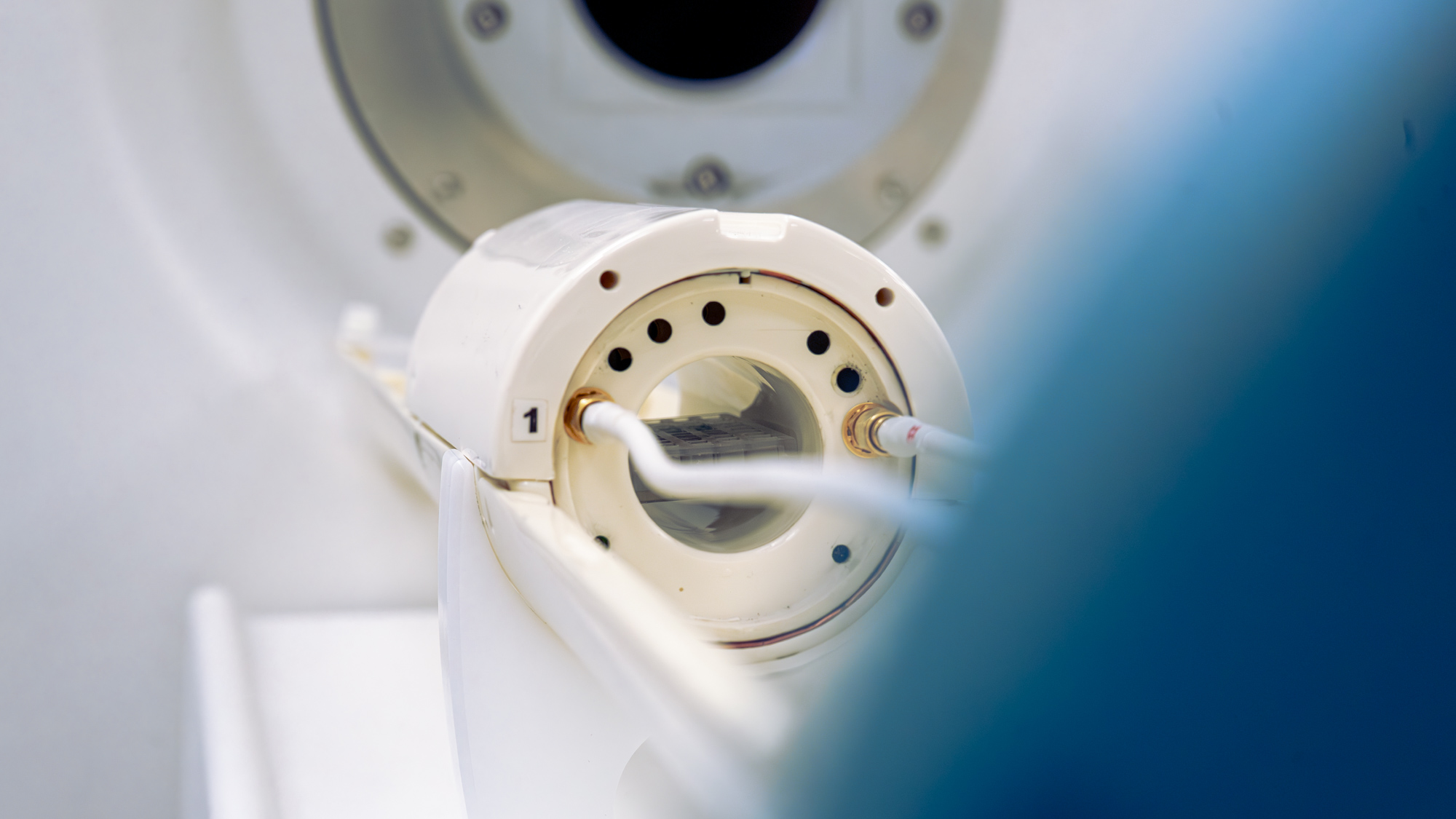
This controlled approach revealed a clear pattern. When nanoparticles are close enough to interact magnetically, their collective behaviour strongly enhances MRI contrast. As these interactions increase, contrast improves rapidly – but only up to a point. Beyond a certain distance threshold, the benefit levels off, showing that stronger interactions do not necessarily lead to better performance. At the other extreme, when particles are too far apart, the collective effect weakens and contrast efficiency drops.
This work offers a new way of thinking about MRI contrast design: not by adding more functionality, but by carefully shaping interactions that already exist. The research study was developed through a collaborative effort between research teams in Spain and Portugal, including INL, Universidade de Santiago de Compostela, CIC biomaGUNE, and Health Research Institute of Santiago de Compostela (IDIS).
As imaging technologies continue to push into higher magnetic fields, this research opens new paths for more efficient, tuneable, and clinically relevant MRI contrast agents – by turning distance into a design tool.
By mapping this behaviour across both conventional and ultra-high magnetic fields, INL researchers showed that controlling magnetic interactions is just as important as choosing the right material. Their findings, recently published in Advanced Science, provide practical design rules for next-generation contrast agents, helping researchers decide how closely nanoparticles should be packed to maximise performance without unnecessary complexity.
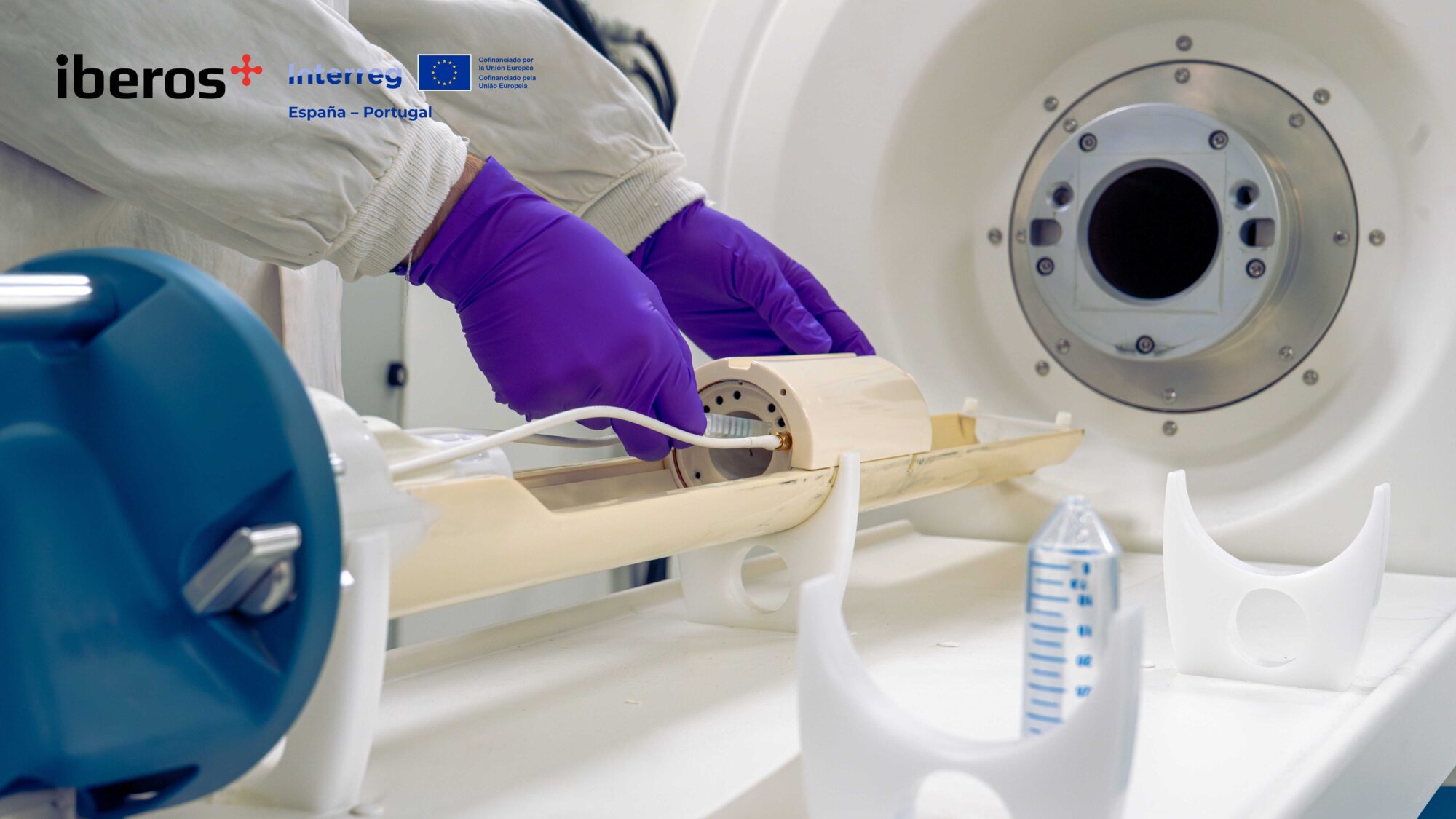
The research was financially supported by IBEROS+, the CARTsol project, and a mobility stay of Pelayo García-Acevedo, first author of the study, at INL under the ‘Programa IACOBUS’. See how we are sharing this breakthrough on LinkedIn, Facebook, Instagram & Bluesky!
Spotlight by Catarina Moura, Clara Miranda and Rui Andrade