Tuning 2D materials growth for quantum photonics
March 26, 2026
Two-dimensional materials are opening new possibilities for next-generation technologies, from electronics to quantum photonics. Among them, hexagonal boron nitride has emerged as a particularly promising candidate.
Hexagonal boron nitride is an ultra-thin material, only a few atoms thick, which doesn’t conduct electricity but can emit light. This material shares a similar honeycomb lattice structure to graphene, although its lattice is expanded by roughly 2%. It combines excellent chemical and thermal stability with a wide band gap, allowing it to contain tiny defects that can emit light, one photon at a time (a key requirement for quantum technologies).
INL researchers from the Sadewasser research group, in collaboration with Nieder and Alpuim groups, have developed a new method to grow large, high-quality boron nitride films for quantum photonics.
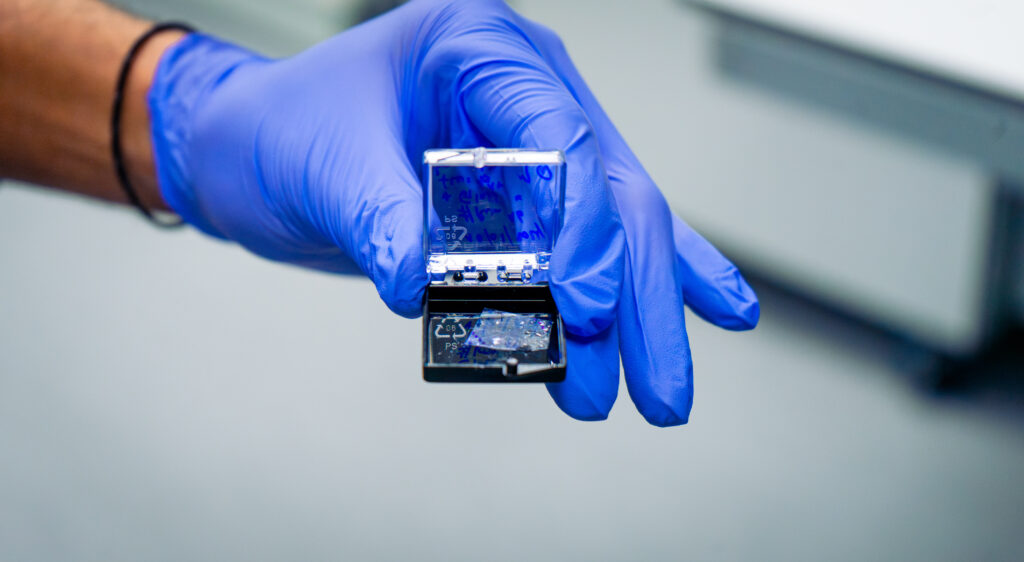
The team focused on a key step in making high-quality boron nitride films: breaking down ammonia borane, the chemical precursor for the material growth. Using atmospheric pressure chemical vapour deposition, they tested the effect of varying argon fluxes during the ammonia borane thermal decomposition stage on the hexagonal boron nitride film properties, helping to control the material’s quality and properties.
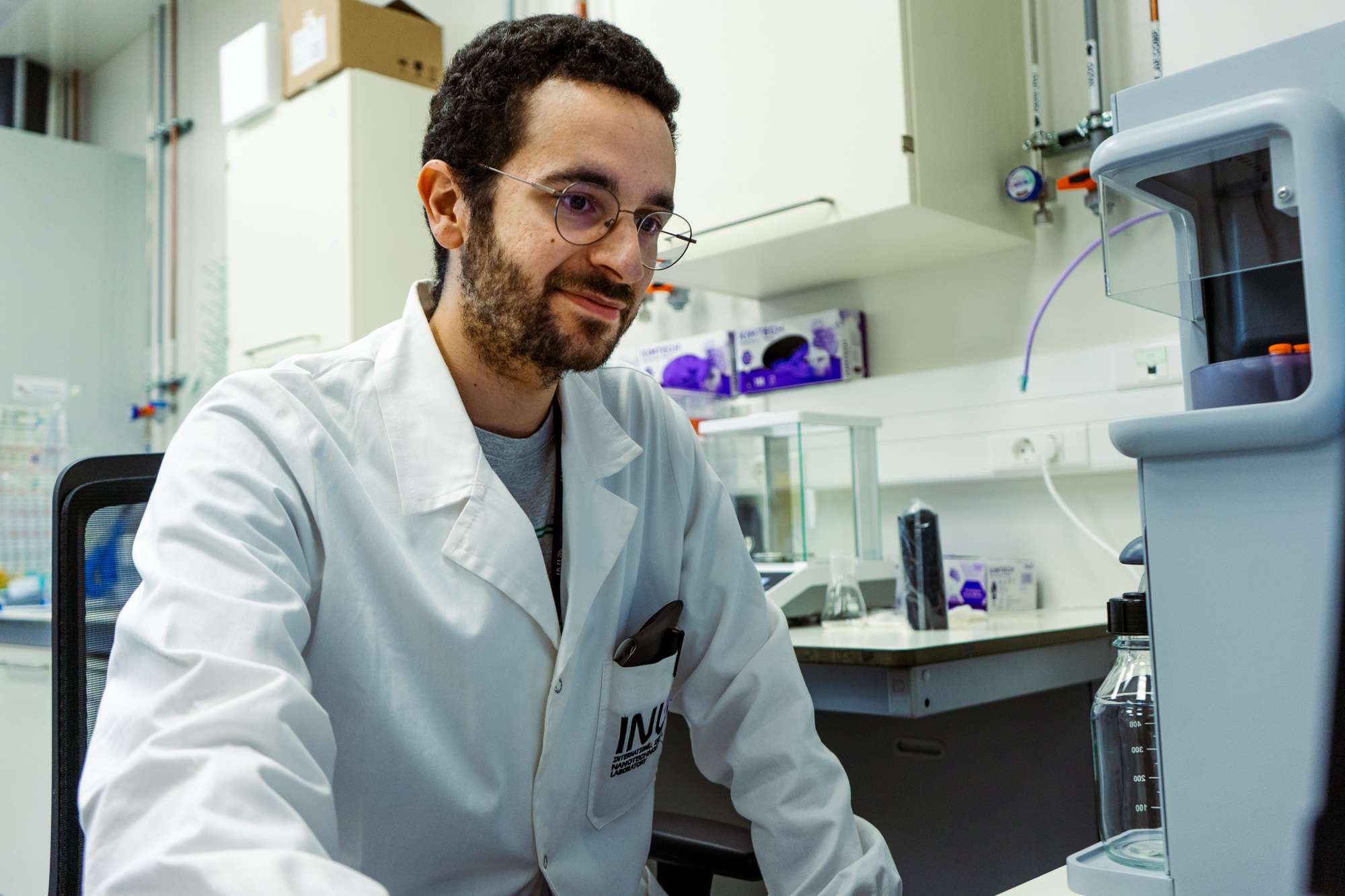
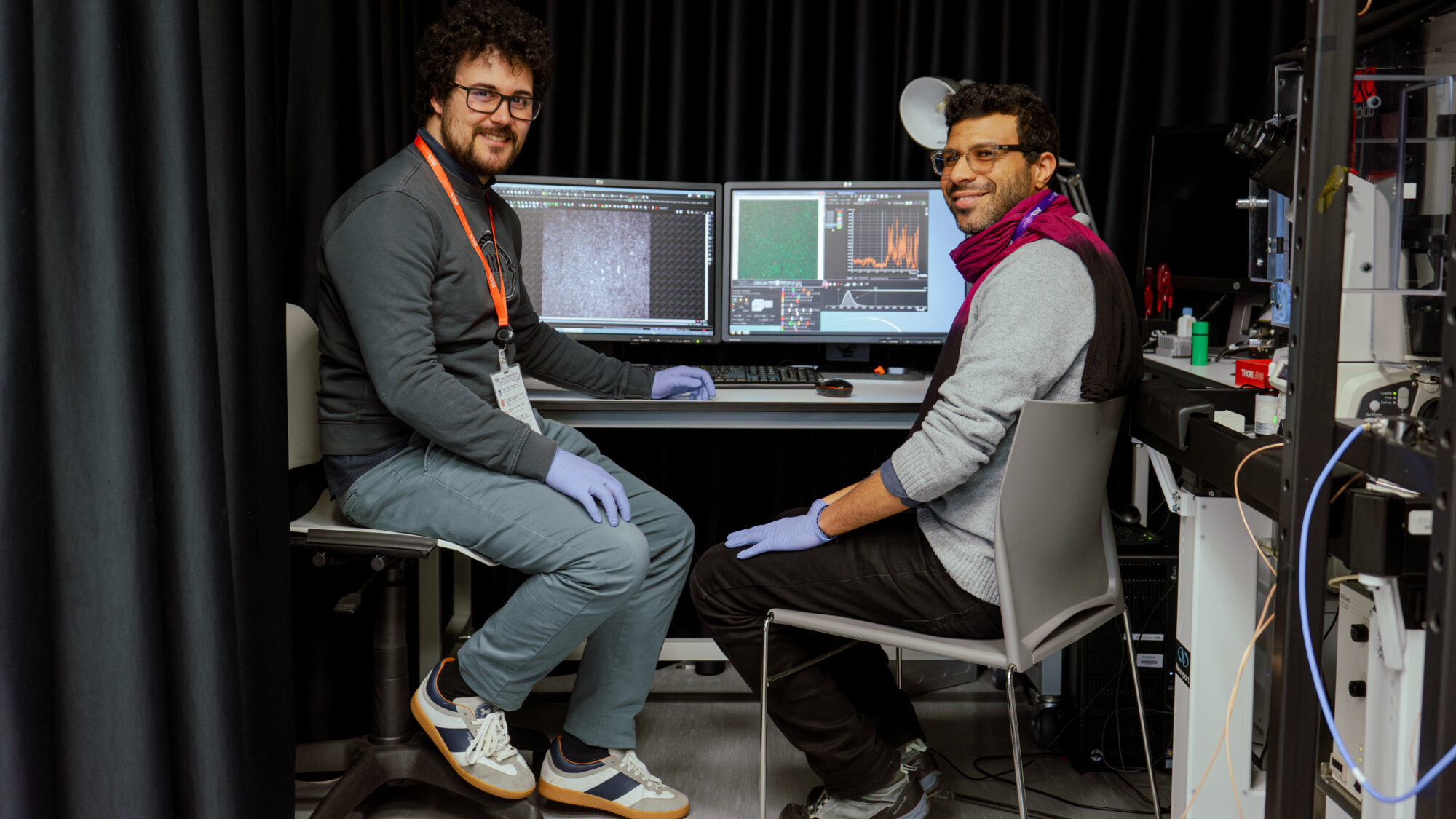
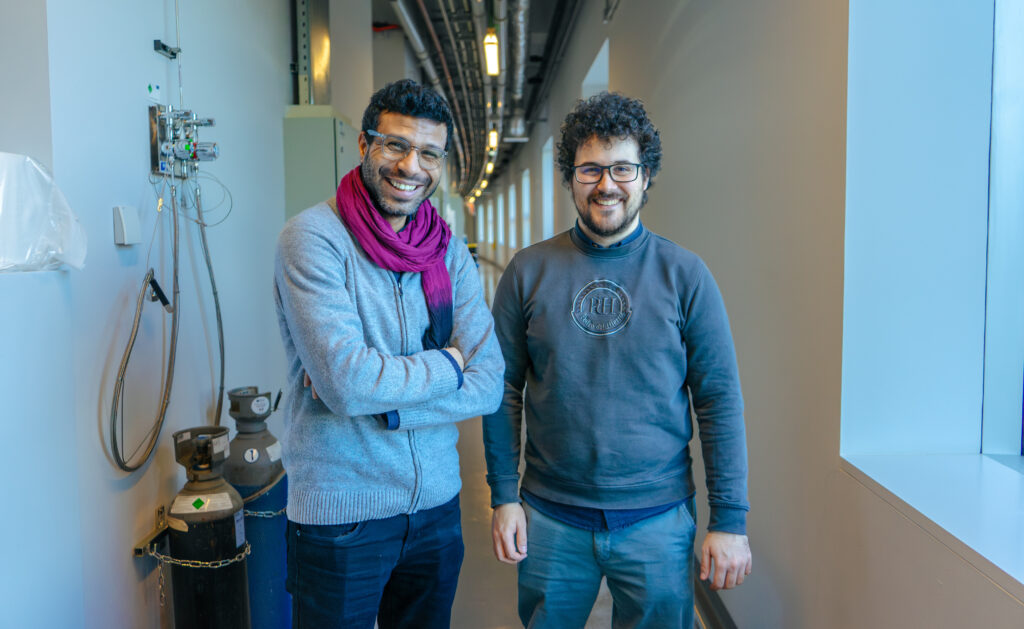
Beyond structural quality, the optical properties of the films revealed particularly exciting results. Elmahdi Amar and Tiago Queirós, two PhD students at INL highlighted “we observed clear ON–OFF blinking fluorescence signatures from localised spots in the boron nitride layer, a hallmark of single-photon emitters operating at room temperature, which are key building blocks for emerging quantum information, and quantum sensing technologies.”
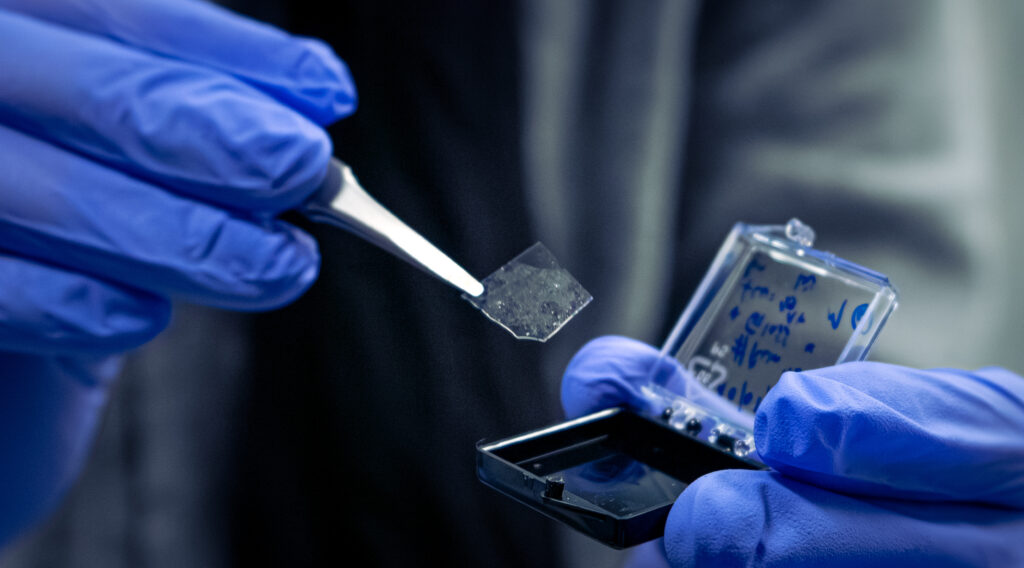
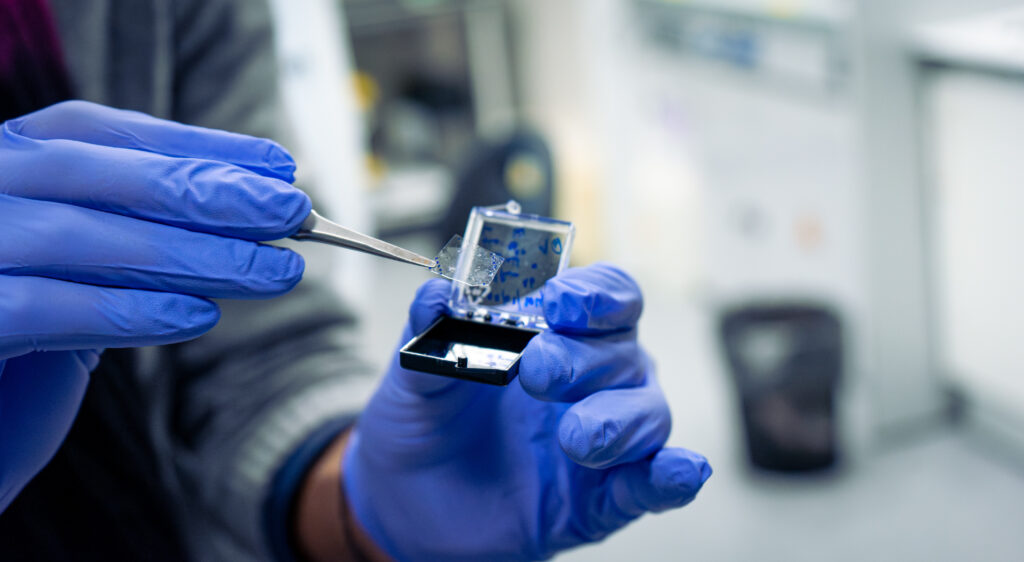
The research study shows that controlling the decomposition of the ammonia borane precursor under different argon fluxes is a decisive factor in determining film quality and defect formation. Rather than relying on complex chemical modifications, INL researchers demonstrated that subtle changes in growth conditions can strongly influence the quantum-relevant properties of the material.
Importantly, this work provides a pathway to explain how boron nitride grown using atmospheric pressure chemical vapour deposition may foster defects. “These findings will enable hexagonal boron nitride production optimisation, yielding high-quality single photon emitters suitable for emerging quantum technology applications,” adds Carlos J. Tavares (University of Minho, Department of Physics).
By advancing the understanding of how two-dimensional materials can be reproducibly grown and tuned, this work brings scalable quantum photonic materials one step closer to practical applications.
This research, recently published in Materials Advances, was supported by PhD grants from the FCT-funded Quantum Portugal Initiative.
Spotlight by Catarina Moura
Multimedia by Rui Andrade
Social Media Campaign by Clara Miranda
See how we are sharing this breakthrough on LinkedIn, Facebook, Instagram & Bluesky!