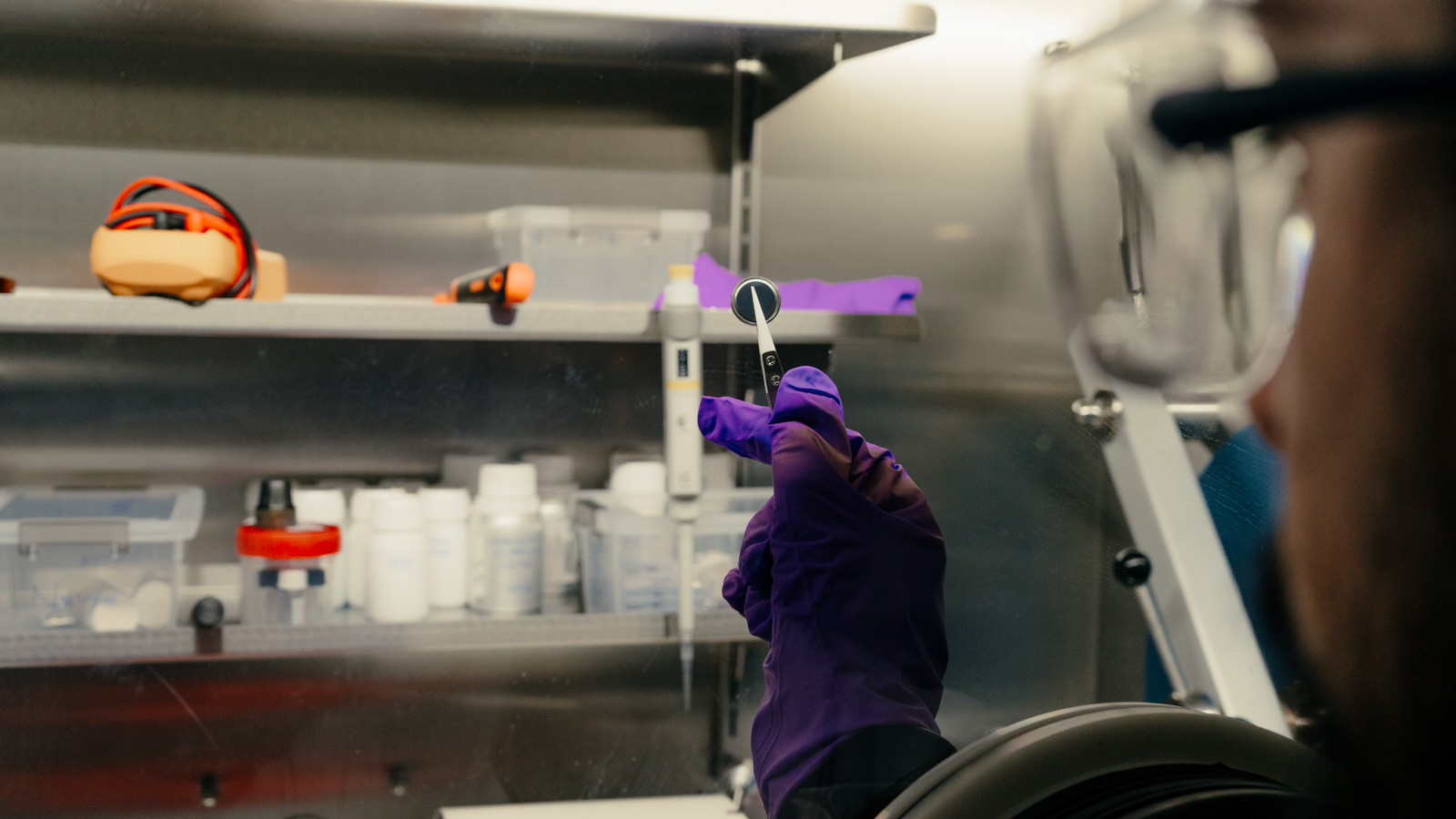
Could sodium be the breakthrough behind tomorrow’s batteries?
April 8, 2026
Sodium-metal batteries are emerging as a promising alternative to lithium-ion technology. Sodium is abundant, cost-effective, and widely distributed, making it ideal for large-scale energy storage. However, finding materials that can reliably store sodium ions has been a major challenge.
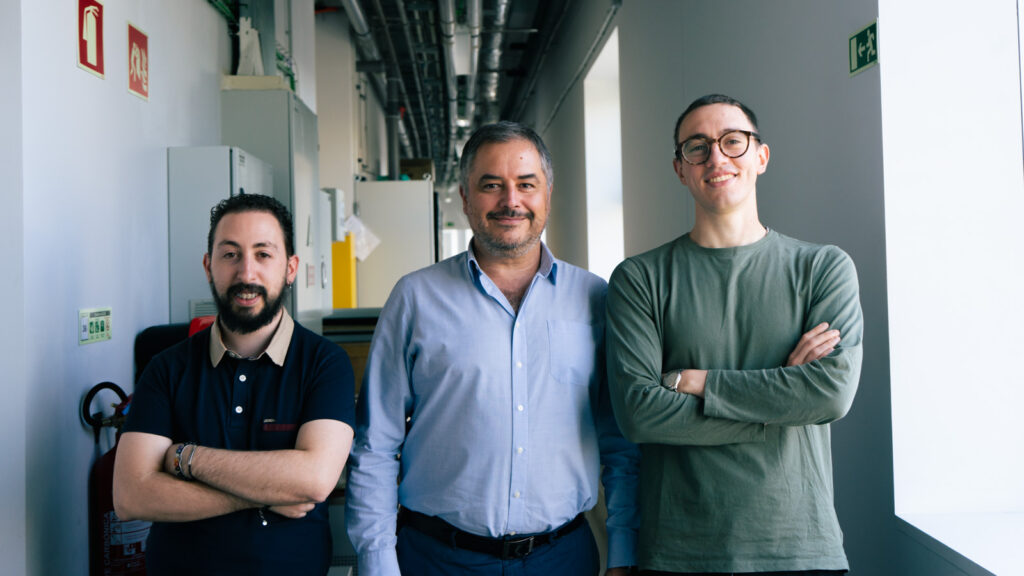
Miguel Muñoz, group leader at INL – International Iberian Nanotechnology Laboratory, and Leonardo Sbrascini, postdoctoral researcher in Muñoz group, worked in collaboration with groups from Spain (Universidade de Santiago de Compostela, University of the Basque Country, CIC energiGUNE, Ikerbasque, Oportunius) and Italy (University of Camerino and GISEL – National Reference Center for Electrochemical Energy Storage) to tackle this challenge.
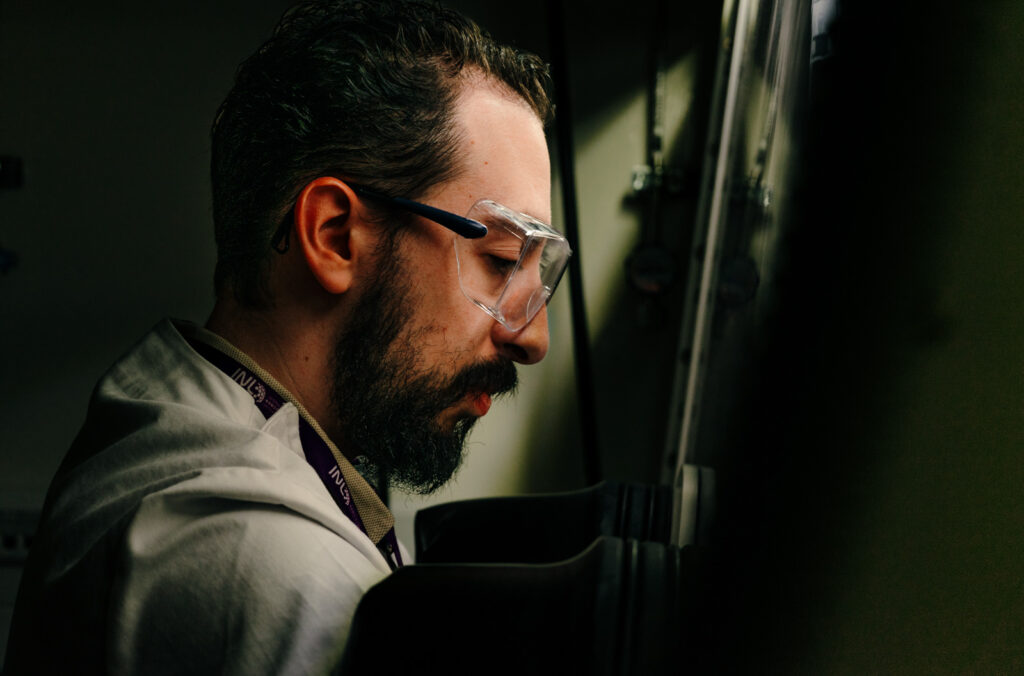
The team studied a two-dimensional organic material called DAAQ-TFP, a covalent organic framework (COF) containing anthraquinone units and a porous structure. This material can store sodium ions efficiently while remaining stable over thousands of charging cycles.
Their research sheds new light on how sodium interacts with the material. While this process has been previously interpreted differently, the results show that sodium ions enter tiny channels within the COF and interact with specific chemical groups, enabling controlled energy storage. This involves two complementary mechanisms: ions can attach quickly to the material’s surface, enabling fast charging and discharging (pseudocapacitive storage), while also triggering chemical reactions with the material that store more energy over time (faradaic storage).
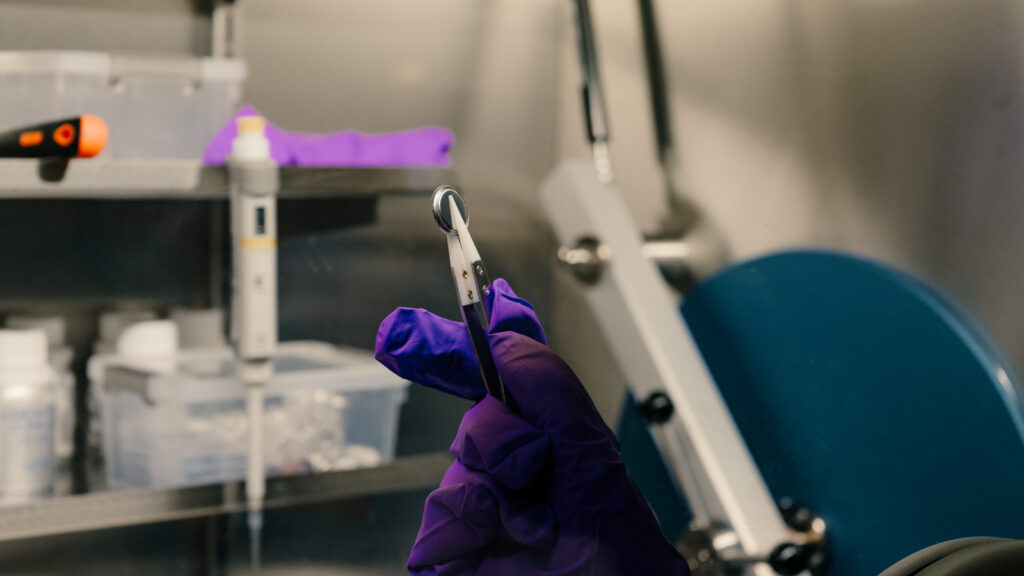
By understanding both mechanisms, the researchers could explain why DAAQ-TFP performs so well with sodium ions: it retains over 90% of its capacity after nearly 4800 cycles, charges and discharges quickly, and does so with high efficiency.
This fundamental insight is crucial for designing high-performance batteries for renewable energy, smart grids, and electric mobility. Using carbon-based organic COFs, these batteries avoid many of the metals and critical raw materials found in traditional electrodes. They move us closer to energy storage solutions that are not only powerful and reliable, but also less dependent on lithium, helping reduce environmental and economic risks.
The study was published in Journal of Materials Chemistry A. INL’s contribution to this work was funded by the PRR – Plano de Recuperação e Resiliência through the Agenda for Business Innovation “New Generation Storage”.
Spotlight by Catarina Moura
Multimedia by Rui Andrade
Social Media Campaign by Clara Miranda
See how we are sharing this breakthrough on LinkedIn, Facebook, Instagram & Bluesky!