INL – International Iberian Nanotechnology Laboratory in collaboration with ANI – Agência Nacional de Inovação hosted yesterday, May 4th, the Horizon Europe BATT4EU Funding Opportunities event and it was focused on presenting the BATT4EU partnership and funding opportunities in Horizon Europe for energy storage solutions.
Counting on a multidisciplinary group of experts sharing ground-breaking viewpoints, this event took us to central topics that sparked insightful discussions and laid considerable foundations to boost a competitive, sustainable and circular European battery value chain. It was possible to discuss the battery ecosystem and challenges in Europe, the current state of the art in Portugal, the future battery technologies for Europe, and the priorities for EU funding in energy storage research, development, and deployment.
For Pedro Salomé, Clean Energy Cluster Coordinator, at INL, this event “showcases INL’s capability to mobilize several stakeholders, industry, academia, and research and technology organizations, at the national, Iberian and European area to come together understanding synergies and opportunities to collaborate and to push the frontiers of technology.”
The participation of the major European associations in the battery sector, European Battery Alliance (eba250) and the Batteries European Partnership Association (BEPA), including a representative from the European Commission, together with the Centro Ibérico de Investigación en Almacenamiento Energético, an Iberian newly created centre dedicated to energy storage, provided the event with an Iberian and European perspective that allowed the participants to understand the latest technological, economical and legislative developments in the battery and energy storage areas. It was the beginning of a promising journey of further discussions and potential collaborations.
This was an excellent opportunity to learn, and network, and counted on the participation of Ana Fontoura Gouveia – Portuguese Secretary of State for Energy and Climate, INL – International Iberian Nanotechnology Laboratory, ANI – Agência Nacional de Inovação, Philippe Jacques – Secretary General, BEPA, Thore Sekkenes, EBA250 Programme Director, EIT InnoEnergy, Batpower Battery Cluster Portugal, Iberian Energy Storage Research Center, CENTI, Galp, Instituto Superior Técnico, Voltalia, Self Energy, Simoldes Plásticos, DST group, Vasco da Gama CoLAB Energy Storage, INESC TEC, ALMASCIENCE, University of Minho, Cleanwatts, EDP Inovação, LNEG, and University of Porto.
Horizon Europe BATT4EU Funding Opportunities at INL – Braga
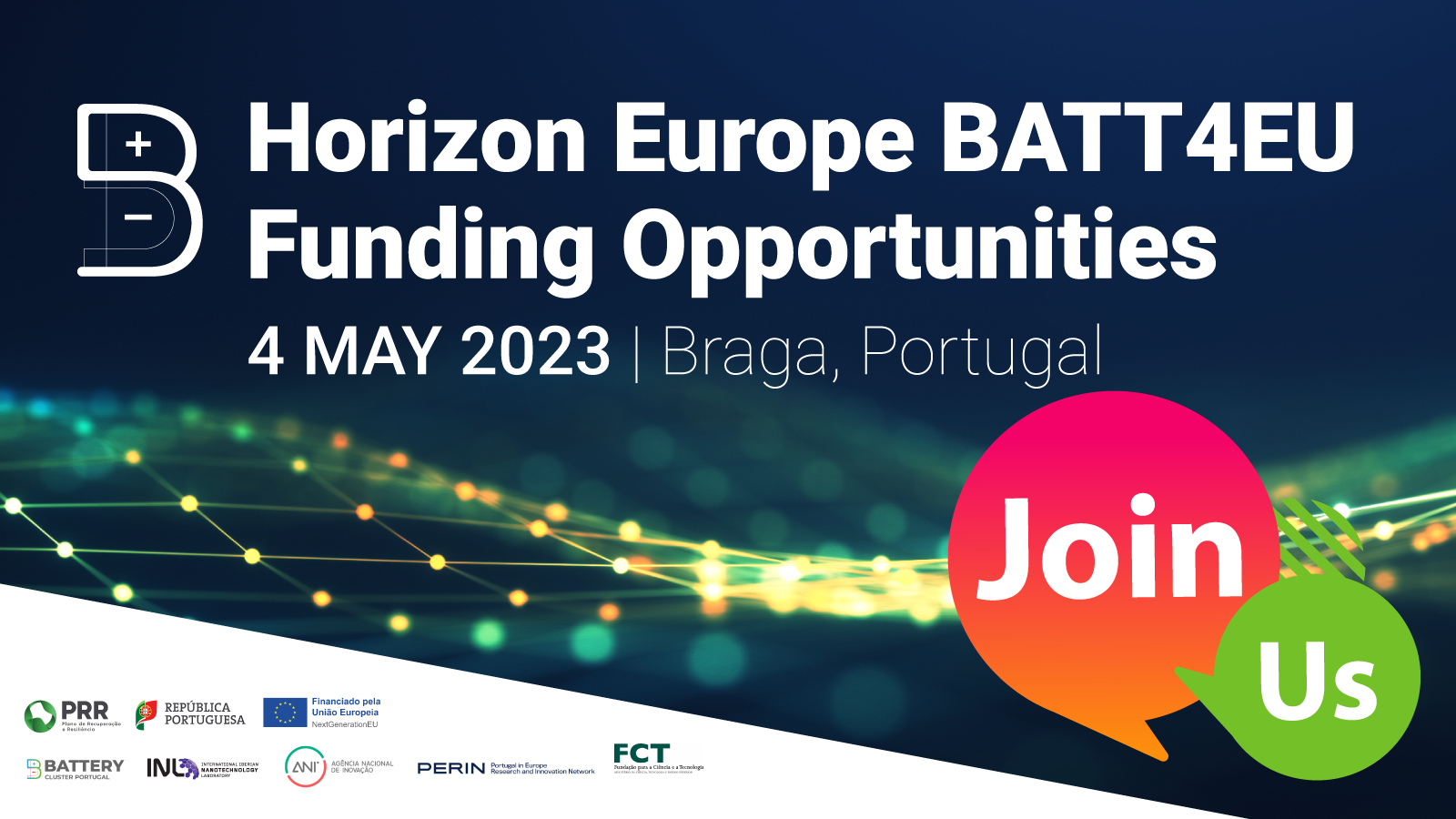
INL – International Iberian Nanotechnology Laboratory in collaboration with ANI – Agência Nacional de Inovação announce an upcoming Horizon Europe BATT4EU Funding Opportunities event to be held on 4 May 2023. The event will take place between 10h00 and 16h30 at INL – International Iberian Nanotechnology Laboratory in Braga, Portugal will focus on presenting the BATT4EU partnership and funding opportunities in Horizon Europe for energy storage solutions.
BATT4EU’s vision is to establish by 2030 in Europe the best in the world innovation ecosystem to boost a competitive, sustainable and circular European battery value chain and to drive the transformation towards a carbon-neutral society.
During this event, we will discuss project ideas and we will build consortia for European Research and Innovation collaborations and networking for the BATT4EU 2023-2024 calls. This a great opportunity to learn, and network. Take part in this exciting event!
Abstract submission is now open
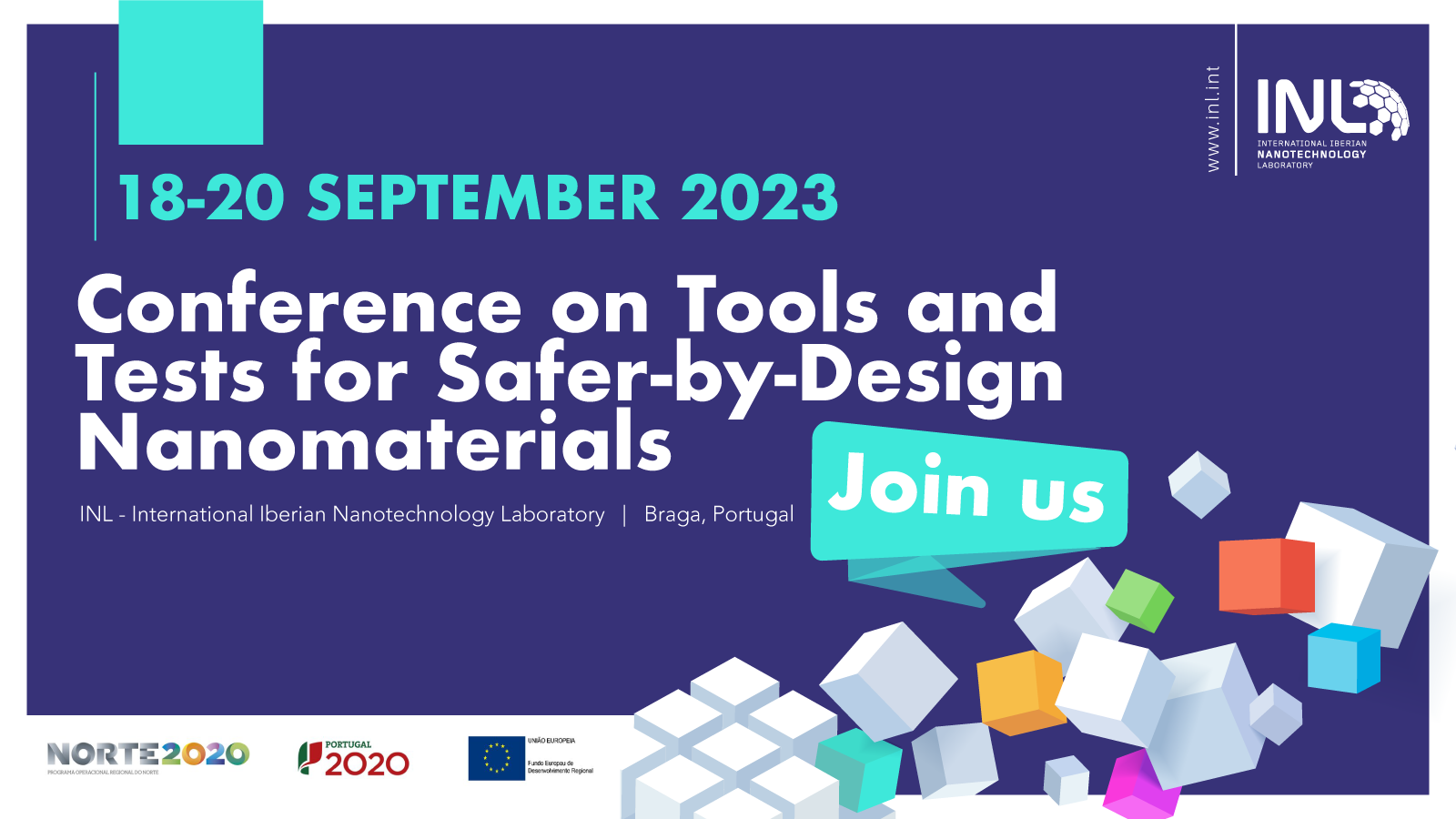
Abstract submission is now open for the Conference on Tools and Tests for Safer-by-Design Nanomaterials, which will take place in Braga – Portugal, at INL – International Iberian Nanotechnology Laboratory on 18-20 September 2023.
This year’s conference is being organised by the SBDToolbox Project and will address the most promising methods and tools to obtain the relevant data encompassing the specific properties that differentiate nanomaterials from chemicals. We will pay special attention to the particular needs of the diverse impact and application areas, namely health, food or environment and their relationship in the integrative context of ONE HEALTH.
This unique event on Tools and Tests for Safer-by-Design Nanomaterials will bring together researchers, policy-makers and industry in a full programme with insightful plenaries, invited talks, and networking opportunities.
Contributions to the Conference on Tools and Tests for Safer-by-Design Nanomaterials should only be submitted online. To facilitate the submission process and the subsequent follow-up procedures, please consider the following information:
+ ELIGIBLE THEMES:
-
Nanomaterials Regulatory Framework
-
New Models and Tools for Nanomaterials Hazard Characterization
-
Nanomaterials Risk Assessment in the Context of ONE HEALTH
Abstracts should be submitted online abstract submission system on the conference page before May 19, 2023.
PITCCH Project final event

PITCCH project final event took place on March 7th, 2023, in Stuttgart, Germany. The purpose of this final event was to present the project results, share good practices from PITCCH collaborations and provide a stage for companies to debate about open innovation strategies and a panel for funding agencies to discuss support programs.
After the opening session with EISMEA Project Officer, DG GROW Policy Officer and PITCCH Project Coordinator, welcomed the keynote speaker, John Fahlteich, CEO at KETMarket Open Innovation Ecosystem.
All interventions and contributions helped us better understand the potential of open innovation and how to overcome the hurdles of collaborative projects successfully. PITCCH seeked to accelerate the market uptake of advanced technologies through different sectors and all PITCCH partners are part of an established network ecosystem of multiple stakeholders, from companies to Technology Centres, from private investors to public authorities, and are involved in many international projects, including EU-funded collaborations.
Scientific talk on carbon nanomaterial simulations with Prof. Solange Binotto Fagan
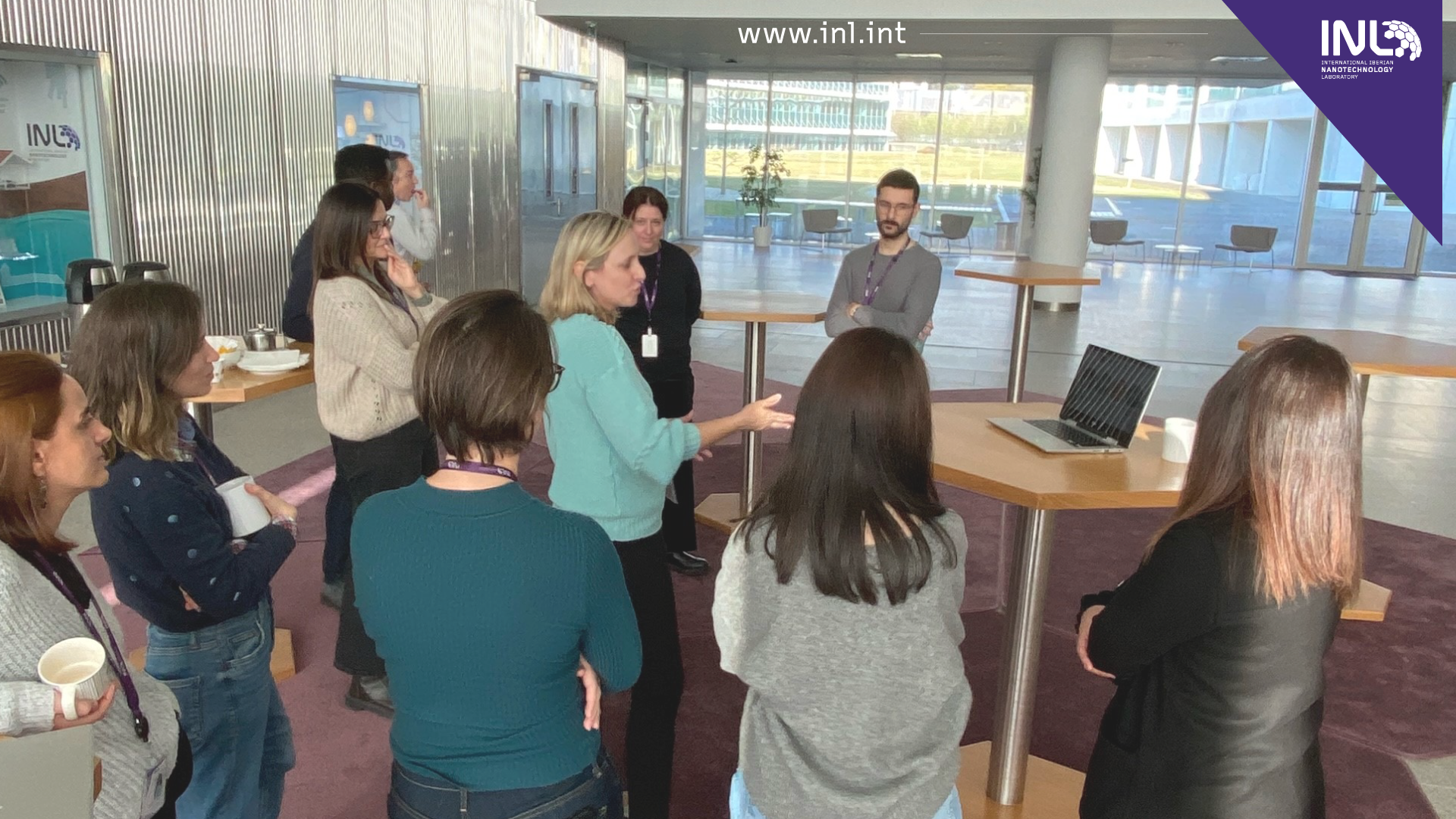
“The beauty of nanotechnology is that computational simulation can predict very well the experimental results” these were the words of Prof. Solange Binotto Fagan, Vice-Dean of the Franciscan University (UFN) from Santa Maria, Rio Grande do Sul, Brazil, and Vice-Coordinator of the National Institute of Science and Technology (INCT) in Carbon Nanomaterials.
The INL – International Iberian Nanotechnology Laboratory team had the pleasure of welcoming Prof. Solange Binotto Fagan during a visit last Friday, March 3, with the aim of establishing new collaborations between INL, UFN and INCT. Prof. Solange gave a scientific talk on carbon nanomaterial simulations, with several examples on ab initio, molecular docking, and molecular dynamics, while comparing these to experimental results. Among several interesting topics discussed during her visit, she spoke about INCT, the large network of Brazilian institutions that work in the area of carbon nanomaterials and expressed her interest in understanding, functionalising and utilising nanomaterials while always keeping the fate of the material in mind.
Additionally, given her experience in teaching and developing virtual learning objects, she explained during INL’s informal Friday Chats the work she does towards science and technology dissemination. Early in her career, she received the L’oreal Prize for Women in Science in the field of Physics. This recognition enabled her to fulfil her goal of encouraging other women to pursue their scientific research. Addressing researchers from all walks of life, she encourages women to believe in themselves, stating that “you don’t need to work at large research institutions to do great science”.
Plasma-Therm Technical Workshop at INL – Braga
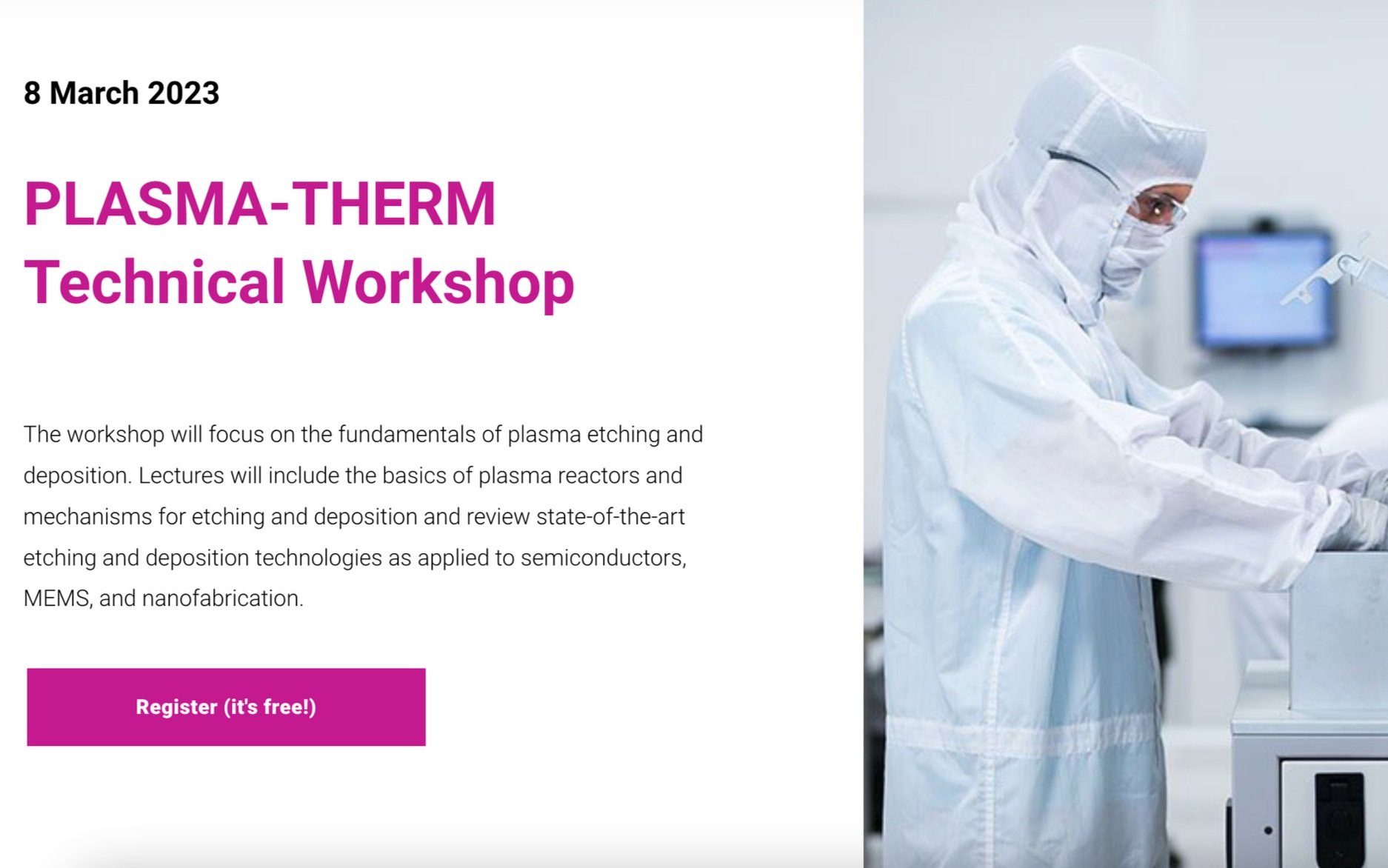
INL – International Iberian Nanotechnology Laboratory together with PhotonExport and in collaboration with Plasma-Therm announce an upcoming Plasma Technical Workshop to be held on Wednesday, 8 March 2023. The event will take place between 9h00 and 18h30 at INL – International Iberian Nanotechnology Laboratory in Braga, Portugal will focus on the fundamentals of plasma etching and deposition.
The workshop will cover topics such as the basics of plasma reactors and mechanisms for etching and deposition and review state-of-the-art etching and deposition technologies as applied to semiconductors, MEMS, and nanofabrication. Talks will cover compound semiconductor, dielectric, and deep silicon etching as well as PECVD and high-density plasma CVD of silicon-based materials. Fundamental and new ideas for endpoint detection and sample thermal budget management will also be presented.
The event will be presented by, David Lishan, PhD who has extensive experience in the field of plasma processing, having worked on a range of material, semiconductor, and chemistry R&D projects. With over 60 publications and conference presentations, David has recently organized and presented plasma processing workshops at leading institutions worldwide.
This workshop is an opportunity for professionals in the field of plasma processing to learn, network and enhance their knowledge and understanding of the latest technologies and techniques. INL – International Iberian Nanotechnology Laboratory, PhotonExport and Plasma-Therm are committed to advancing the field of plasma processing and look forward to hosting a successful event.
The workshop is free, but pre-registration by 6 March 2023.
“Surface engineering for sustainable future: Multifunctional coatings for optics and energy applications” scientific talk by Dr.Ludvik Martinu
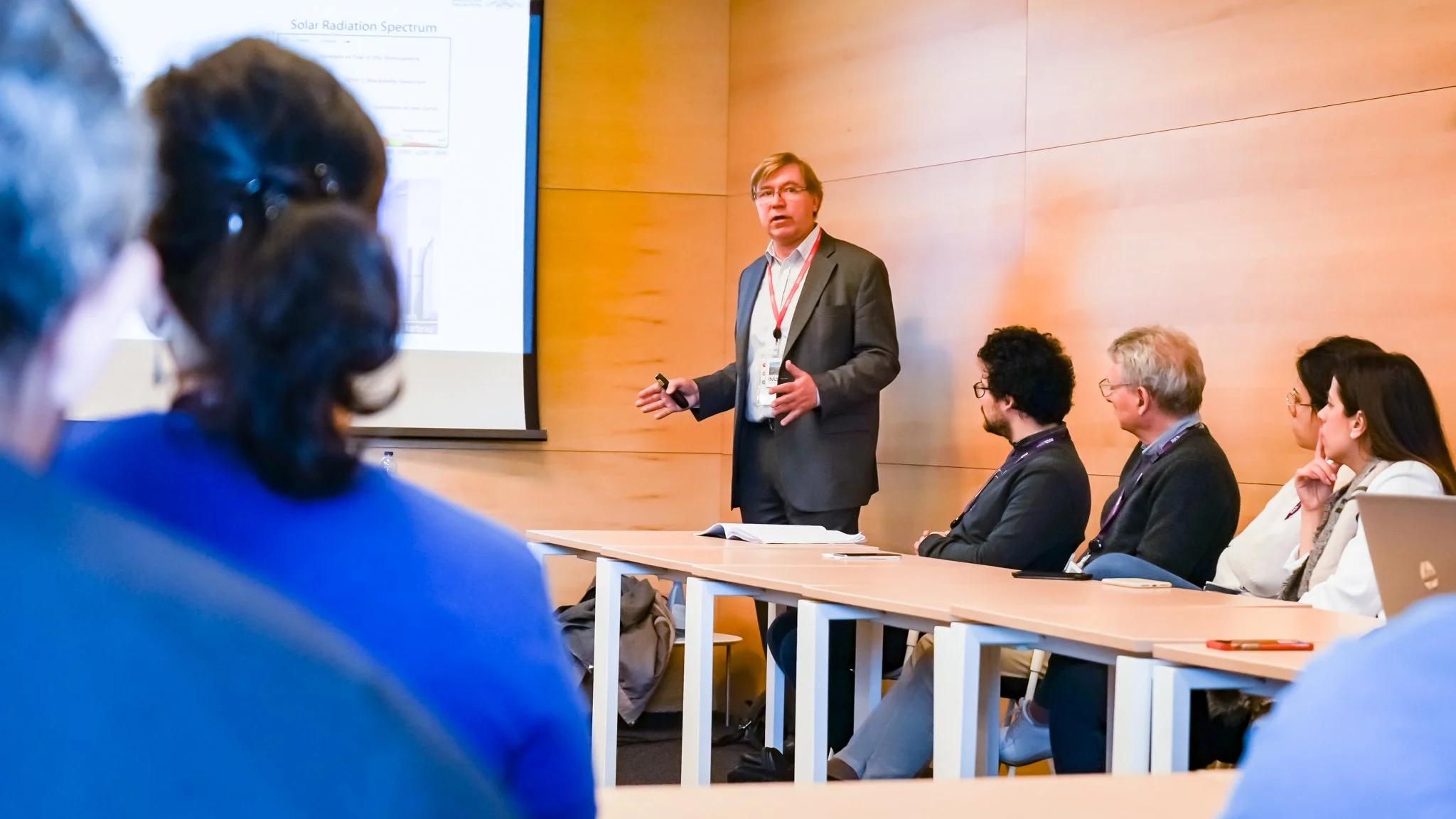
Ludvik Martinu, Professor at Polytechnique Montreal, Canada, in the Department of Engineering Physics, Chairholder of the Multisectoral Industrial Research Chair in Coatings and Surface Engineering, and Co-director of the Thin Film Science and Technology Research Center on the Campus of the University of Montreal gave a scientific talk at INL – International Iberian Nanotechnology Laboratory today, on “Surface engineering for sustainable future: Multifunctional coatings for optics and energy applications”.
Functional and multifunctional coating applications represent a multi-billion-dollar market worldwide and represent desirable options for sustainable development; As the range of coatings applications continuously broadens and exciting opportunities arise, it is becoming increasingly important to develop new nanostructured thin film materials with specific functional properties.
During the presentation, he described a holistic approach to coatings and surface engineering solutions based on a broad and in-depth knowledge of the interplay between the design, material, process, and performance assessment of coating systems concerning specific applications and durability in demanding environments.
Dr Ludvik Martinu also reviewed the progress and future opportunities for using nano structurally-controlled architectures that benefit from advanced deposition techniques, including High Power Impulse Magnetron Sputtering (HiPIMS), Ion Beam Assisted Chemical Vapor Deposition (IBA-CVD), combined Glancing Angle/Atomic Layer Deposition, and Pulsed Hollow Cathode PECVD. And in the end, he described examples of case studies and applications such as advanced glazing for energy management and saving in intelligent windows and nanosatellites, hybrid (organic/inorganic) coatings for ophthalmic lenses, and protective coatings with premeditated stress depth profiles for aircraft engines.
Next Page » « Previous Page -->Ludvik Martinu, Professor at Polytechnique Montreal, Canada, in the Department of Engineering Physics, Chairholder of the Multisectoral Industrial Research Chair in Coatings and Surface Engineering, and Co-director of the Thin Film Science and Technology Research Center on the Campus of the University of Montreal gave a scientific talk at INL – International Iberian Nanotechnology Laboratory today, on “Surface engineering for sustainable future: Multifunctional coatings for optics and energy applications”.
Functional and multifunctional coating applications represent a multi-billion-dollar market worldwide and represent desirable options for sustainable development; As the range of coatings applications continuously broadens and exciting opportunities arise, it is becoming increasingly important to develop new nanostructured thin film materials with specific functional properties.
During the presentation, he described a holistic approach to coatings and surface engineering solutions based on a broad and in-depth knowledge of the interplay between the design, material, process, and performance assessment of coating systems concerning specific applications and durability in demanding environments.
Dr Ludvik Martinu also reviewed the progress and future opportunities for using nano structurally-controlled architectures that benefit from advanced deposition techniques, including High Power Impulse Magnetron Sputtering (HiPIMS), Ion Beam Assisted Chemical Vapor Deposition (IBA-CVD), combined Glancing Angle/Atomic Layer Deposition, and Pulsed Hollow Cathode PECVD. And in the end, he described examples of case studies and applications such as advanced glazing for energy management and saving in intelligent windows and nanosatellites, hybrid (organic/inorganic) coatings for ophthalmic lenses, and protective coatings with premeditated stress depth profiles for aircraft engines.