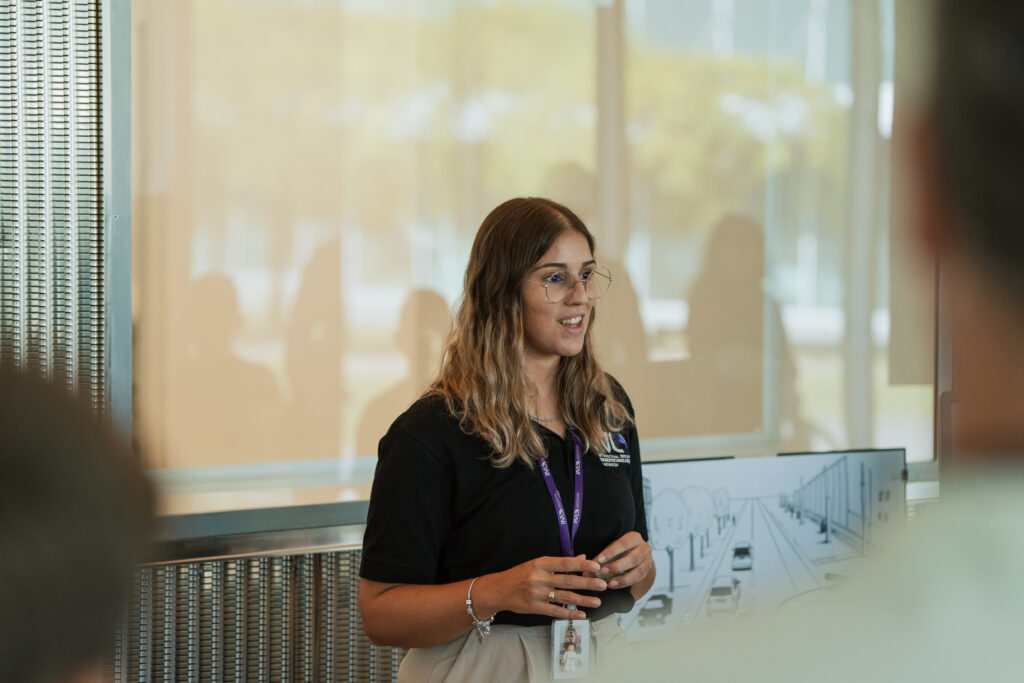
The Minister of Agriculture, Maria do Céu Antunes, together with Secretary of State for Fisheries, Teresa Coelho, within the scope of ‘Governo +Próximo’ with the aim to connect the scientific research performed here to the current and future challenges in the field of agriculture and fisheries.

This visit aims to give visibility to entities that stand out in their contribution to the country’s economic growth in emerging areas of development, as well as, through the contribution of companies and centres of research for the growth of the blue economy.

The Minister underlined that “this is a cutting edge laboratory and that the technologies developed at INL – International Iberian Nanotechnology Laboratory are truly unique and disruptive and can be applied to the agriculture and fisheries areas. Nanotechnology has enormous potential to provide innovative improvements to reduce costs, increase efficiency and reduce our impact on the environment, as a necessity impacting our ability to feed our inhabitants.

This initiative was organized within a decentralized Ministers’ Council that will happen tomorrow – May 4th, in Braga. The Minister and the Secretary of State together with Altino Bessa – Councilor of Braga City Council, Nuno Canada – President of INIAV, Rogério Ferreira – Director General of DGADR, and President AG PEPAContinente, and José Matias – Deputy Regional Director of DRAP Norte had the opportunity to contact with INL researchers from scientific areas and learn more about our projects and unique technologies.

Ana C. Araújo unravelling the world of Micro and Nanofabrication

Meet Ana Araújo. She holds a highly technical course in Microbiology and a degree in Applied Biology from the University of Minho and started her career in 2011 as a Lab technician at the 3B’s Research Group (Biomaterials, Biodegradables and Biomimetics) – University of Minho

She has been always involved with logistics, lab processes, organisation, management, and safety in several laboratories: chemistry, microbiology, biology, cell culture, and animal facilities, among others. In parallel with her work lab routine, she collaborated on some scientific projects in the field of Microbiology, namely the characterization of antibacterial properties in biomaterials and bio compounds to prevent bacterial adhesion and biofilm formation on medical devices.

In 2021, she started working at INL – International Iberian Nanotechnology Laboratory as a Cleanroom Technician with the Micro and Nanofabrication team. She is responsible for wet processes and provides logistic support in our cleanroom facility.

Ana, can you tell us a bit about your path and what got you interested in the field of Micro and Nanofabrication?

My journey in the research field began in 2011, a few months after finishing the Microbiology technical course, at the I3B´s Research Institute as a Lab Technician. That was the moment my discovery of the scientific world took place. Only later, and in parallel with my professional career, I decided to attend and obtain a degree in Applied Biology at the University of Minho. During 10 years I had the opportunity to work on the management, logistics, and safety areas of different laboratories from different research areas: chemistry, biology, cell culture, microbiology, animal facilities, etc. It was a rich and diverse experience and I feel that I played an integral and important part in the research. However, beyond management and logistics, I also wanted to experience the other side of the prism, so I began to collaborate on research projects in the field of Microbiology at the same Institute. 

My interest in Micro and Nanofabrication began in 2021, at a time when I felt I needed a new challenge in my career. Then, I accepted the great opportunity to work at INL – International Iberian Nanotechnology Laboratory as a Cleanroom Technician. I provide logistical support in the cleanroom facilities and I am responsible for wet processes in internal and industrial projects. I confess that at the beginning I felt as if I was in a parallel world, where micropipettes were replaced by industrial equipment, biological samples, wafers and the lab coat by coverall. But I easily realised that this was an area where all sciences come together to explore and create technology with an impact on society. It was the opening to a “brave new world”. 

What is your long-term research goal?

My long-term research goal is to continue to explore challenges, make my best contribution to development and innovation in society, and reinforce the role of a technician. I consider the role of a technician determinant, it helps the researchers in their discoveries, contributing to good laboratory practices, and reflecting a more productive, functional, and organised scientific research. 


What advice would you give to young girls who are considering a career in science?

One piece of advice I give to young girls considering a career in science is to take risks and explore new areas. For me, dealing with new challenges is the learning experience needed to make decisions regarding the future. Without this, you will never know which direction you should take.

So, if you are curious, if you like challenges, and if you have a taste for discovery, take a risk! You are guaranteed a challenging and enriching daily life.

INL researchers develop an automated monitoring system for toxins found in drinking water

Cyanobacteria, also known as blue-green algae, are microscopic organisms found naturally in all types of water, such as ponds, lakes, water streams, rivers and wetlands. Bloom events may occur in stagnant or very slowly flowing water bodies when cyanobacteria grow excessively. Not all blooms are harmful, but some cyanobacteria can produce toxins that cause serious illness or death in livestock and wildlife.

Microcystin is one of the harmful toxins produced by cyanobacteria. Although microcystins may occur in fish, molluscs and shellfish from water bodies with cyanobacterial over-growth, human exposure to microcystins happens mainly through drinking water or recreational water bodies.

According to the EU Drinking Water Directive 2020, the monitoring of total microcystin-LR concentration is mandatory for drinking water, and it is highly recommended in any stagnant water.

INL researchers have developed an automated monitoring system for total microcystin-LR. This monitoring system has dedicated modules for sample preparation and toxin detection, it is powered by a battery (able to work without an operator for 4 weeks), it has very high sensitivity and it is remotely accessible through a cloud platform.

This novel electrochemical sensing platform avoids the multiple processing steps typically needed for standard microcystin-LR analysis in the laboratory and provides an early warning system for remote monitoring in water.

INL strives to develop and deploy integrated and digital-based solutions for the comprehensive monitoring and selective elimination of water contaminants. This monitoring system was jointly developed by researchers from the Water Quality and Technology Engineering Groups.

‘Cientista Regressa à Escola’ in Braga

‘Cientista Regressa à Escola’ is an inspiring programme by Native Scientist in partnership with INL – International Iberian Nanotechnology Laboratory and Braga Municipality took the first scientists to schools in Braga to the EB1 of Panoias, Garapôa and Tebosa to showcase science and encourage young children to embrace science.

It involved around 60 students from the EB of Panoias, Garapôa and Tebosa and Sandra Carvalho, MedTech Product Developer at RUBYnanomed, a spin-off from INL – International Iberian Nanotechnology Laboratory, João Carlos Henriques and Sofia Ferreira spoke and showcased science to all students.

‘Cientista Regressa à Escola’ is an educational program that promotes the return of scientists to their 1st cycle schools of origin to carry out science workshops with 4th-year students. This project’s main objective is to contribute to the promotion of culture and scientific literacy in Portugal and, at the same time, to deconstruct stereotypes regarding scientists.

2023 INL Annual Research Symposium

From April 19 to 21, INL – International Iberian Nanotechnology Laboratory had the honour to host the 2023 Annual INL Research Symposium. The event, an internal initiative, aimed at sharing and showcasing the research activities and accomplishments. The event also celebrates all our hard work and provides a forum for the breadth of activities being undertaken within each Research Group. 

During the three half-days, we had more than 200 participants each day, 11 Research and Engineering Groups showcased 26 demos, excellent scientific presentations, more than 90 posters and video flash talks, and very engaging coffee breaks and ‘happy-hour’ moments. This was a unique internal event and a great occasion to learn and experiment new technological developments.

Next year, INL will continue promoting this event as part of the strategic plan for internal research dissemination activities and for creating an environment that encourages, stimulates and promotes research and researchers.

Thank you all for your brilliant hard work!

INL researchers develop a novel compact and low-cost microLED chip 

Light-emitting diode chips, commonly known as LEDs, are semiconductor light sources that are used in smartphones for displays, automotive lighting, medical devices, sensors and optical communications. LEDs typically combine a large p-type doped semiconductor layer (layer with faulty conduction electrons; these lack of conduction electrons behave as positive charges called holes) with an n-type doped semiconductor layer (layer with abundant conduction electrons), forming a p-n junction. When a sufficient voltage is applied, electrons and holes move across the p-n junction and electrons recombine with holes releasing energy in the form of light.

Temporal electrical and optical response of the microLED. (a) The emitter configuration for electro-optical modulation. (b) The time-resolved electroluminescence (EL) as a function of the forward bias voltage: (i) 2 V, (ii) 2.5 V, and (iii) 3 V for 1 V, 100 ns input electrical pulses. The determined decay lifetime (τ) is indicated for each bias condition. (c) The receiver configuration for optoelectrical modulation. (d) The photocurrent response to illumination by a laser source (𝜆∼830nm�∼830nm) driven by 1 V, 2 µs square-wave voltage pulses. The photocurrent was measured as a function of the forward bias voltage: (i) 2 V, (ii) 2.6 V, and (iii) 3.5 V. The photoresponse fall time (𝜏𝑓��) indicated for each bias condition is determined as the time between 10% and 90% of the maximum photocurrent.

The layered p-n junction structure is one of the most well-established semiconductor optoelectronic modern chip technologies that revolutionized the development of LEDs, lasers, and photodetectors. However, given the recent miniaturization of light-emitting and photo-detecting devices, such as nanoscale LEDs and nano-photodetectors, the use of p-type semiconductors adds significant complexity and associated costs to the device’s manufacture.

In this recent work, INL researchers in collaboration with the University of Lisbon, present a novel microLED chip that does not need p-type semiconductor layers. Furthermore, the developed microLED also has the astounding ability to work as both a light emitter and a detector, in the same circuit.

Bruno Romeira, the leader of this study, explains that “the architecture of the device provides a compact and low-cost microLED chip with seamless integration of multi-capabilities (electroluminescence, photoresponse and negative differential conductance – electrical on-chip gain), under identical operating forward voltage conditions”. 

The findings of this study pave the way for a wide range of low-cost applications in on-chip light-emitting and light-receiver systems, of key importance for imaging, sensing, signal processing, data communications and neuromorphic computing AI applications.

This study was funded by the European Union, Horizon Europe, under project 828841 – ChipAI, and project 101046790 – InsectNeuroNano. You can find the full article here: https://doi.org/10.1364/OPTICA.476938.

Meet Elvira Paz, Staff Researcher in the Spintronics Research Group

Today you can meet Elvira Paz. Elvira is Staff Researcher in the Spintronics Research Group at INL – International Iberian Nanotechnology Laboratory. She obtained an MSc (2004) and a PhD (2010) in Physics from the Universidad Autónoma de Madrid | UAM . Her current research focuses on magnetic sensors based on MTJs.

During her PhD, she focused on the growth of epitaxial iron and its structural and magnetic characterization, and afterwards, she performed the lithography of wire and antidot nanostructures to study their magnetic behaviour. She studied the influence of the iron’s magnetic biaxial anisotropy on the nanostructures’ magnetic properties, the combination of the crystalline and the shape anisotropies.

Her research is focused on fabricating and characterising magnetic sensors based on magnetic tunnel junctions. Her main objective is to decrease the sensitivity of the sensors as much as possible to achieve a very accurate measurement of low fields. This allows using sensors in a wider range of applications. During her work at INL – International Iberian Nanotechnology Laboratory she published more than 20 international papers, and two patents application and presented her work at several international conferences.

At INL since 2011, can you tell us a bit about your journey?

I joined INL – International Iberian Nanotechnology Laboratory in March 2011. This has been a long 12 years journey, and during all this time I had evolved professionally and personally. I had the luxury to work in a laboratory with state-of-the-art equipment that gave me the opportunity to study systems that are in our daily lives to try to improve the lives of people. Improving people’s well-being motivates me to keep going. And at the same time being surrounded by international colleges make you travel while working when we talk about different cultures.

How would you explain the importance of your work to a non-scientific person?

My research is focused on magnetic sensors. Magnetic sensors are present in everything that we have around us, from our mobile phones to our home appliances, and lately, there is a lot of research for the car industry to improve autonomous driving.

Recent trends in magnetic sensors are focused on miniaturization, the improvement of features and finding new operating principles based on fundamental studies of new materials and phenomena. Making better sensors and more efficient in terms of energy is a challenge that will be good for us and for the planet and future generations.

How do you feel the landscape will change for women in science over the next 5 years?

I think the landscape is changing, but it is changing faster in the biology area than the physics and electronics, and I don’t see a lot of young women in this area. I think we’ll need a lot more than 5 years to see a change. Diversity and collaboration are two things the scientific community lacks, and both are related to the poor experiences women have in physics.

The only way to have a change is to start to make the girls feel inspired by physics at smaller ages. There are a lot of studies that saw that the environment shapes girls’ interest and motivation in STEM and that female role-model sessions significantly increase the positive impact of expectations of success on STEM choices. We have to work hard on that to see a change in the landscape.

Mission NERD visits Braga Hospital

Mission NERD is, once again, out of the laboratory. Researchers from INL – International Iberian Nanotechnology Laboratory visited the Pediatrics Service and the External Consultation Services of Hospital de Braga and the purpose of this visit was to showcase the world of science and the work developed by our Researchers.

Visitors and family members were able to experience various activities, such as drilling a balloon without popping it, making the hair stay standing, measuring the height in nanometers or even dressing like a nanoscientist. Humanizing knowledge, facilitating the understanding of science, and decoding some concepts of science through simple activities using everyday materials were the main goals of this visit.

Mission NERD aims to decode science to society in a whole new way, create unique experiences, stimulate creativity, enable dialogue and spread scientific knowledge to the community. Our volunteers are committed scientists working at INL – International Iberian Nanotechnology Laboratory that wants to inspire and re-connect people of different realities by using a common ground – the spirit of sharing.

Next Page » « Previous Page -->

Mission NERD is, once again, out of the laboratory. Researchers from INL – International Iberian Nanotechnology Laboratory visited the Pediatrics Service and the External Consultation Services of Hospital de Braga and the purpose of this visit was to showcase the world of science and the work developed by our Researchers.

Visitors and family members were able to experience various activities, such as drilling a balloon without popping it, making the hair stay standing, measuring the height in nanometers or even dressing like a nanoscientist. Humanizing knowledge, facilitating the understanding of science, and decoding some concepts of science through simple activities using everyday materials were the main goals of this visit.

Mission NERD aims to decode science to society in a whole new way, create unique experiences, stimulate creativity, enable dialogue and spread scientific knowledge to the community. Our volunteers are committed scientists working at INL – International Iberian Nanotechnology Laboratory that wants to inspire and re-connect people of different realities by using a common ground – the spirit of sharing.