On 4 November, the INL – International Iberian Nanotechnology Laboratory together with nine Portuguese and Spanish higher education institutions signed a consortium agreement for the creation of the Iberian FoodTec Lab (IFL), a «laboratory of excellence» in the area of food safety.
The Iberian FoodTec Lab «has the mission of implementing a collaborative Iberian agenda to promote multidisciplinary research initiatives, prepare diagnoses on the food situation in Portugal and Spain and contribute to the development and implementation of public policies». With this initiative, it is also intended to «encourage the exchange of experiences, dialogue between academic institutions, companies and international organizations and promote an equitable and healthy sustainable diet, contributing to the increase of international competitiveness».
The agreement was signed at the INL – International Iberian Nanotechnology Laboratory, within the scope of the 33rd Luso-Iberian Summit, an event that took place in Viana do Castelo. This agreement was signed by the Polytechnic of Bragança – where the IFL’s headquarters will be located –, the Polytechnic of Viana do Castelo, INL – International Iberian Nanotechnology Laboratory, University of Vigo, University of Salamanca, University of Valladolid, the University of Minho, Portuguese Catholic University, University of Porto, and the University of Trás-os-Montes and Alto Douro.
According to Lorenzo Pastrana, Lorenzo Pastrana Research Group Leader at INL, “the agri-food sector represents, on average, 15% of the GDP in the northwest of the Iberian peninsula. Moreover, in these regions, intense activity in R&D and innovation is being carried out in different entities of the scientific and technological ecosystem, delivering excellent performance indications in many scientific ranks. The Iberian FoodTec Lab (IFL) was born to enhance knowledge in food and health and boost the transfer to the productive sector. For this purpose, the leading Universities in the region and the INL will join and coordinate capabilities to generate impact in the food sector. INL is one of the founders of this initiative that will allow the Food for the Future cluster, to foster the implementation of their applications of nanotechnologies to produce personalized, healthier and safer foods and reduce food waste.“
Marewind, developing durable materials and recyclable solutions for the offshore wind industry

Over the past 15 years, wind energy has experienced remarkable growth, positioning Europe as a leader in the global offshore wind market. Functional and structural components for offshore energy are subjected to numerous damage mechanisms on materials and coatings. Critically, corrosion and fatigue affect the lifetime of offshore structures where environmental factors such as wetness, UV radiation, abrasion and erosion have already created severe damage.
Nowadays, wind turbine blade leading-edge erosion affects annual energy production by 4-20 %. That equates to a loss between €152-760 million a year across the overall European offshore wind sector. Moreover, the maintenance of the materials is very expensive and accounts for around 25% of the offshore wind farms’ cost. In addition to that, at the end of the wind turbines’ service life, the generated waste in need of recycling can increase by up to 800,000 tonnes per year in Europe by 2050.
MAREWIND solutions will pave the way for the next generation of offshore wind generators and facilities that aim to solve the technological, economic, business, and societal challenges we are now facing. In addition, it will strengthen the leading role of Europe in the global offshore wind market with the current 22,072 MW of installed cumulative capacity, followed by Asian and North American markets.
INL is developing self-healing materials in order to protect these structures from corrosion. Self-healing materials are intelligent materials that when damaged through mechanical damage have the ability to heal and restore the material to its original set of properties.
By enhancing the materials’ durability and recyclability, and reducing maintenance in offshore structures, the project will contribute to a more economic and sustainable model of the offshore wind sector.
MAREWIND project is funded by the European Union’s Horizon 2020 research and innovation programme. The project is run by a consortium of 16 partners from 7 European countries, representing leading business, technological and research organizations, and institutions across Europe. All partners are working together with technological, scientific and industrial consortium partners within this project and aim to develop durable materials and recyclable solutions for the offshore wind industry while extending the service life of the wind facilities. The involved partners cover the whole value chain on offshore wind and therefore will validate prototypes, results and costs along the project under accelerated testing and in real environment.
‘Product in Touch’ – a tactile sensor which mimics the detection ability of human fingerprints
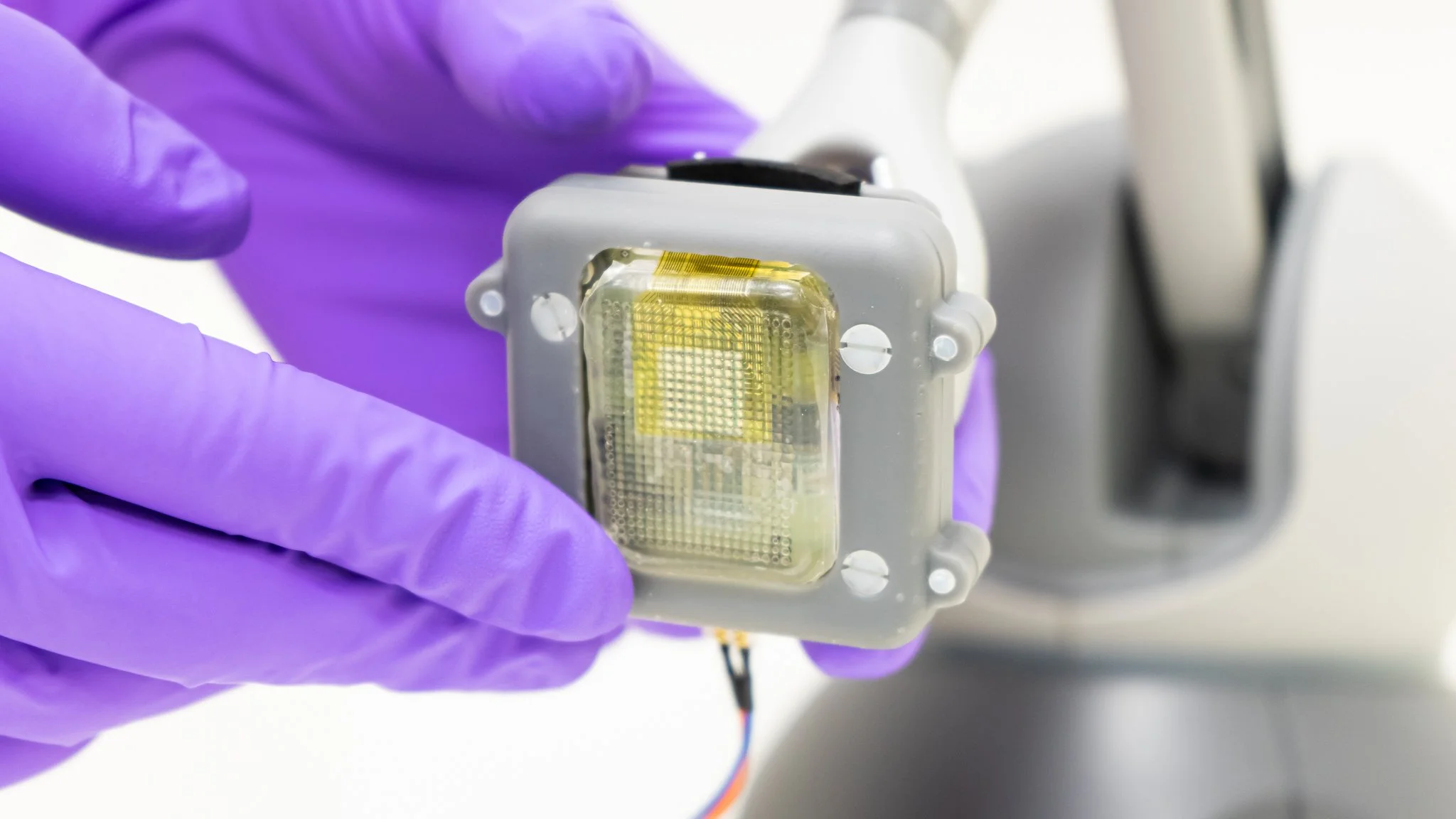
Researchers at INL – International Iberian Nanotechnology Laboratory, in collaboration with Centro de Computação Gráfica and Edilásio developed a tactile sensor which mimics the detection ability of human fingerprints.
Tactile perception, or touch perception, is the brain’s ability to perceive information coming from the skin. Humans can recognise a surface by touching it, to feel the static pressure distribution created by the surface profile, or by sliding on it, to feel the vibration generated by dynamic contact with the fine texture. It is essential that tactile sensors that mimic the human ability to perceive surfaces are able to detect force distribution with high spatial and temporal resolution.
The flexible tactile sensor developed at INL, under the project ‘Product in Touch’, uses polyimide-based microfabrication technology, and provides sub-millimetre spatial resolution, reproducing a morphology detection similar to the sensitivity of human fingertips. The flexibility of the tactile sensor enables the conformal integration of the device onto complex geometries while maintaining normal morphology sensitivity. The technology has been used to extract real surface texture parameters for virtual reality environments.
Furthermore, the sensor has the potential to be used in artificial multimodal fingers, robotics and robot grippers, and in the feedback loop of control systems where 2D surface morphology with the sub-millimetre spatial resolution is critical. The possibility of applying this technology will add increased value and will also raise these products in terms of competitiveness.
uPGRADE project team meets in Portugal
Are you following us?
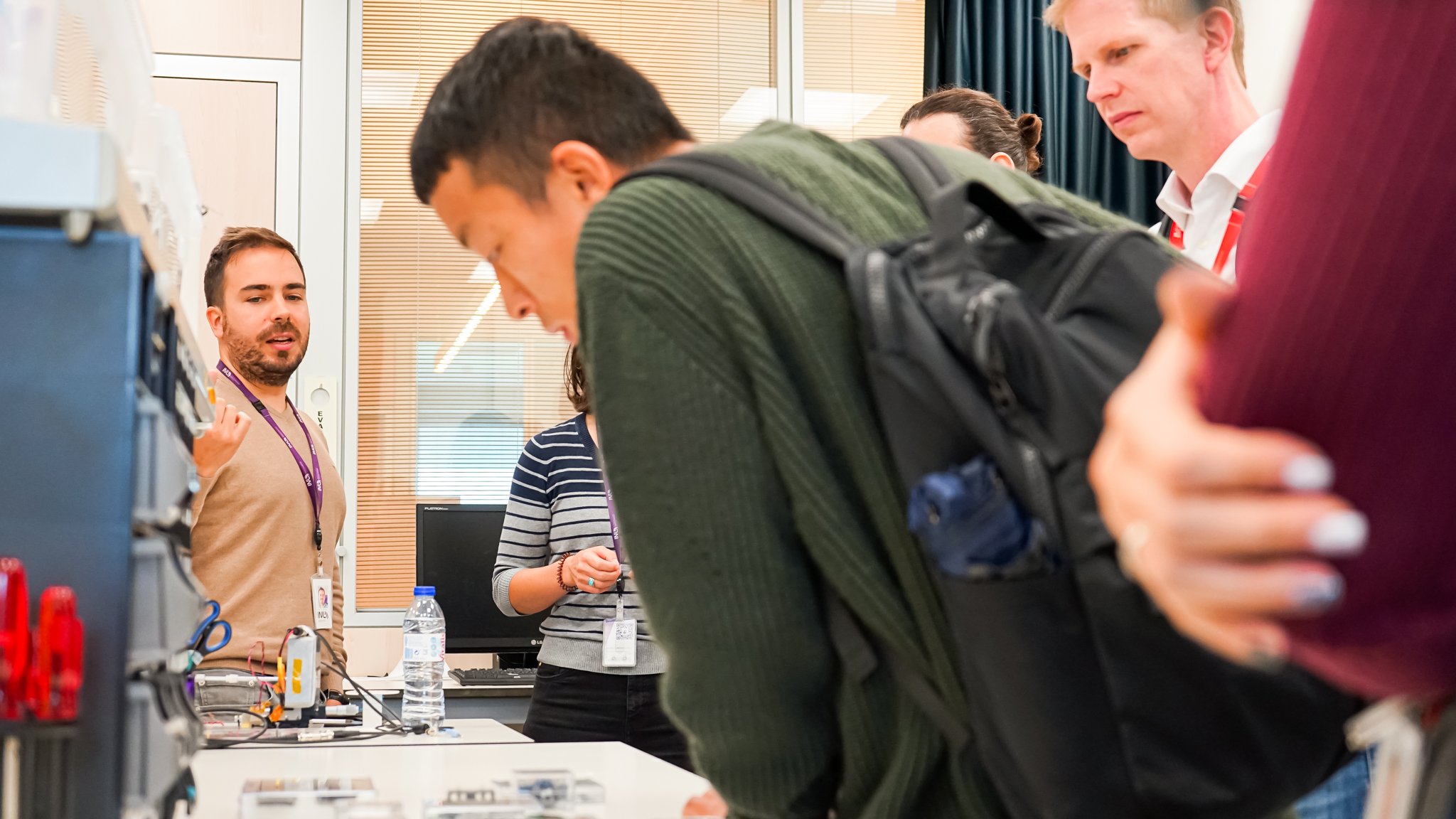
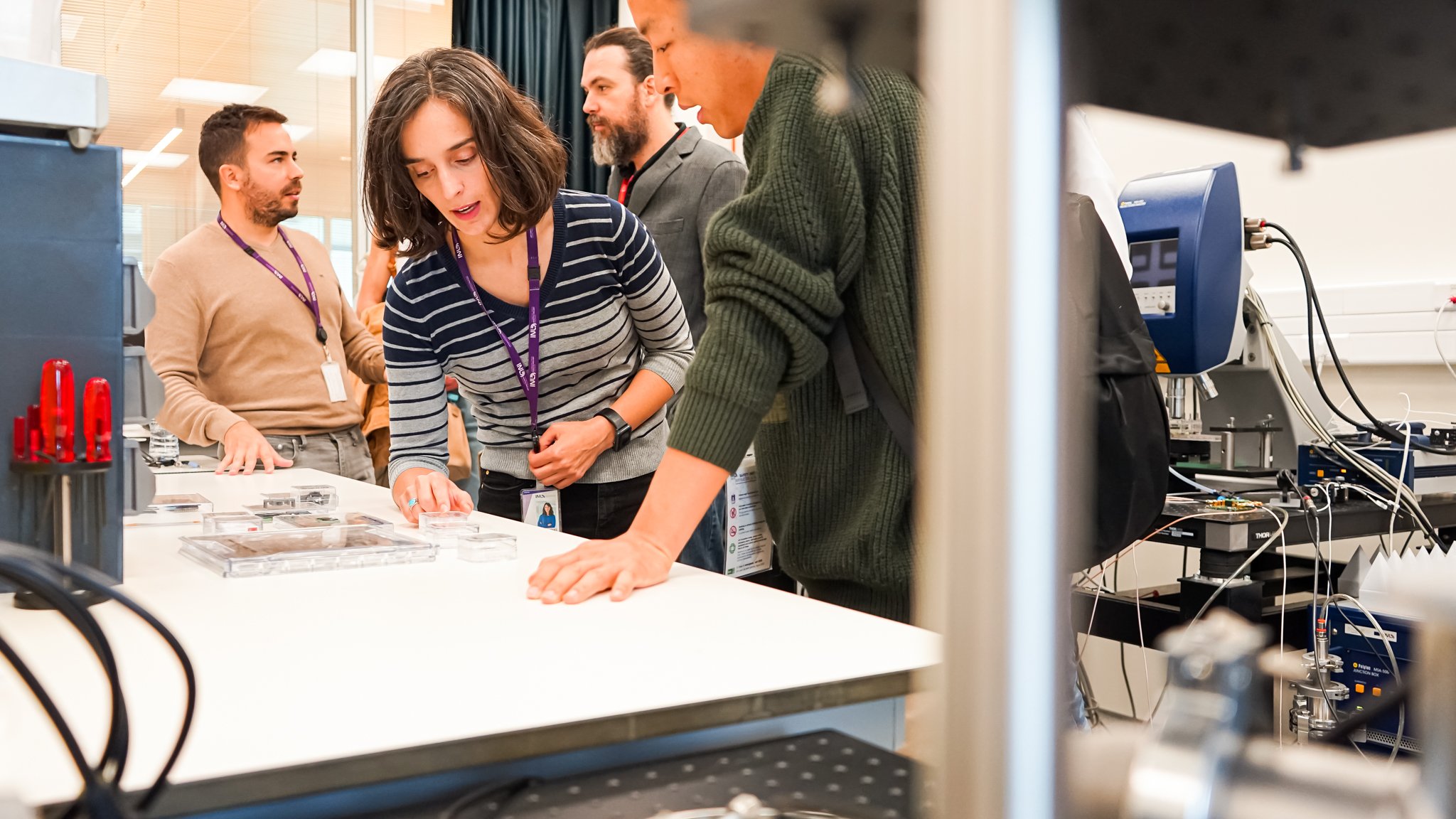
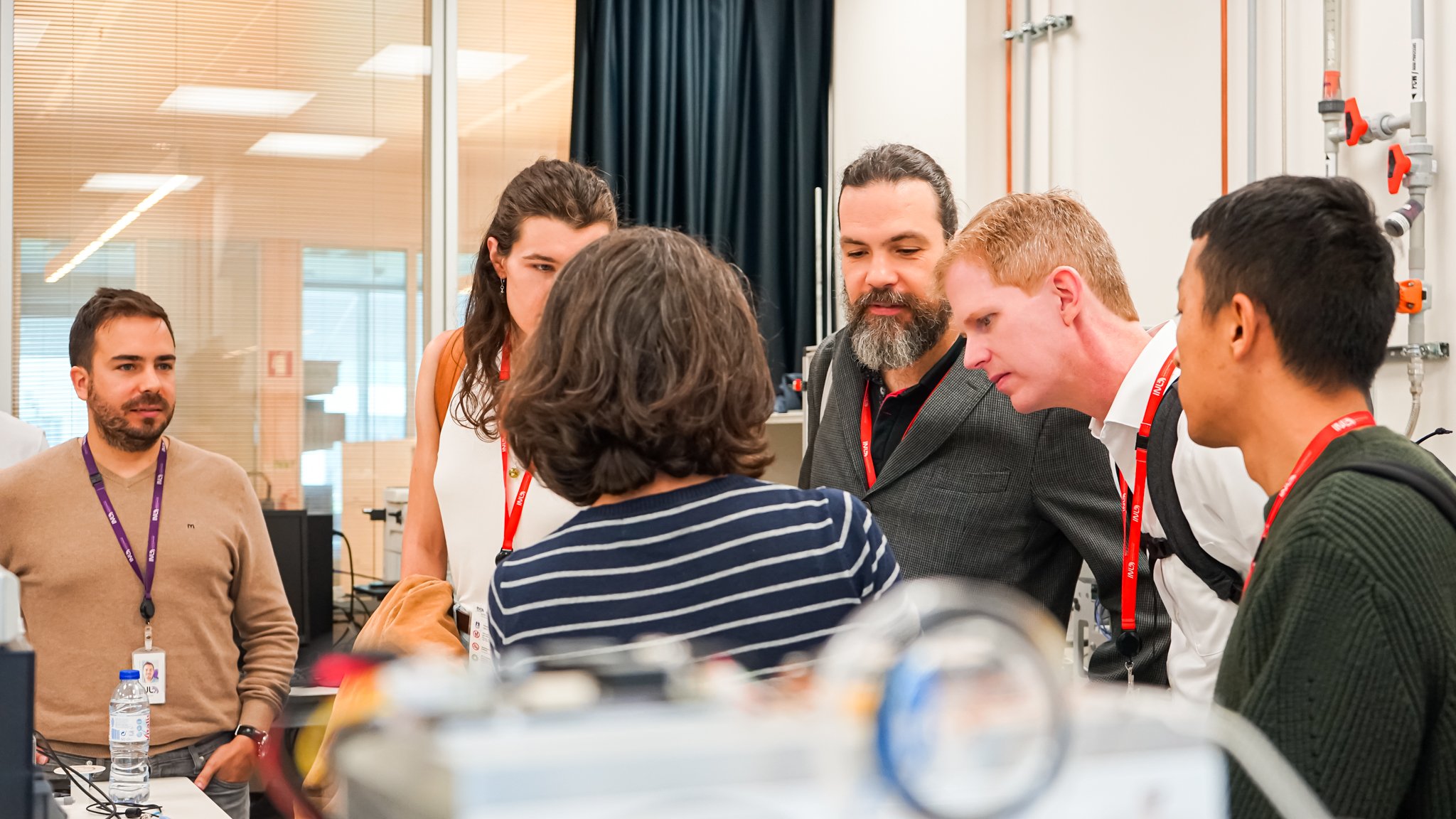
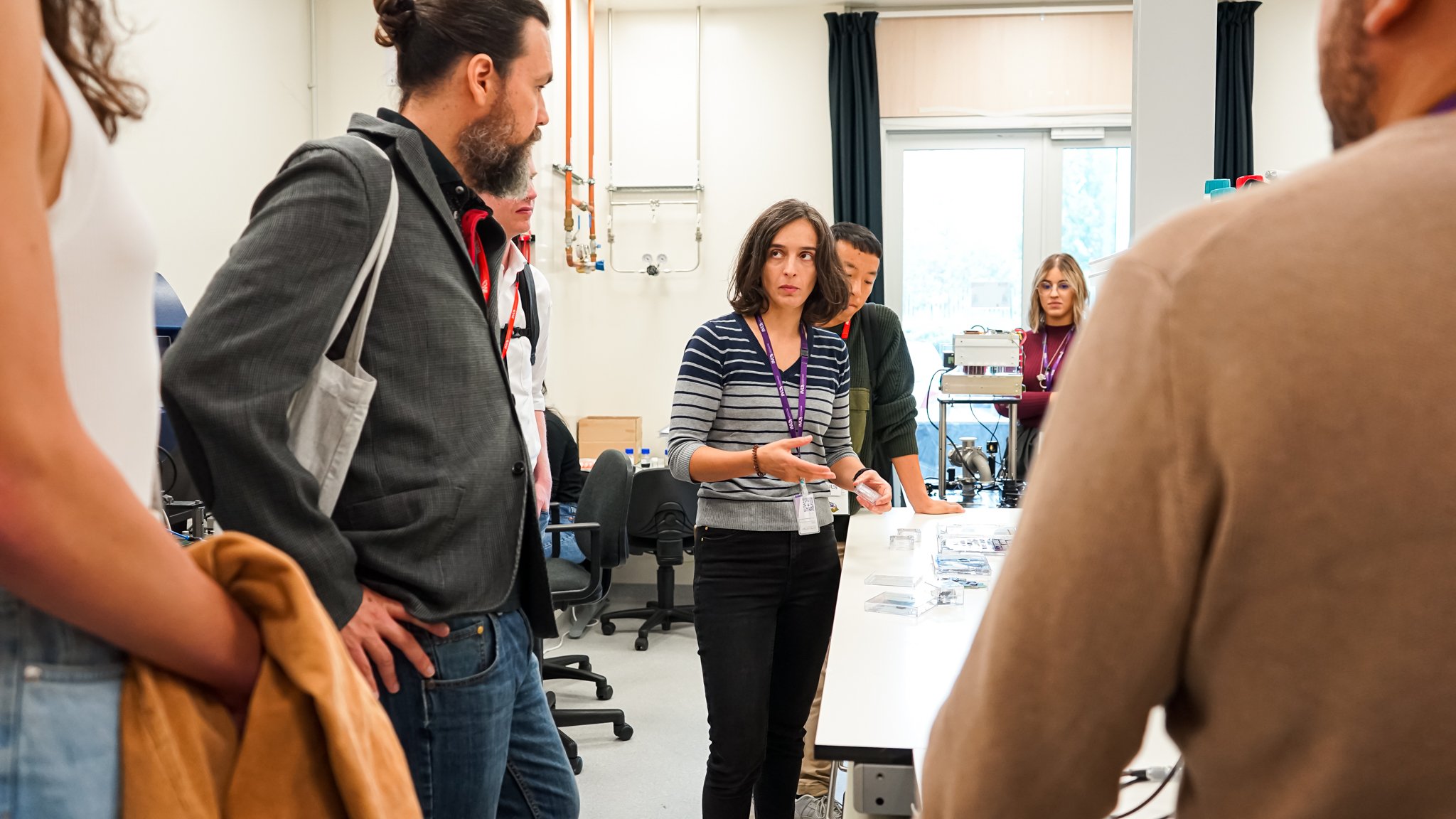
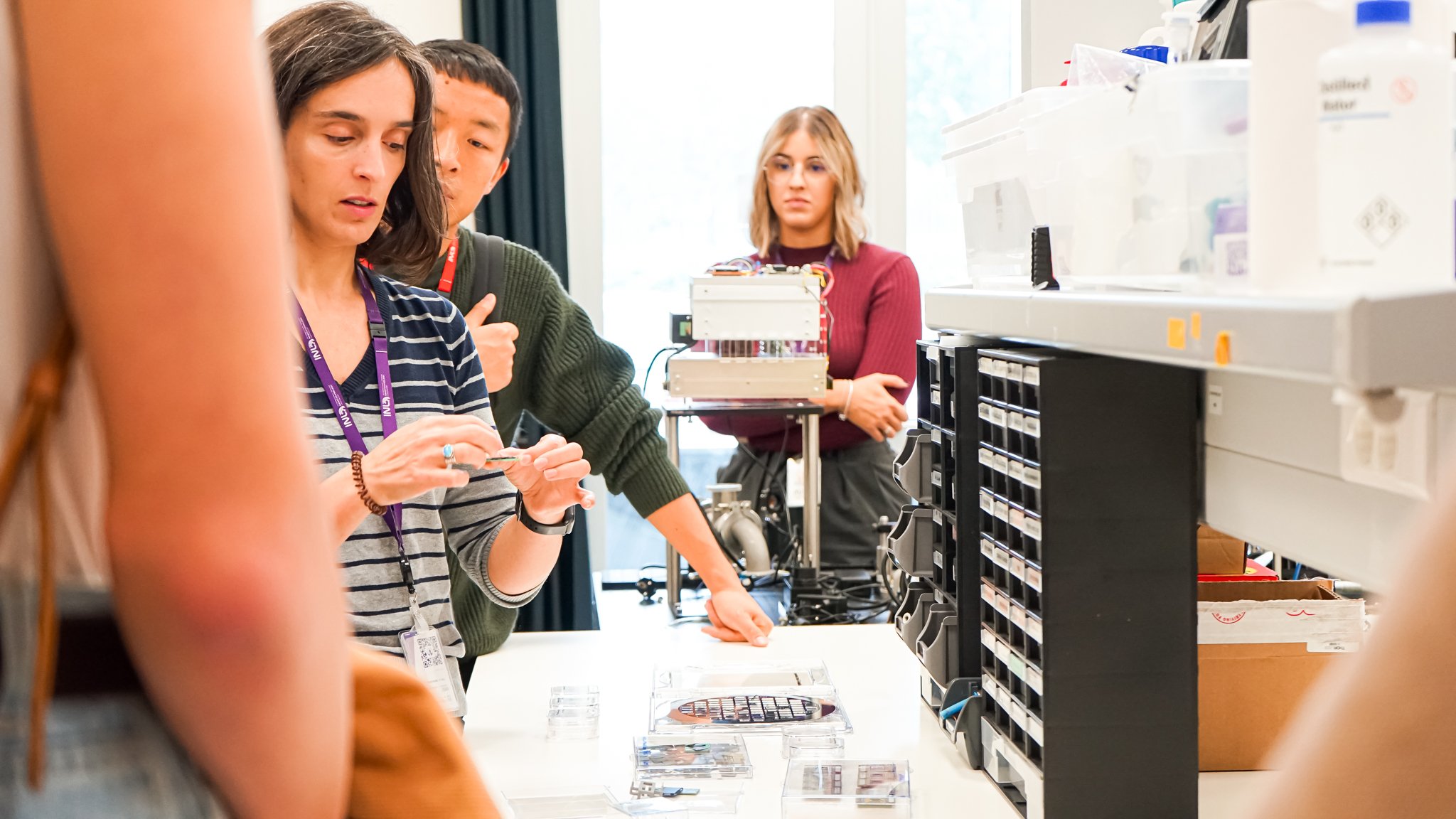
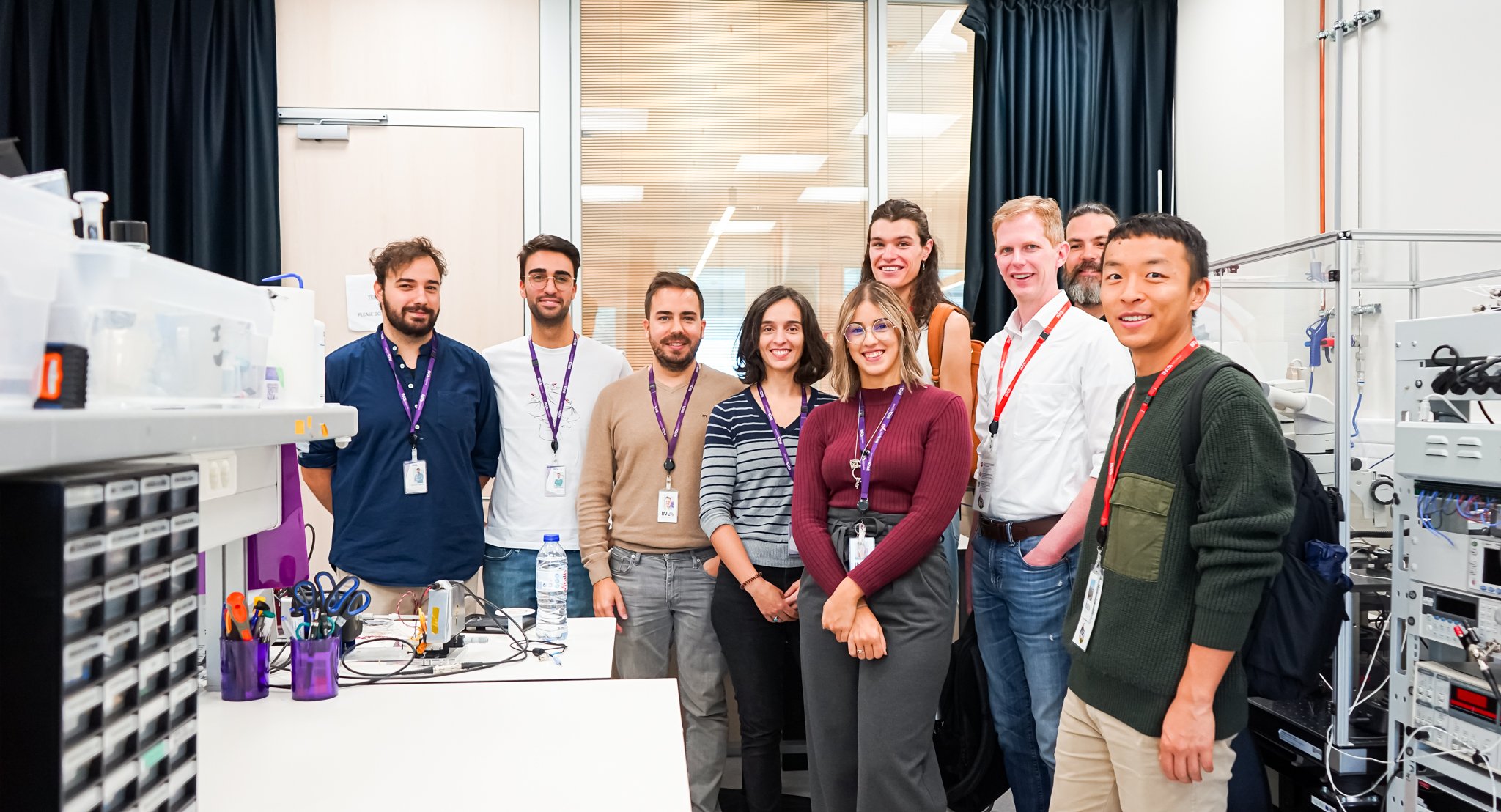
The satellite design review meeting of the uPGRADE project took place last Friday, October 22. It was held at ISQ – Instituto de Soldadura e Qualidade and attended by the University of Texas – Austin team from the Center for Space Research, including the distinguished Professor Byron Tapley, responsible for the GRACE and GRACE-FO, two major space missions that targeted the measurement of gravimetric data, scientific evidence of the polar ice decrease in the recent decades.
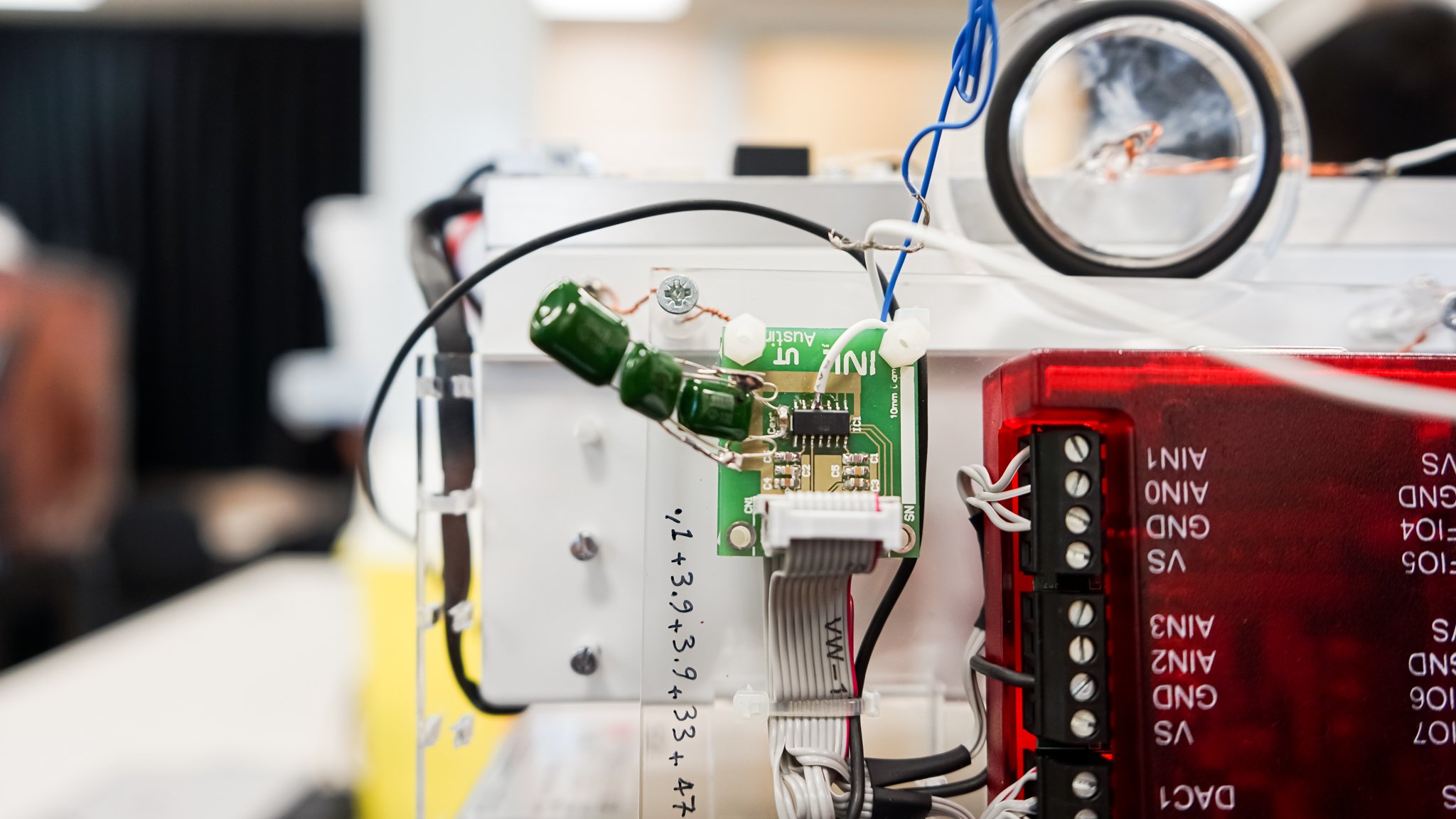
During the meeting, Spin.Works presented the design of the 6U satellite, foreseen to be launched in 2024. From the INL and University of Minho side, the Integrated Micro and Nanotechnologies team presented the MEMS accelerometer being developed for space gravimetric applications, namely the latest characterization results and the design of the 6 accelerometers’ orthogonal assembly.
Given their visit to Portugal, the University of Texas – Austin team also took the opportunity to visit INL – International Iberian Nanotechnology Laboratory and get to know the microfabrication and characterization facilities being used within the uPGRADE project. The capabilities of spintronics sensors for space applications were also discussed as well as the developments achieved in the INFANTE project with the Spintronics group.
INL – International Iberian Nanotechnology Laboratory is part of the uPGRADE project together with ISQ – Instituto de Soldadura e Qualidade, Spin.Works and the University of Minho. These three Portuguese entities will count on the collaboration of INL and the University of Texas – Austin.
INL work is being coordinated by Rosana Dias and Filipe Alves in the Integrated Micro and Nanotechnologies Research Group at INL. The uPGRADE CubeSat is part of the ‘Go Portugal– Global Science and Technology Partnerships Portugal’ initiative is co-financed by the FEDER program, through Compete2020 of the European Union, by the Regional Operational Programs and by the Foundation for Science and Technology (FCT) and will follow the observations made by NASA’s GRACE and GRACE-FO.
Next Page » « Previous Page -->Are you following us?
The satellite design review meeting of the uPGRADE project took place last Friday, October 22. It was held at ISQ – Instituto de Soldadura e Qualidade and attended by the University of Texas – Austin team from the Center for Space Research, including the distinguished Professor Byron Tapley, responsible for the GRACE and GRACE-FO, two major space missions that targeted the measurement of gravimetric data, scientific evidence of the polar ice decrease in the recent decades.
During the meeting, Spin.Works presented the design of the 6U satellite, foreseen to be launched in 2024. From the INL and University of Minho side, the Integrated Micro and Nanotechnologies team presented the MEMS accelerometer being developed for space gravimetric applications, namely the latest characterization results and the design of the 6 accelerometers’ orthogonal assembly.
Given their visit to Portugal, the University of Texas – Austin team also took the opportunity to visit INL – International Iberian Nanotechnology Laboratory and get to know the microfabrication and characterization facilities being used within the uPGRADE project. The capabilities of spintronics sensors for space applications were also discussed as well as the developments achieved in the INFANTE project with the Spintronics group.
INL – International Iberian Nanotechnology Laboratory is part of the uPGRADE project together with ISQ – Instituto de Soldadura e Qualidade, Spin.Works and the University of Minho. These three Portuguese entities will count on the collaboration of INL and the University of Texas – Austin.
INL work is being coordinated by Rosana Dias and Filipe Alves in the Integrated Micro and Nanotechnologies Research Group at INL. The uPGRADE CubeSat is part of the ‘Go Portugal– Global Science and Technology Partnerships Portugal’ initiative is co-financed by the FEDER program, through Compete2020 of the European Union, by the Regional Operational Programs and by the Foundation for Science and Technology (FCT) and will follow the observations made by NASA’s GRACE and GRACE-FO.