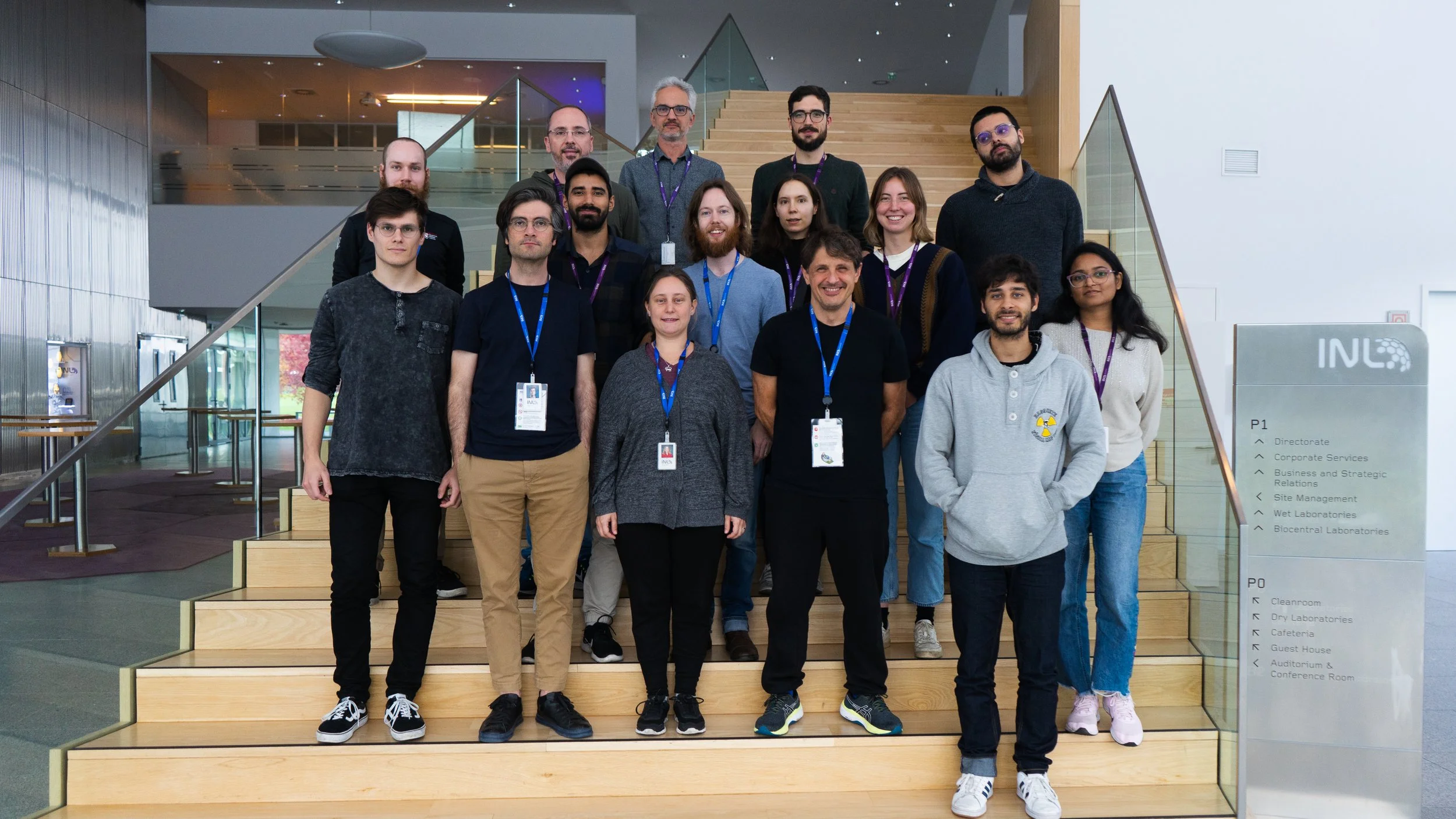
From April 19 to 21, INL – International Iberian Nanotechnology Laboratory had the honour to host the 2023 Annual INL Research Symposium. The event, an internal initiative, aimed at sharing and showcasing the research activities and accomplishments. The event also celebrates all our hard work and provides a forum for the breadth of activities being undertaken within each Research Group.
During the three half-days, we had more than 200 participants each day, 11 Research and Engineering Groups showcased 26 demos, excellent scientific presentations, more than 90 posters and video flash talks, and very engaging coffee breaks and ‘happy-hour’ moments. This was a unique internal event and a great occasion to learn and experiment new technological developments.
Next year, INL will continue promoting this event as part of the strategic plan for internal research dissemination activities and for creating an environment that encourages, stimulates and promotes research and researchers.
Thank you all for your brilliant hard work!
FoQaCiA | European funding boosts quantum research at INL
Efficient quantum algorithms can have a significant impact on important, broad-reaching problems, solving some mathematical problems faster than any classical approach. However, it still remains to be discovered how to harness the quantum systematically for computation.
Project FoQaCiA, jointly funded by the European Council and Canadian agency NSERC, aims to extend the theoretical basis for the design of quantum algorithms. The consortium’s view is that the future success of quantum computing critically depends on advances at the most fundamental level. Large-scale investments in quantum implementations will only pay off if they can draw on additional foundational insights and ideas.
The consortium FoQaCiA is a multi-disciplinary team of mathematicians, physicists, and computer scientists, with complementary areas of expertise. A unique feature of this project is the combination of top experts in the foundations of quantum computation from the two sides of the Atlantic, together with researchers capable of translating the insights gained into software for circuit compilation and classical simulation of quantum computers and into feasible demonstrations of the computational power granted by sequential quantum-mechanical measurements.
FoQaCiA researchers start from the very foundations of quantum theory and investigate how quantum programming techniques can arise from them. Within this project, scientists seek to identify one or two novel quantum programming techniques and validate them through applications.
The FoQaCIA consortium: INL (European coordinator), Stockholm University, Universidad de Sevilla, Universidad de Granada, Bilkent Universitesi, University College London, Uniwersytet Gdański, The University of British Columbia (Canadian coordinator), Simon Fraser University, University of Ottawa, and the University of Waterloo.
World Water Day | 22nd March, 2023

“Searching for nanoplastics in the sea” was taken by Patricia Taladriz-Blanco using a scanning electron microscope. It shows the different salts present in the seawater, collected from the North Sea, and possible nanoplastics attached to them.
Today is World Water Day, and we would like to encourage you to think about how we use water and its importance to our Planet.
Water affects everyone, so we need everyone to take action.
INL researchers from the Water Quality research group are working on a European project to enhance urban water quality.
As climate change aggravates, severe weather events such as drought, storms and heat waves are becoming more frequent. These changes may lead to increased rainfall in many areas that aren’t equipped for high-density rainfall. Consequently, the wastewater systems are unfit and inefficient, causing potential harmful pollutants and contaminants to infiltrate the surrounding environment.
The project D4RUNOFF is a consortium which involves 13 organisations from Denmark, Spain, Portugal, France and Italy. This project aims to create a novel framework for preventing and managing pollution from this runoff in urban areas.
D4RUNOFF scientists are developing new detection methods and sensors, designing nature-based solutions combined with advanced water infrastructures, and producing an artificial intelligence-powered decision support tool for making informed decisions and improving water quality for citizens and the environment.
On this World Water Day, we would also like to share a few ideas prepared by the United Nations, so you can make your list of personal commitments to solving the water and sanitation crisis. Remember, we can all do something, even if it seems small. Be the change you want to see in the World.
-
Save water: Take shorter showers and don’t let the tap run when brushing my teeth, doing dishes and preparing food.
-
Eat local: Buy local, seasonal food and look for products made with less water.
-
Be curious: Find out where my water comes from and how it is shared, and visit a treatment plant to see how my waste is managed.
-
Protect nature: Plant a tree or create a rain garden – use natural solutions to reduce the risk of flooding and store water.
-
Flush safely: Fix leaking water and waste pipes, empty full septic tanks and report sludge dumping.
-
Build pressure: Write to my elected representatives about budgets for improving water at home and abroad.
-
Stop polluting: Don’t put food waste, oils, medicines and chemicals down my toilet or drains.
-
Clean up: Take part in clean-ups of my local rivers, lakes, wetlands or beaches.
ISO13485: INL successfully concluded the first certification cycle
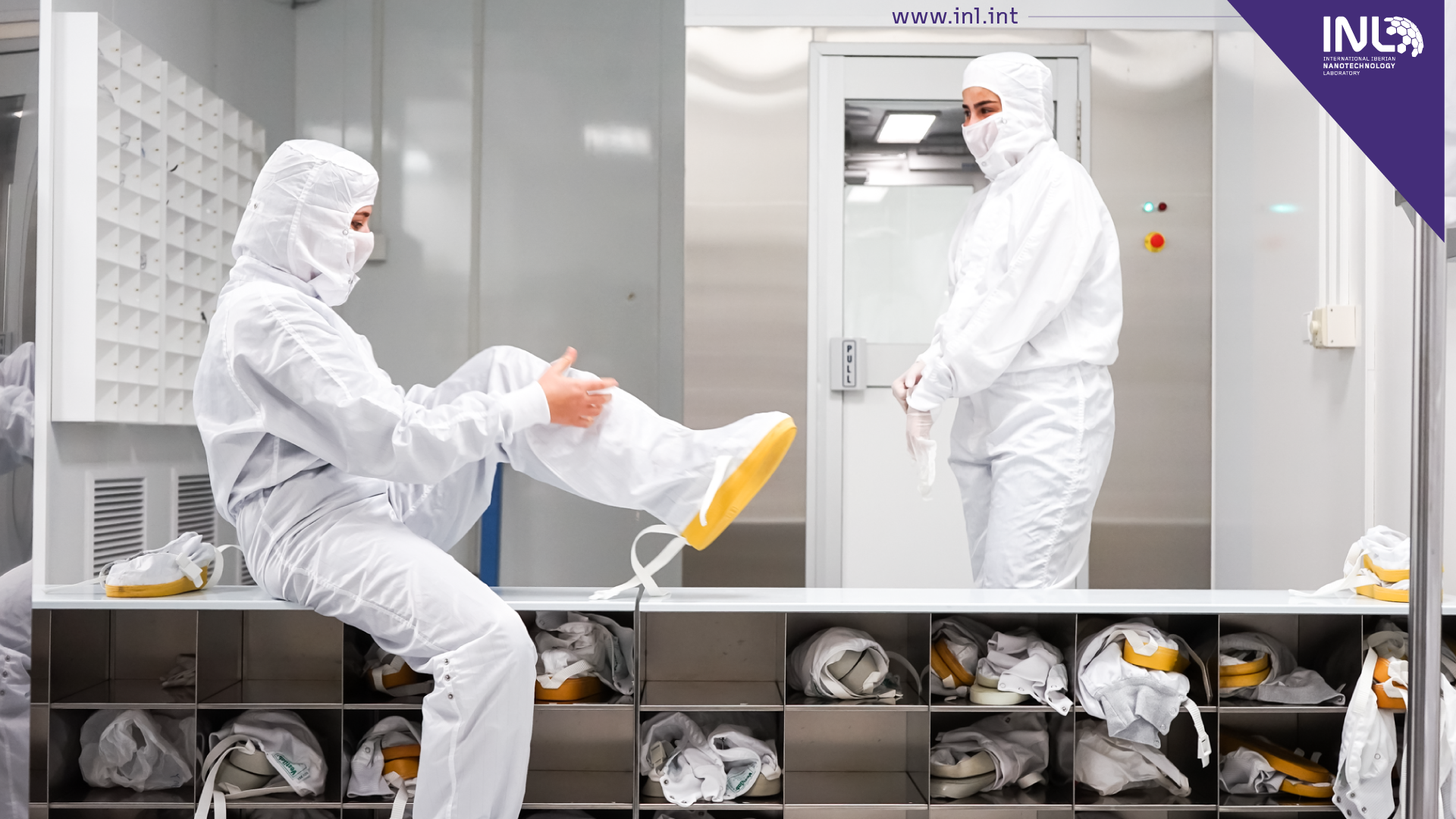
Last December, INL – International Iberian Nanotechnology Laboratory successfully concluded the first certification cycle of all activities developed by the Micro and Nanofabrication (MNF) Facility related to design, development and testing of nanotechnology-based solutions for use in medical devices, in accordance with the international standard ISO 13485. This standard specifies the requirements for a management system where an organization needs to demonstrate its ability to provide Medical Devices and related services that consistently meet customer and applicable regulatory requirements.
SGS Spain conducted the final certification audit, and we managed to achieve the remarkable result of 0 nonconformities during the entire three-year cycle. This was a significant milestone successfully achieved by the Facility and INL – International Iberian Nanotechnology Laboratory last year.
During the last three years, ISO 13485 certification was – and continues to be of a major benefit for INL, as it enables access to a key market, gaining customers’ trust and achieving international quality recognition, as this certification is not only preferred but required.
Quality is in INL genetic code
The attribution of ISO 13485 certification is only the latest development of a journey dedicated to certifying INL operations according to internationally recognized standards.
July 2020 marked the full implementation and the external certification of INL Research, Development and Innovation Management System, establishing an Innovation model, supported by interfaces and interactions between the scientific and technological knowledge, the knowledge about the organization, the market, and the society.
It was designed according to the NP 4457 standard, which defines the requirements of effective management of Research, Development, and Innovation (RDI), allowing organizations that adopt this standard to define an RDI policy and achieve their innovation objectives, in a process where INL Business and Strategic Relations, Research Office and Intellectual Property areas had a key role.
The implementation and certification of these standards add to the already mature INL Quality Management System – first certified according to the well-known ISO 9001 in 2017, and which also successfully entered the second three-year certification cycle achieving the first certificate renewal – leading to the creation of INL Integrated Management System, comprising processes, requirements, and standards of different scopes and natures, all intrinsically articulated to result in a unified framework oriented towards common objectives.
Interdisciplinarity is key to INL success in Quality
All these meaningful achievements were only possible with the collaboration of the certification project leaders, process owners, more than 60 direct participants, and the remarkable commitment with quality and excellence of more than 300 Members of the Personnel. Thanks to the committed work and dedication of all the ones involved, INL has achieved all certifications with zero nonconformities since the first audit, back in 2017, which is considered to be an exceptional result.
Furthermore, INL is now one of the very few Research and Technology Organizations worldwide with QMS certification, now adding the RDI and Medical Devices to this uncommon record.
HIBA launches a free E-Learning Data platform for the acquisition of digital skills in agro-digitization

After several months of preparation, the free E-Learning Data platform, a tool developed within the scope of the Interreg Poctep HUB IBERIA AGROTECH (HIBA) project, was launched today thanks to the cooperative work of several partner competence centres that are beneficiaries of this European initiative with extensive experiences in the field of agro-digitalization, such as the School of Agricultural and Forestry Engineering (ETSIAM) of the University of Córdoba, the University of Évora and the University of the Algarve, with the collaboration of the Agro-Food Cooperatives of Andalusia.
Available on the HIBA project web in Spanish and Portuguese, E-Learning Data was created in part with the aim of helping to acquire digital skills in the area of agro-digitalization. Open, after registration, to all those who wish to train and adapt to the new needs of the agricultural sector, the platform includes free MOOCs on Digital Enabling Technologies of importance in agriculture adapted to different user profiles, as well as access to tools innovations that favour entrepreneurship; support for the development of training through virtual assistants and knowledge on the most relevant aspects of precision agriculture, among others. In addition, a virtual assistant available 24 hours a day, HIBABot, will be responsible for resolving any doubts that may arise for the user.
The platform is aimed at people who work or are entrepreneurs in the agri-food sector, service companies in the sector, local development groups, agricultural associations, trainers and non-university and university students. It will allow testing innovations and experimenting with technologies to promote entrepreneurship, improve agricultural digitalization skills and provide decision-making support. To benefit from all its services, you only need to register here.
The Interreg Spain-Portugal Cross-border Cooperation Project (POCTEP) HIBA will promote a multi-regional ecosystem focused on the digitization of the agri-food sector in Spain and Portugal through the creation of a network of Digital Innovation Hubs (DIH) that will foster the entrepreneurial initiative, competitiveness and sustainability, promoting post-Covid19 economic reactivation.
With a budget of 5.3 million euros, 75% co-financed by the ERDF (European Regional Development Fund) under the Interreg V-A Spain-Portugal Cross-border Cooperation Program 2014-2020 (POCTEP), HIBA has 19 beneficiaries, with the Ministry of Agriculture, Fisheries, Water and Rural Development of the Regional Government of Andalusia being the main beneficiary.
The E-Learning data platform is part of ACTIVITY 3 of the HIBA project for accelerating digitization processes. The purpose of this activity is to provide companies with different services to start and/or accelerate their digitization process, through training in digital skills for different levels of training and user profiles; and the ability to test innovations and experiment with technologies to promote entrepreneurship and the improvement of processes and decision-making in agri-food companies in the area of multi-regional cooperation.
National Mourning Day in Portugal – 5 January 2023

Photo Credits: Claudio Peri/EPA
Today, INL associates with the National Mourning day decreed by the Government of Portugal, one of our member-states, for the death of Pope Emeritus Benedict XVI.
Benedict, born Joseph Alois Ratzinger, was ordained a priest in 1951 and named archbishop of Munich and Freising in 1977, the same year he became a cardinal. Four years later, Pope John Paul II summoned Cardinal Ratzinger to Rome, where he became the head of the Congregation for the Doctrine of the Faith, the office responsible for defending church orthodoxy, one of the Vatican’s most important positions. He led the office for nearly 25 years.
After John Paul II died in 2005, Cardinal Ratzinger was chosen as his successor. He took the name of a sixth-century monk, Benedict of Nursia, who had founded monasteries and the Benedictine order, helping spread Christianity in Europe.
Ultimately, Pope Benedict resigned — the first by a pontiff since 1415 — in 2013 due to ill health. He lived in retirement in a monastery on the Vatican grounds, mostly stepping back from public life and dedicating himself to prayer and meditation
The President of Portugal, Marcelo Rebelo de Sousa underlined that “throughout his eight years of Pontificate, Pope Benedict XVI remained a symbol of stability and defence of the values of the Catholic Church” such as “friendship, solidarity and support for the poorest and the most vulnerable and the importance of forgiveness and reconciliation”.
On 31 December 2022, Pope Benedict XVI died at the Mater Ecclesiae Monastery in Vatican City at the age of 95.
Wrapping Up 2022: Our People
2022 has been a busy year for the INL Community. This week we take a look at some of this year’s highlights and achievements regarding our people, our projects, and the latest research developments. Join us on this ride and remember all the interviews carried out throughout the year.
We have come to the end of yet another successful year that brought with it fantastic achievements, along with its own challenges and uncertainties.
The war in Ukraine, the continuing pandemic, and the rising inflation combined with an energy crisis. This has been a difficult year for all. Fighting such tough challenges is only possible when we come together when we perform interdisciplinary work and people from all backgrounds come together to find new solutions. INL is a proud and truly talented community.
Thank you all for your hard work, enthusiasm and perseverance. You are what INL is made of.
Andrea GOUVÊA
2022 interviews started with Andrea Gouvêa, Research Engineer in the Micro and Nanofabrication facility at INL – International Iberian Nanotechnology Laboratory providing technical and hands-on expertise on advanced systems and techniques. Read the full interview >>

Jennifer Teixeira
Research Fellow at the Nanofabrication for Optoelectronic Applications (NOA) group since June 2019. In the group, I’m involved in the research line for the development and fabrication of high-performance substrates, based on passivation and light management strategies, for photovoltaic (PV) applications. Read the full interview >>

Jana Nieder
The Ultrafast Bio- and Nanophotonics research group under her leadership develops three synergistic photonics research lines: 1) Innovative Bioimaging Methodology Development for the health sciences, 2) Integrated Photonics Technologies, e.g. for biosensing and neuromorphic, and 3) Quantum Photonics methodologies for metrology, bioimaging and computation.
As Head of the Nanophotonics and Bioimaging Corporate Laboratories at INL, Jana Nieder has the ambition to provide the latest technologies and excellent service and access to the community of internal and external researchers via the established open-access programme. Jana Nieder Ultrafast Bio- and Nanophotonics Research Group Leader. Read the full interview >>

António Oliveira
Student of the Doctoral Program in Physical Engineering at the University of Aveiro (UA), who has just received a Fulbright Scholarship. The Fulbright Program offers international educational and cultural exchange programs for passionate and accomplished students, scholars, artists, teachers, and professionals of all backgrounds to study, teach, or pursue important research and professional projects and is one of the most prestigious in the United States of America (USA), that will take António Oliveira to the Institute of Energy Conversion (IEC) at the University of Delaware.
António concluded the Integrated Master’s degree in Micro and Nanotechnologies Engineering at the NOVA School of Science and Technology | FCT NOVA in November 2019. His Master’s thesis was performed at the International Iberian Nanotechnology Laboratory (INL) where he developed novel light management structures for ultra-thin chalcogenide solar cells at the Nanofabrication for Optoelectronic Applications Research Group. Read the full interview >>

Alejandro Garrido-Maestu
He joined INL – International Iberian Nanotechnology Laboratory in 2015 as a Marie Curie COFUND Research Fellow. Within this project, his research aimed to develop a fast multi-pathogen detection lab-on-a-chip based on DNA amplification by loop-mediated isothermal amplification combined with gold nanoparticles.
Alejandro is now a Staff Researcher in the Food & Quality Research Group and his work is focused on the development, and application, of molecular methods for the detection and quantification of foodborne pathogens, the implementation of bacteriophages as fast detection tools, and discrimination among viable and dead microorganisms. To this end, he is working with different DNA amplification techniques such as PCR/ qPCR, LAMP, LCR and RPA. Read the full interview >>
José Pedro Rodrigues
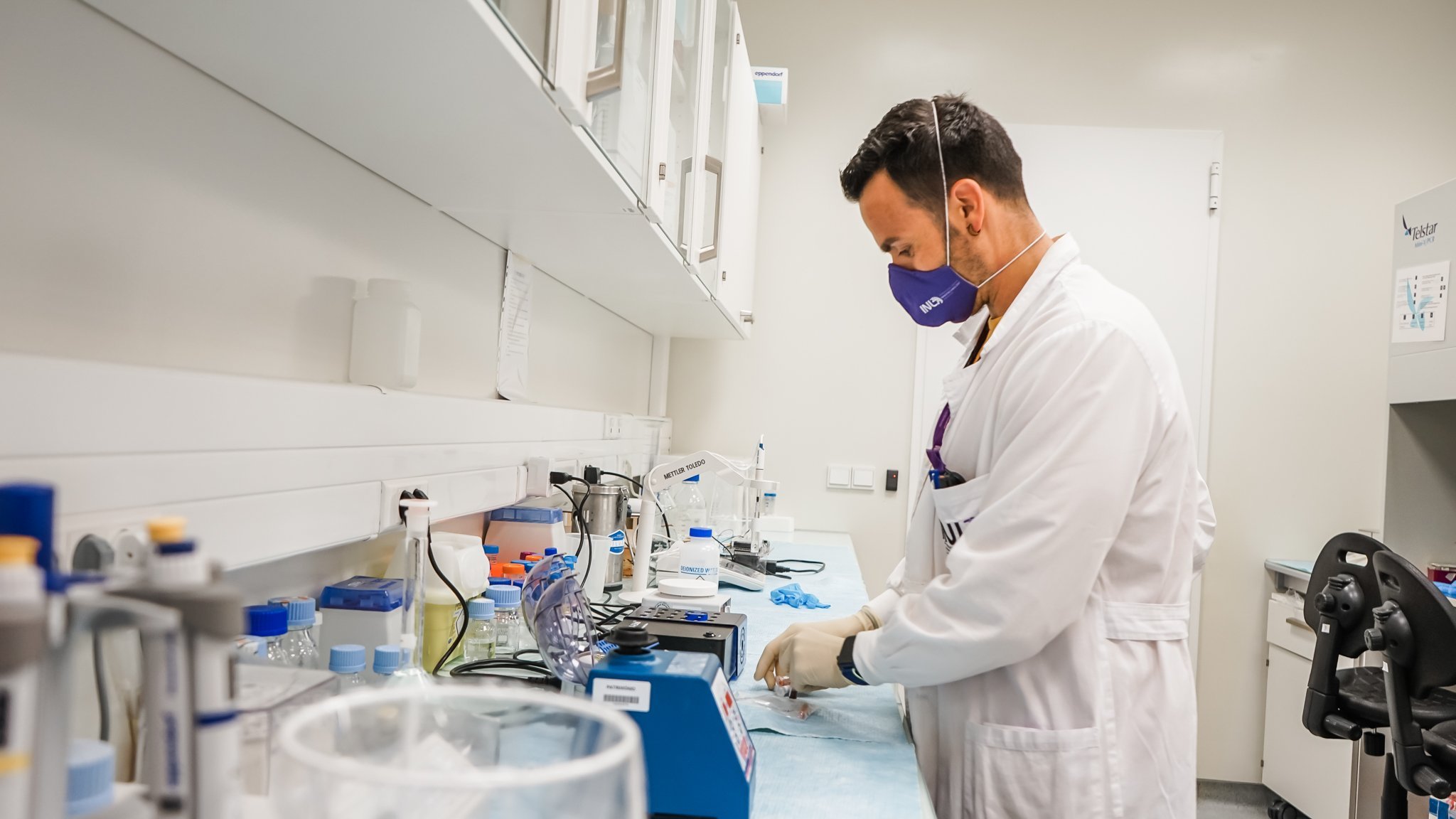
Facility Manager, is currently a member of the Micro and Nanofabrication Facility at INL. Among his facility management responsibilities, José focuses on cleanroom processes and equipment performance management.
José joined INL in 2016 with already 19 years of significant industrial background. He worked for international semiconductor companies having roles in Operations, Equipment and Process Engineering departments. More recently, he worked in a Swiss MEMS and Sensors company as an Equipment Specialist. Read the full interview >>

Sarah Azinheiro
PhD student at the INL – International Iberian Nanotechnology Laboratory as an FCT Research Fellow in the Food Quality and Safety Research Group. Sarah won the “Testing for Life” Student Award from the AOAC/Eurofins Foundation and she is involved in several projects related to the development of innovative and faster detection methods for pathogenic microorganisms and allergens, based on DNA analysis. Read the full interview >>

Catarina Moura
Science Communicator Officer at INL – International Iberian Nanotechnology Laboratory within the Communication, Conferences and Marketing unit.
Catarina has an active role in supporting the INL research community to carry out research and innovation-oriented activities of relevance for communication. She also coordinates science communication initiatives that range from the organisation of scientific events to the establishment of relationships with the media, scientific experts, universities, and other research organisations. Read the full interview >>

António Vilanova
Research Fellow working on the Nanofabrication Optoelectronic Application’s Research Group at INL – International Iberian Nanotechnology Laboratory. António obtained an MSc Degree in Environmental Engineering, in 2014, from the Faculty of Engineering of the University of Porto (FEUP), being awarded a Scholarship for Exceptional Academic Merit. In 2016, António was awarded a competitive individual FCT fellowship to carry on his PhD studies in chemical and biological engineering at FEUP. He obtained his PhD degree in February 2021. Read the full interview >>

Edoardo Sotgiu
Research Engineer in the group of Microfabrication and Exploratory Nanotechnology (iMINA) at INL – International Iberian Nanotechnology Laboratory. He focuses his research on the field of haptics and his research interests vary from biomechanics and human movement analysis, to control of exoskeleton robotic devices, and robot-assisted neurorehabilitation to the pedestrian navigation system for blind people. Read the full interview >>

Carlos Marques
Research Engineer of the Systems Engineering Research Group. Carlos holds an Industrial Electronics and Computer Engineering Integrated Master Degree and completed his PhD in Electronics and Computer Engineering in 2016 at the University of Minho.
His research and work are focused on almost all aspects of electronics, but his preferences are in analogue instrumentation, signal processing, power electronics, and everything that involves electromagnetism. Read the full interview >>

Michael González-Durruthy
He joined INL – International Iberian Nanotechnology Laboratory this year and he is currently working in the Nanosafety research group. He graduated in Pharmaceutical Sciences from the University of Havana Cuba with an M.Sc. in Experimental Toxicology. And he holds two PhDs – one in Physiological Sciences from the Federal University of Rio Grande, Brazil and a second PhD in Materials Science from the University of Santiago de Compostela, Spain, Department of Applied Physics. Read the full interview >>

Lars Montelius
Lars Montelius completed his 8-year mandate as Director-General of INL – International Iberian Nanotechnology Laboratory last August and has been in service for eight years. In these last INL has matured both from its research activities and from an organizational point of view. Today, INL is, as you know, home to more than +400 passionate people from about +30 different countries.
In his own words “it has been a real pleasure to serve as Director-General of INL – International Iberian Nanotechnology Laboratory throughout these years, being able to be part of INL in all its areas of activity. I am grateful to all INLers, present and former ones, that so passionately have been part of this amazing journey – and of course to all partners and friends worldwide that we have been engaged with. I wish INL – and the new Director-General – soon to be appointed, all the best success”.
2023 looks to be even bigger, better, and busier and we will face strong goodwill and our usual stamina. INL is a proud and truly talented community. Thank you all for your hard work, enthusiasm and perseverance.
To all our partners and friends, thank you for being here and for supporting our work and our path.
We wish you all an amazing 2023!
Wrapping Up 2022: Research
2022 has been a busy year for the INL Community. This week we take a look at some of this year’s highlights and achievements regarding our people, our projects, and the latest research developments. Join us on this ride and remember all the interviews carried out throughout the year.
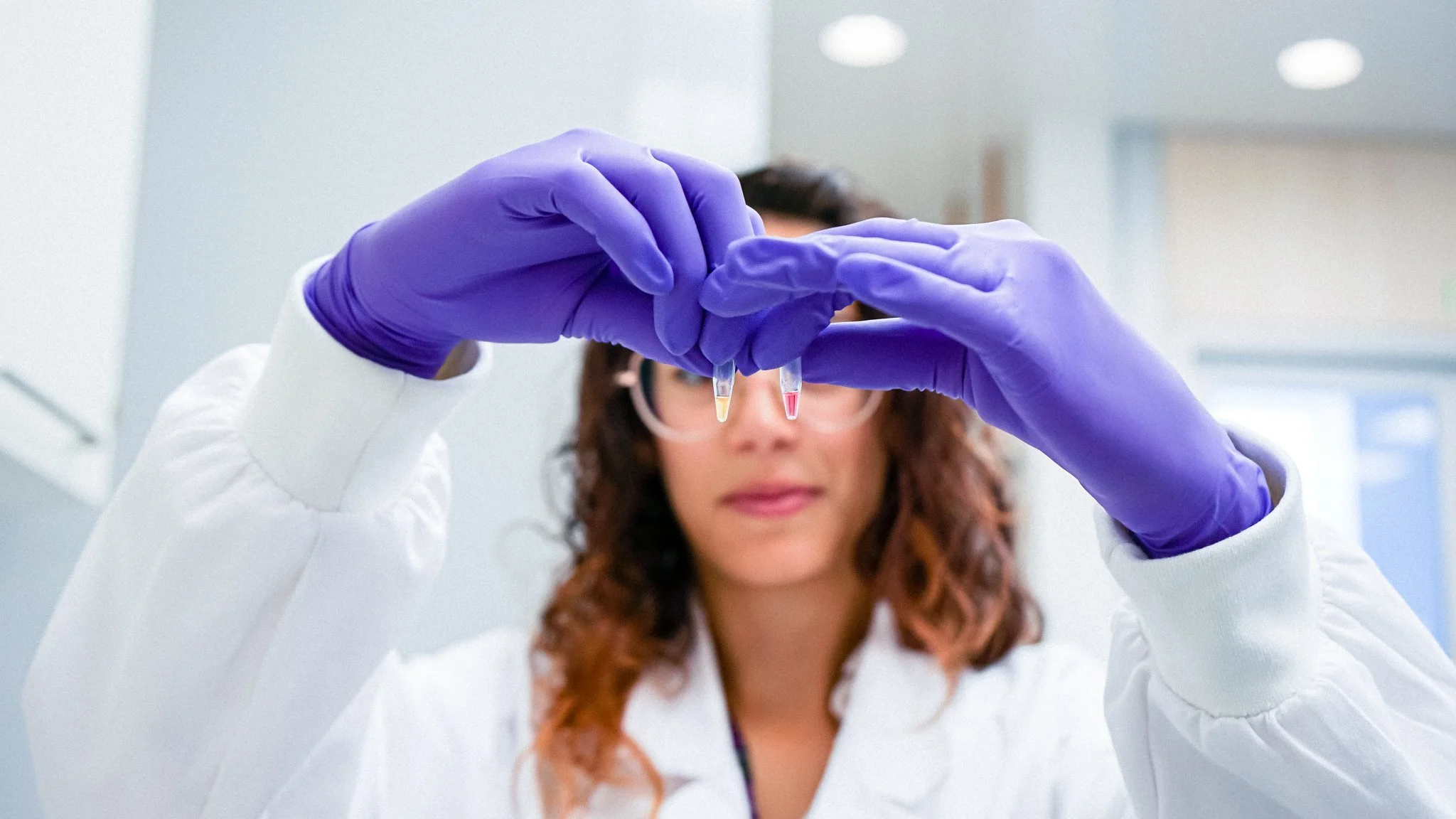
As 2022 comes to a close, we would like to take a moment to reflect on everything INL has accomplished in terms of Research this year. COVID-19, the War in Ukraine, and the global crisis (financial and environmental) haven’t stopped us and despite everything, we’ve made this a great year filled with large accomplishments.
In 2022 we’ve welcomed students, staff, and visitors back to our laboratory, though, of course, it wasn’t exactly the way things had been. Masks remained present for a good part of the year. Even with all the changes, INL persisted to perform interdisciplinary research, and deploy and articulate nanotechnology for the benefit of society addressing society’s grand challenges.
INL joins QUARMEN master (QUAntum Research Master Education Network)
INL – International Iberian Nanotechnology Laboratory is an official partner of the QUARMEN master (QUAntum Research Master Education Network), a project created in the frame of the European university alliance for Global Health – EUGLOH, also coordinated by Paris-Saclay University. This program counts on the collaboration of Paris-Saclay, Porto, Rome, and Toronto universities. Read the full update >>
INL delegation visits HRAEPY – Regional High Specialty Hospital of the Yucatán Peninsula “HRAEPY”
The INL – International Iberian Nanotechnology Laboratory and the Regional High Specialty Hospital of the Yucatán Peninsula “HRAEPY”, a decentralised body of the Federal Public Administration within the Mexico Government initiated a cooperation agreement in the field of nanomedicine back in 2020. The aim of this cooperation agreement, signed during a remote ceremony due to the pandemic, was to carry out bilateral clinical research in the field of precision medicine. Read the full update >>
Isabel Rodríguez among the best 5000 Spanish scientific women
Isabel Rodríguez, Research Fellow at the Food Processing and Nutrition Research Group, has been ranked among the best 5000 Spanish scientific women. As part of CSIC’s institution’s commitment to gender equality policies, they’ve published the first edition of the Ranking of Spanish and foreign researchers working in Spain according to data from their personal public profiles on Google Scholar. This edition consists of the 5600 researchers ordered according to the highest h-index and secondarily by a number of citations. Read the full update >>
The i-GRAPE consortium composed of INL – International Iberian Nanotechnology Laboratory, SOGRAPE, INESC MN, The University of Freiburg, AUTOMATION SRL is proud to announce that the i-GRAPE Project, represented by INL – International Iberian Nanotechnology Laboratory and SOGRAPE at the 19th edition of the COTEC Portugal Innovation Summit, has just been recognized with the “Innovation in XPERIENCE 4.0 Ecosystem” Award. Read the full update >>
Lars Montelius at IndTech2022 presenting the Materials 2030 Roadmap
The Director-General of INL – International Iberian Nanotechnology Laboratory, Lars Montelius presented last week, at IndTech 2022, the Materials 2030 Roadmap, during the Plenary session: Systemic Approach for Advanced Materials: 2030 Perspective chaired by Joanna Drake, Deputy Director-General of the European Commission’s Directorate-General for the Environment. Read the full update >>
InNPeC Project – Nanotools for rare giants: an innovative blood-based screening for prostate cancer
Researchers from INL – International Iberian Nanotechnology Laboratory and INESC-MN – Institute for Systems Engineering and Computers – Microsystems and Nanotechnologies have developed two different devices, which can be used separately or as a two-stage system, to isolate these rare blood cells (more specifically circulating tumour cells or CTCs, and cancer-associated macrophage-like cells or CAMLs). These rare cells can be used as biomarkers to diagnose prostate cancer or to provide feedback on how a patient is responding to a specific treatment. Read the full update >>
MICRODIGEST, a Micro-device for Human Gastrointestinal Tract Simulation
In the MICRODIGEST project, INL researchers developed a tool to evaluate the safety and efficacy of new drugs or foods. The modular sensors platform uses microfluidics to simulate human digestion (oral, gastric, and intestinal phases) and intestinal absorption in an automated and miniaturised manner. This allows for reducing sample size, increasing experimental throughput and potentially reducing costly failures in future clinical trials. Read the full update >>
MiconCell Project has come to an end!
After 4 years, the FCT-funded project “MiconCell – Thin-film micro-concentrator solar cells” has successfully finished in June 2022. The innovative idea of the MiconCell project was to combine highly-efficient thin-film technology with the concentrator photovoltaic approach and shrink the size scale to the micrometre range. Read the full update >>
NovaCell project, developing novel architectures of CIGS solar cells
Project NovaCell is managed by the Nanofabrication for optoelectronic applications – NOA research group and they focus their work and research on the incorporation of nanotechnology in optoelectronic devices with strong industrial and innovation potential. In this project, NOA research group is developing novel architectures of CIGS solar cells. By reducing the solar cell thickness, researchers want to reduce fabrication costs through material savings and by increasing the machine throughput. Read the full update >>
SpinCat, Spin-Polarized Catalysts for Energy-efficient AEM Water Electrolysis
In the SpinCat project, researchers are working on the development of efficient magnetic earth-abundant catalysts that, through spin polarisation, will boost the catalytic activity towards oxygen evolution reaction by a factor of three as compared to state-of-the-art catalysts. This project will contribute to establishing Europe as the world leader in electrolyser technology for renewable HYDROGEN production and will help Europe to reach its decarbonisation objectives. Read the full update >>
“Shine bright like a diamond” gains meaning in Parkinson’s research
Recently, medical researchers succeeded to grow small cellular mini-brains, known as brain organoids, in a lab dish. In parallel, physicists are reporting novel quantum sensing techniques, based on bright colour centres in diamonds. The Ultrafast Bio- and Nanophotonics Research Group, in collaboration with ICVS/University of Minho and University of Aveiro, is carrying out frontier research to gain insight into Parkinson’s disease. Read the full update >>
NANOCULTURE, monitoring the exposure of the nanoparticles on aquaculture specimens
Given the importance of the aquaculture sector for the Atlantic Area, possible adverse effects of the use of engineered nonpoint sources of pollution in aquaculture should be well understood in order to ensure maximum safety of food products and the environmental-related impacts of the activity. Therefore, the objective of NANOCULTURE is to advance the knowledge, risk assessment and mitigation of the environmental presence of the most-used engineered nanoparticles in market products: titanium dioxide and silver nanoparticles. Read the full update >>
#TrustEat – Agri-food research at INL by adding blockchain technology
The project #TrustEat aims to add a new dimension to the current research in the agri-food area at INL by adding blockchain technology. This technology can ensure the food value chain integrity to the consumers, providing a reliable tool to contribute to the safety, traceability and authenticity of food systems. Blockchain is an immutable digital ledger that works through a consensus of computer systems; there is not one central authority over the blockchain. Read the full update >>
Project STAR-Sol, opening doors to large-scale electrical solar deployment
The aim of the project STAR-Sol, a collaboration between INL – International Iberian Nanotechnology Laboratory and the University of Luxembourg, is to overcome challenges in photovoltaic material science and to open doors to large-scale electrical solar deployment. The innovative design developed in the project STAR-Sol incorporates parallel stripes of solar cells, smaller than the eye can resolve. Read the full update >>
QU-BOSS aims to open new horizons in quantum information
QU-BOSS project focuses its work and development on opening new horizons in quantum information, quantum control and machine learning. INL researchers are contributing with theoretical expertise on optical quantum computing to this European project, together with Università Degli Studi di Roma La Sapienza and Consiglio Nazionale Delle Ricerche. Read the full update >>
NanoBioSensor, developing a faster methodology to detect the presence of spoilage
The project NanoBioSensor, a collaboration between INL, Exatronic and Frulact, developed a faster methodology to detect the presence of spoilage-responsible microorganisms (yeast and moulds) in fruit preparations. The device and methodology were developed by combining the researchers’ expertise in molecular biology, microfluidics and electronics. This new methodology allows much faster detection of microorganisms – reducing the total analysis time of 7 days to less than 24 hours with a sensibility comparable to conventional methods. Read the full update >>
3DSecret winner of the Pathfinder Programme by the European Innovation Council
The results of the EIC Pathfinder Open 2022 competition were released and a project coordinated by INL – International Iberian Nanotechnology is among the winners. With its Pathfinder programme, the EIC supports the exploration of bold ideas for radically new technologies. It welcomes the high-risk/high-gain and interdisciplinary cutting-edge science collaborations that underpin technological breakthroughs. Read the full update >>
GASTRIC, developing miniaturised devices for the simulation of gastrointestinal enzymatic digestion
The GASTRIC project is focused on the development of miniaturised devices for the simulation of gastrointestinal enzymatic digestion and an organ-a-chip to study intestinal absorption in the gut. Oral administration remains the preferred route for the delivery of drugs or dietary supplements. However, orally ingested compounds must first survive digestion and then be absorbed by the small intestine to reach the systemic circulation. The capacity to study these processes in a reliable and robust manner is key to the successful development of new bioactive compounds. Read the full update >>
Eight INL researchers among the World’s Top 2% Scientists
These eight INL researchers were highlighted for the impact of their work throughout their whole careers, among the World’s Top 2% Scientists. The updated list is based on the Sep 01, 2022, snapshot from Scopus, updated to the end of the citation year 2021. The list provides a publicly available database of 100,000 top scientists in several disciplines worldwide, with standardised information on citations, h-index, co-authorship-adjusted hm-index, citations to papers in different authorship positions, and a composite indicator. Read the full update >>
uPGRADE project team meets in Portugal
During the meeting, Spin.Works presented the design of the 6U satellite, foreseen to be launched in 2024. From the INL and University of Minho side, the Integrated Micro and Nanotechnologies team presented the MEMS accelerometer being developed for space gravimetric applications, namely the latest characterization results and the design of the 6 accelerometers’ orthogonal assembly. Read the full update >>
Marewind, developing durable materials and recyclable solutions for the offshore wind industry
MAREWIND solutions will pave the way for the next generation of offshore wind generators and facilities that aim to solve the technological, economic, business, and societal challenges we are now facing. In addition, it will strengthen the leading role of Europe in the global offshore wind market with the current 22,072 MW of installed cumulative capacity, followed by Asian and North American markets. Read the full update >>
A new white paper has been published by Water Europe with the contribution of the Water Quality research group at INL – International Iberian Nanotechnology Laboratory. Water Europe, initiated by the European Commission in 2004, issues white papers to inform readers about complex water-related topics in a concise and targeted way. Read the full update >>
Miguel Cerqueira is among the most cited researchers for the fifth year in a row
The INL – International Iberian Nanotechnology Laboratory staff researcher, Miguel Cerqueira, from the Food Processing Research Group, has been ranked as a “Highly Cited Researcher” for the fifth consecutive year, in the field of Agricultural Sciences. Read the full update >>
Lorena Diéguez, Paulina Piairo and Sara Abalde-Cela running for the EU Prize for Women Innovators 2022 through their work developed at INL and at RUBYnanomed, a spin-off from INL – International Iberian Nanotechnology Laboratory. The EU Prize for Women Innovators celebrates the women entrepreneurs behind game-changing innovations. In doing so, the EU seeks to raise awareness of the need for more women innovators, and create role models for women and girls everywhere. Read the full update >>
3D-NANOFOOD, personalised foods for seniors through nanotechnology and 3D printing
3D-NANOFOOD project proposes a combination of promising techniques to manufacture personalised foods, including 3D printing, food enrichment, and nano-delivery systems. 3D printing is a versatile and emerging technology to manufacture food in a fast way, and at the same time to develop products with personalised texture and/or special nutrition needs. Read the full update >>
NeuralGRAB, developing a brain activity recording platform
In the framework of the project NeuralGRAB funded by the La Caixa Foundation, INL – International Iberian Nanotechnology Laboratory is working with the Faculty of Medicine of the University of Porto and the Spanish Astrobiology Centre(CAB/CSIC) towards the development of a brain activity recording platform. Read the full update >>
KESPER, innovative technology that uses a novel class of kesterite materials
KESPER – The kesterite-based Photoelectrodes for Water and Nitrogen Reduction project proposes an innovative technology that uses a novel class of kesterite materials avoiding the use of critical raw materials for the generation of renewable gases. Kesterite, a greenish-black mineral, presents several forms and compositions; however, this also makes it extremely versatile with adaptable features. Read the full update >>
SINFONIA, boosting RTD activities in nanosafety
The European-funded project SiNfONiA aims to boost research and technological development activities in the area of nanosafety and bring to market technology that is safe and trusted by the end-users and consumers is a fundamental necessity and the foundation for all current and future deployment and acceptance of nanotechnology. Read the full update >>
Next year, we will continue to make strides in improving how we serve our community and how we continue to explore new interfaces and perform interdisciplinary research for the benefit of society.
We would like to say thank you to each one of you for everything you do every day. Your commitment to work, to science and nanotechnology, is a big part of the reason we feel pumped and excited for the upcoming year. Together we will continue to travel in scale and experience science outside your world and inside INL.
Wrapping Up 2022: Research
2022 has been a busy year for the INL Community. This week we take a look at some of this year’s highlights and achievements regarding our people, our projects, and the latest research developments. Join us on this ride and remember all the interviews carried out throughout the year.
As 2022 comes to a close, we would like to take a moment to reflect on everything INL has accomplished in terms of Research this year. COVID-19, the War in Ukraine, and the global crisis (financial and environmental) haven’t stopped us and despite everything, we’ve made this a great year filled with large accomplishments.
In 2022 we’ve welcomed students, staff, and visitors back to our laboratory, though, of course, it wasn’t exactly the way things had been. Masks remained present for a good part of the year. Even with all the changes, INL persisted to perform interdisciplinary research, and deploy and articulate nanotechnology for the benefit of society addressing society’s grand challenges.
INL joins QUARMEN master (QUAntum Research Master Education Network)
INL – International Iberian Nanotechnology Laboratory is an official partner of the QUARMEN master (QUAntum Research Master Education Network), a project created in the frame of the European university alliance for Global Health – EUGLOH, also coordinated by Paris-Saclay University. This program counts on the collaboration of Paris-Saclay, Porto, Rome, and Toronto universities. Read the full update >>
INL delegation visits HRAEPY – Regional High Specialty Hospital of the Yucatán Peninsula “HRAEPY”
The INL – International Iberian Nanotechnology Laboratory and the Regional High Specialty Hospital of the Yucatán Peninsula “HRAEPY”, a decentralised body of the Federal Public Administration within the Mexico Government initiated a cooperation agreement in the field of nanomedicine back in 2020. The aim of this cooperation agreement, signed during a remote ceremony due to the pandemic, was to carry out bilateral clinical research in the field of precision medicine. Read the full update >>
Isabel Rodríguez among the best 5000 Spanish scientific women
Isabel Rodríguez, Research Fellow at the Food Processing and Nutrition Research Group, has been ranked among the best 5000 Spanish scientific women. As part of CSIC’s institution’s commitment to gender equality policies, they’ve published the first edition of the Ranking of Spanish and foreign researchers working in Spain according to data from their personal public profiles on Google Scholar. This edition consists of the 5600 researchers ordered according to the highest h-index and secondarily by a number of citations. Read the full update >>
The i-GRAPE consortium composed of INL – International Iberian Nanotechnology Laboratory, SOGRAPE, INESC MN, The University of Freiburg, AUTOMATION SRL is proud to announce that the i-GRAPE Project, represented by INL – International Iberian Nanotechnology Laboratory and SOGRAPE at the 19th edition of the COTEC Portugal Innovation Summit, has just been recognized with the “Innovation in XPERIENCE 4.0 Ecosystem” Award. Read the full update >>
Lars Montelius at IndTech2022 presenting the Materials 2030 Roadmap
The Director-General of INL – International Iberian Nanotechnology Laboratory, Lars Montelius presented last week, at IndTech 2022, the Materials 2030 Roadmap, during the Plenary session: Systemic Approach for Advanced Materials: 2030 Perspective chaired by Joanna Drake, Deputy Director-General of the European Commission’s Directorate-General for the Environment. Read the full update >>
InNPeC Project – Nanotools for rare giants: an innovative blood-based screening for prostate cancer
Researchers from INL – International Iberian Nanotechnology Laboratory and INESC-MN – Institute for Systems Engineering and Computers – Microsystems and Nanotechnologies have developed two different devices, which can be used separately or as a two-stage system, to isolate these rare blood cells (more specifically circulating tumour cells or CTCs, and cancer-associated macrophage-like cells or CAMLs). These rare cells can be used as biomarkers to diagnose prostate cancer or to provide feedback on how a patient is responding to a specific treatment. Read the full update >>
MICRODIGEST, a Micro-device for Human Gastrointestinal Tract Simulation
In the MICRODIGEST project, INL researchers developed a tool to evaluate the safety and efficacy of new drugs or foods. The modular sensors platform uses microfluidics to simulate human digestion (oral, gastric, and intestinal phases) and intestinal absorption in an automated and miniaturised manner. This allows for reducing sample size, increasing experimental throughput and potentially reducing costly failures in future clinical trials. Read the full update >>
MiconCell Project has come to an end!
After 4 years, the FCT-funded project “MiconCell – Thin-film micro-concentrator solar cells” has successfully finished in June 2022. The innovative idea of the MiconCell project was to combine highly-efficient thin-film technology with the concentrator photovoltaic approach and shrink the size scale to the micrometre range. Read the full update >>
NovaCell project, developing novel architectures of CIGS solar cells
Project NovaCell is managed by the Nanofabrication for optoelectronic applications – NOA research group and they focus their work and research on the incorporation of nanotechnology in optoelectronic devices with strong industrial and innovation potential. In this project, NOA research group is developing novel architectures of CIGS solar cells. By reducing the solar cell thickness, researchers want to reduce fabrication costs through material savings and by increasing the machine throughput. Read the full update >>
SpinCat, Spin-Polarized Catalysts for Energy-efficient AEM Water Electrolysis
In the SpinCat project, researchers are working on the development of efficient magnetic earth-abundant catalysts that, through spin polarisation, will boost the catalytic activity towards oxygen evolution reaction by a factor of three as compared to state-of-the-art catalysts. This project will contribute to establishing Europe as the world leader in electrolyser technology for renewable HYDROGEN production and will help Europe to reach its decarbonisation objectives. Read the full update >>
“Shine bright like a diamond” gains meaning in Parkinson’s research
Recently, medical researchers succeeded to grow small cellular mini-brains, known as brain organoids, in a lab dish. In parallel, physicists are reporting novel quantum sensing techniques, based on bright colour centres in diamonds. The Ultrafast Bio- and Nanophotonics Research Group, in collaboration with ICVS/University of Minho and University of Aveiro, is carrying out frontier research to gain insight into Parkinson’s disease. Read the full update >>
NANOCULTURE, monitoring the exposure of the nanoparticles on aquaculture specimens
Given the importance of the aquaculture sector for the Atlantic Area, possible adverse effects of the use of engineered nonpoint sources of pollution in aquaculture should be well understood in order to ensure maximum safety of food products and the environmental-related impacts of the activity. Therefore, the objective of NANOCULTURE is to advance the knowledge, risk assessment and mitigation of the environmental presence of the most-used engineered nanoparticles in market products: titanium dioxide and silver nanoparticles. Read the full update >>
#TrustEat – Agri-food research at INL by adding blockchain technology
The project #TrustEat aims to add a new dimension to the current research in the agri-food area at INL by adding blockchain technology. This technology can ensure the food value chain integrity to the consumers, providing a reliable tool to contribute to the safety, traceability and authenticity of food systems. Blockchain is an immutable digital ledger that works through a consensus of computer systems; there is not one central authority over the blockchain. Read the full update >>
Project STAR-Sol, opening doors to large-scale electrical solar deployment
The aim of the project STAR-Sol, a collaboration between INL – International Iberian Nanotechnology Laboratory and the University of Luxembourg, is to overcome challenges in photovoltaic material science and to open doors to large-scale electrical solar deployment. The innovative design developed in the project STAR-Sol incorporates parallel stripes of solar cells, smaller than the eye can resolve. Read the full update >>
QU-BOSS aims to open new horizons in quantum information
QU-BOSS project focuses its work and development on opening new horizons in quantum information, quantum control and machine learning. INL researchers are contributing with theoretical expertise on optical quantum computing to this European project, together with Università Degli Studi di Roma La Sapienza and Consiglio Nazionale Delle Ricerche. Read the full update >>
NanoBioSensor, developing a faster methodology to detect the presence of spoilage
The project NanoBioSensor, a collaboration between INL, Exatronic and Frulact, developed a faster methodology to detect the presence of spoilage-responsible microorganisms (yeast and moulds) in fruit preparations. The device and methodology were developed by combining the researchers’ expertise in molecular biology, microfluidics and electronics. This new methodology allows much faster detection of microorganisms – reducing the total analysis time of 7 days to less than 24 hours with a sensibility comparable to conventional methods. Read the full update >>
3DSecret winner of the Pathfinder Programme by the European Innovation Council
The results of the EIC Pathfinder Open 2022 competition were released and a project coordinated by INL – International Iberian Nanotechnology is among the winners. With its Pathfinder programme, the EIC supports the exploration of bold ideas for radically new technologies. It welcomes the high-risk/high-gain and interdisciplinary cutting-edge science collaborations that underpin technological breakthroughs. Read the full update >>
GASTRIC, developing miniaturised devices for the simulation of gastrointestinal enzymatic digestion
The GASTRIC project is focused on the development of miniaturised devices for the simulation of gastrointestinal enzymatic digestion and an organ-a-chip to study intestinal absorption in the gut. Oral administration remains the preferred route for the delivery of drugs or dietary supplements. However, orally ingested compounds must first survive digestion and then be absorbed by the small intestine to reach the systemic circulation. The capacity to study these processes in a reliable and robust manner is key to the successful development of new bioactive compounds. Read the full update >>
Eight INL researchers among the World’s Top 2% Scientists
These eight INL researchers were highlighted for the impact of their work throughout their whole careers, among the World’s Top 2% Scientists. The updated list is based on the Sep 01, 2022, snapshot from Scopus, updated to the end of the citation year 2021. The list provides a publicly available database of 100,000 top scientists in several disciplines worldwide, with standardised information on citations, h-index, co-authorship-adjusted hm-index, citations to papers in different authorship positions, and a composite indicator. Read the full update >>
uPGRADE project team meets in Portugal
During the meeting, Spin.Works presented the design of the 6U satellite, foreseen to be launched in 2024. From the INL and University of Minho side, the Integrated Micro and Nanotechnologies team presented the MEMS accelerometer being developed for space gravimetric applications, namely the latest characterization results and the design of the 6 accelerometers’ orthogonal assembly. Read the full update >>
Marewind, developing durable materials and recyclable solutions for the offshore wind industry
MAREWIND solutions will pave the way for the next generation of offshore wind generators and facilities that aim to solve the technological, economic, business, and societal challenges we are now facing. In addition, it will strengthen the leading role of Europe in the global offshore wind market with the current 22,072 MW of installed cumulative capacity, followed by Asian and North American markets. Read the full update >>
A new white paper has been published by Water Europe with the contribution of the Water Quality research group at INL – International Iberian Nanotechnology Laboratory. Water Europe, initiated by the European Commission in 2004, issues white papers to inform readers about complex water-related topics in a concise and targeted way. Read the full update >>
Miguel Cerqueira is among the most cited researchers for the fifth year in a row
The INL – International Iberian Nanotechnology Laboratory staff researcher, Miguel Cerqueira, from the Food Processing Research Group, has been ranked as a “Highly Cited Researcher” for the fifth consecutive year, in the field of Agricultural Sciences. Read the full update >>
Lorena Diéguez, Paulina Piairo and Sara Abalde-Cela running for the EU Prize for Women Innovators 2022 through their work developed at INL and at RUBYnanomed, a spin-off from INL – International Iberian Nanotechnology Laboratory. The EU Prize for Women Innovators celebrates the women entrepreneurs behind game-changing innovations. In doing so, the EU seeks to raise awareness of the need for more women innovators, and create role models for women and girls everywhere. Read the full update >>
3D-NANOFOOD, personalised foods for seniors through nanotechnology and 3D printing
3D-NANOFOOD project proposes a combination of promising techniques to manufacture personalised foods, including 3D printing, food enrichment, and nano-delivery systems. 3D printing is a versatile and emerging technology to manufacture food in a fast way, and at the same time to develop products with personalised texture and/or special nutrition needs. Read the full update >>
NeuralGRAB, developing a brain activity recording platform
In the framework of the project NeuralGRAB funded by the La Caixa Foundation, INL – International Iberian Nanotechnology Laboratory is working with the Faculty of Medicine of the University of Porto and the Spanish Astrobiology Centre(CAB/CSIC) towards the development of a brain activity recording platform. Read the full update >>
KESPER, innovative technology that uses a novel class of kesterite materials
KESPER – The kesterite-based Photoelectrodes for Water and Nitrogen Reduction project proposes an innovative technology that uses a novel class of kesterite materials avoiding the use of critical raw materials for the generation of renewable gases. Kesterite, a greenish-black mineral, presents several forms and compositions; however, this also makes it extremely versatile with adaptable features. Read the full update >>
SINFONIA, boosting RTD activities in nanosafety
The European-funded project SiNfONiA aims to boost research and technological development activities in the area of nanosafety and bring to market technology that is safe and trusted by the end-users and consumers is a fundamental necessity and the foundation for all current and future deployment and acceptance of nanotechnology. Read the full update >>
Next year, we will continue to make strides in improving how we serve our community and how we continue to explore new interfaces and perform interdisciplinary research for the benefit of society.
We would like to say thank you to each one of you for everything you do every day. Your commitment to work, to science and nanotechnology, is a big part of the reason we feel pumped and excited for the upcoming year. Together we will continue to travel in scale and experience science outside your world and inside INL.
Next Page » « Previous Page -->2022 has been a busy year for the INL Community. This week we take a look at some of this year’s highlights and achievements regarding our people, our projects, and the latest research developments. Join us on this ride and remember all the interviews carried out throughout the year.
As 2022 comes to a close, we would like to take a moment to reflect on everything INL has accomplished in terms of Research this year. COVID-19, the War in Ukraine, and the global crisis (financial and environmental) haven’t stopped us and despite everything, we’ve made this a great year filled with large accomplishments.
In 2022 we’ve welcomed students, staff, and visitors back to our laboratory, though, of course, it wasn’t exactly the way things had been. Masks remained present for a good part of the year. Even with all the changes, INL persisted to perform interdisciplinary research, and deploy and articulate nanotechnology for the benefit of society addressing society’s grand challenges.
INL joins QUARMEN master (QUAntum Research Master Education Network)
INL – International Iberian Nanotechnology Laboratory is an official partner of the QUARMEN master (QUAntum Research Master Education Network), a project created in the frame of the European university alliance for Global Health – EUGLOH, also coordinated by Paris-Saclay University. This program counts on the collaboration of Paris-Saclay, Porto, Rome, and Toronto universities. Read the full update >>
INL delegation visits HRAEPY – Regional High Specialty Hospital of the Yucatán Peninsula “HRAEPY”
The INL – International Iberian Nanotechnology Laboratory and the Regional High Specialty Hospital of the Yucatán Peninsula “HRAEPY”, a decentralised body of the Federal Public Administration within the Mexico Government initiated a cooperation agreement in the field of nanomedicine back in 2020. The aim of this cooperation agreement, signed during a remote ceremony due to the pandemic, was to carry out bilateral clinical research in the field of precision medicine. Read the full update >>
Isabel Rodríguez among the best 5000 Spanish scientific women
Isabel Rodríguez, Research Fellow at the Food Processing and Nutrition Research Group, has been ranked among the best 5000 Spanish scientific women. As part of CSIC’s institution’s commitment to gender equality policies, they’ve published the first edition of the Ranking of Spanish and foreign researchers working in Spain according to data from their personal public profiles on Google Scholar. This edition consists of the 5600 researchers ordered according to the highest h-index and secondarily by a number of citations. Read the full update >>
The i-GRAPE consortium composed of INL – International Iberian Nanotechnology Laboratory, SOGRAPE, INESC MN, The University of Freiburg, AUTOMATION SRL is proud to announce that the i-GRAPE Project, represented by INL – International Iberian Nanotechnology Laboratory and SOGRAPE at the 19th edition of the COTEC Portugal Innovation Summit, has just been recognized with the “Innovation in XPERIENCE 4.0 Ecosystem” Award. Read the full update >>
Lars Montelius at IndTech2022 presenting the Materials 2030 Roadmap
The Director-General of INL – International Iberian Nanotechnology Laboratory, Lars Montelius presented last week, at IndTech 2022, the Materials 2030 Roadmap, during the Plenary session: Systemic Approach for Advanced Materials: 2030 Perspective chaired by Joanna Drake, Deputy Director-General of the European Commission’s Directorate-General for the Environment. Read the full update >>
InNPeC Project – Nanotools for rare giants: an innovative blood-based screening for prostate cancer
Researchers from INL – International Iberian Nanotechnology Laboratory and INESC-MN – Institute for Systems Engineering and Computers – Microsystems and Nanotechnologies have developed two different devices, which can be used separately or as a two-stage system, to isolate these rare blood cells (more specifically circulating tumour cells or CTCs, and cancer-associated macrophage-like cells or CAMLs). These rare cells can be used as biomarkers to diagnose prostate cancer or to provide feedback on how a patient is responding to a specific treatment. Read the full update >>
MICRODIGEST, a Micro-device for Human Gastrointestinal Tract Simulation
In the MICRODIGEST project, INL researchers developed a tool to evaluate the safety and efficacy of new drugs or foods. The modular sensors platform uses microfluidics to simulate human digestion (oral, gastric, and intestinal phases) and intestinal absorption in an automated and miniaturised manner. This allows for reducing sample size, increasing experimental throughput and potentially reducing costly failures in future clinical trials. Read the full update >>
MiconCell Project has come to an end!
After 4 years, the FCT-funded project “MiconCell – Thin-film micro-concentrator solar cells” has successfully finished in June 2022. The innovative idea of the MiconCell project was to combine highly-efficient thin-film technology with the concentrator photovoltaic approach and shrink the size scale to the micrometre range. Read the full update >>
NovaCell project, developing novel architectures of CIGS solar cells
Project NovaCell is managed by the Nanofabrication for optoelectronic applications – NOA research group and they focus their work and research on the incorporation of nanotechnology in optoelectronic devices with strong industrial and innovation potential. In this project, NOA research group is developing novel architectures of CIGS solar cells. By reducing the solar cell thickness, researchers want to reduce fabrication costs through material savings and by increasing the machine throughput. Read the full update >>
SpinCat, Spin-Polarized Catalysts for Energy-efficient AEM Water Electrolysis
In the SpinCat project, researchers are working on the development of efficient magnetic earth-abundant catalysts that, through spin polarisation, will boost the catalytic activity towards oxygen evolution reaction by a factor of three as compared to state-of-the-art catalysts. This project will contribute to establishing Europe as the world leader in electrolyser technology for renewable HYDROGEN production and will help Europe to reach its decarbonisation objectives. Read the full update >>
“Shine bright like a diamond” gains meaning in Parkinson’s research
Recently, medical researchers succeeded to grow small cellular mini-brains, known as brain organoids, in a lab dish. In parallel, physicists are reporting novel quantum sensing techniques, based on bright colour centres in diamonds. The Ultrafast Bio- and Nanophotonics Research Group, in collaboration with ICVS/University of Minho and University of Aveiro, is carrying out frontier research to gain insight into Parkinson’s disease. Read the full update >>
NANOCULTURE, monitoring the exposure of the nanoparticles on aquaculture specimens
Given the importance of the aquaculture sector for the Atlantic Area, possible adverse effects of the use of engineered nonpoint sources of pollution in aquaculture should be well understood in order to ensure maximum safety of food products and the environmental-related impacts of the activity. Therefore, the objective of NANOCULTURE is to advance the knowledge, risk assessment and mitigation of the environmental presence of the most-used engineered nanoparticles in market products: titanium dioxide and silver nanoparticles. Read the full update >>
#TrustEat – Agri-food research at INL by adding blockchain technology
The project #TrustEat aims to add a new dimension to the current research in the agri-food area at INL by adding blockchain technology. This technology can ensure the food value chain integrity to the consumers, providing a reliable tool to contribute to the safety, traceability and authenticity of food systems. Blockchain is an immutable digital ledger that works through a consensus of computer systems; there is not one central authority over the blockchain. Read the full update >>
Project STAR-Sol, opening doors to large-scale electrical solar deployment
The aim of the project STAR-Sol, a collaboration between INL – International Iberian Nanotechnology Laboratory and the University of Luxembourg, is to overcome challenges in photovoltaic material science and to open doors to large-scale electrical solar deployment. The innovative design developed in the project STAR-Sol incorporates parallel stripes of solar cells, smaller than the eye can resolve. Read the full update >>
QU-BOSS aims to open new horizons in quantum information
QU-BOSS project focuses its work and development on opening new horizons in quantum information, quantum control and machine learning. INL researchers are contributing with theoretical expertise on optical quantum computing to this European project, together with Università Degli Studi di Roma La Sapienza and Consiglio Nazionale Delle Ricerche. Read the full update >>
NanoBioSensor, developing a faster methodology to detect the presence of spoilage
The project NanoBioSensor, a collaboration between INL, Exatronic and Frulact, developed a faster methodology to detect the presence of spoilage-responsible microorganisms (yeast and moulds) in fruit preparations. The device and methodology were developed by combining the researchers’ expertise in molecular biology, microfluidics and electronics. This new methodology allows much faster detection of microorganisms – reducing the total analysis time of 7 days to less than 24 hours with a sensibility comparable to conventional methods. Read the full update >>
3DSecret winner of the Pathfinder Programme by the European Innovation Council
The results of the EIC Pathfinder Open 2022 competition were released and a project coordinated by INL – International Iberian Nanotechnology is among the winners. With its Pathfinder programme, the EIC supports the exploration of bold ideas for radically new technologies. It welcomes the high-risk/high-gain and interdisciplinary cutting-edge science collaborations that underpin technological breakthroughs. Read the full update >>
GASTRIC, developing miniaturised devices for the simulation of gastrointestinal enzymatic digestion
The GASTRIC project is focused on the development of miniaturised devices for the simulation of gastrointestinal enzymatic digestion and an organ-a-chip to study intestinal absorption in the gut. Oral administration remains the preferred route for the delivery of drugs or dietary supplements. However, orally ingested compounds must first survive digestion and then be absorbed by the small intestine to reach the systemic circulation. The capacity to study these processes in a reliable and robust manner is key to the successful development of new bioactive compounds. Read the full update >>
Eight INL researchers among the World’s Top 2% Scientists
These eight INL researchers were highlighted for the impact of their work throughout their whole careers, among the World’s Top 2% Scientists. The updated list is based on the Sep 01, 2022, snapshot from Scopus, updated to the end of the citation year 2021. The list provides a publicly available database of 100,000 top scientists in several disciplines worldwide, with standardised information on citations, h-index, co-authorship-adjusted hm-index, citations to papers in different authorship positions, and a composite indicator. Read the full update >>
uPGRADE project team meets in Portugal
During the meeting, Spin.Works presented the design of the 6U satellite, foreseen to be launched in 2024. From the INL and University of Minho side, the Integrated Micro and Nanotechnologies team presented the MEMS accelerometer being developed for space gravimetric applications, namely the latest characterization results and the design of the 6 accelerometers’ orthogonal assembly. Read the full update >>
Marewind, developing durable materials and recyclable solutions for the offshore wind industry
MAREWIND solutions will pave the way for the next generation of offshore wind generators and facilities that aim to solve the technological, economic, business, and societal challenges we are now facing. In addition, it will strengthen the leading role of Europe in the global offshore wind market with the current 22,072 MW of installed cumulative capacity, followed by Asian and North American markets. Read the full update >>
A new white paper has been published by Water Europe with the contribution of the Water Quality research group at INL – International Iberian Nanotechnology Laboratory. Water Europe, initiated by the European Commission in 2004, issues white papers to inform readers about complex water-related topics in a concise and targeted way. Read the full update >>
Miguel Cerqueira is among the most cited researchers for the fifth year in a row
The INL – International Iberian Nanotechnology Laboratory staff researcher, Miguel Cerqueira, from the Food Processing Research Group, has been ranked as a “Highly Cited Researcher” for the fifth consecutive year, in the field of Agricultural Sciences. Read the full update >>
Lorena Diéguez, Paulina Piairo and Sara Abalde-Cela running for the EU Prize for Women Innovators 2022 through their work developed at INL and at RUBYnanomed, a spin-off from INL – International Iberian Nanotechnology Laboratory. The EU Prize for Women Innovators celebrates the women entrepreneurs behind game-changing innovations. In doing so, the EU seeks to raise awareness of the need for more women innovators, and create role models for women and girls everywhere. Read the full update >>
3D-NANOFOOD, personalised foods for seniors through nanotechnology and 3D printing
3D-NANOFOOD project proposes a combination of promising techniques to manufacture personalised foods, including 3D printing, food enrichment, and nano-delivery systems. 3D printing is a versatile and emerging technology to manufacture food in a fast way, and at the same time to develop products with personalised texture and/or special nutrition needs. Read the full update >>
NeuralGRAB, developing a brain activity recording platform
In the framework of the project NeuralGRAB funded by the La Caixa Foundation, INL – International Iberian Nanotechnology Laboratory is working with the Faculty of Medicine of the University of Porto and the Spanish Astrobiology Centre(CAB/CSIC) towards the development of a brain activity recording platform. Read the full update >>
KESPER, innovative technology that uses a novel class of kesterite materials
KESPER – The kesterite-based Photoelectrodes for Water and Nitrogen Reduction project proposes an innovative technology that uses a novel class of kesterite materials avoiding the use of critical raw materials for the generation of renewable gases. Kesterite, a greenish-black mineral, presents several forms and compositions; however, this also makes it extremely versatile with adaptable features. Read the full update >>
SINFONIA, boosting RTD activities in nanosafety
The European-funded project SiNfONiA aims to boost research and technological development activities in the area of nanosafety and bring to market technology that is safe and trusted by the end-users and consumers is a fundamental necessity and the foundation for all current and future deployment and acceptance of nanotechnology. Read the full update >>
Next year, we will continue to make strides in improving how we serve our community and how we continue to explore new interfaces and perform interdisciplinary research for the benefit of society.
We would like to say thank you to each one of you for everything you do every day. Your commitment to work, to science and nanotechnology, is a big part of the reason we feel pumped and excited for the upcoming year. Together we will continue to travel in scale and experience science outside your world and inside INL.